
Crested Bunting vs Black-headed Bunting
Emberiza lathami versus Emberiza melanocephala
Play a quiz with Crested Bunting and Black-headed Bunting
 Crested Bunting
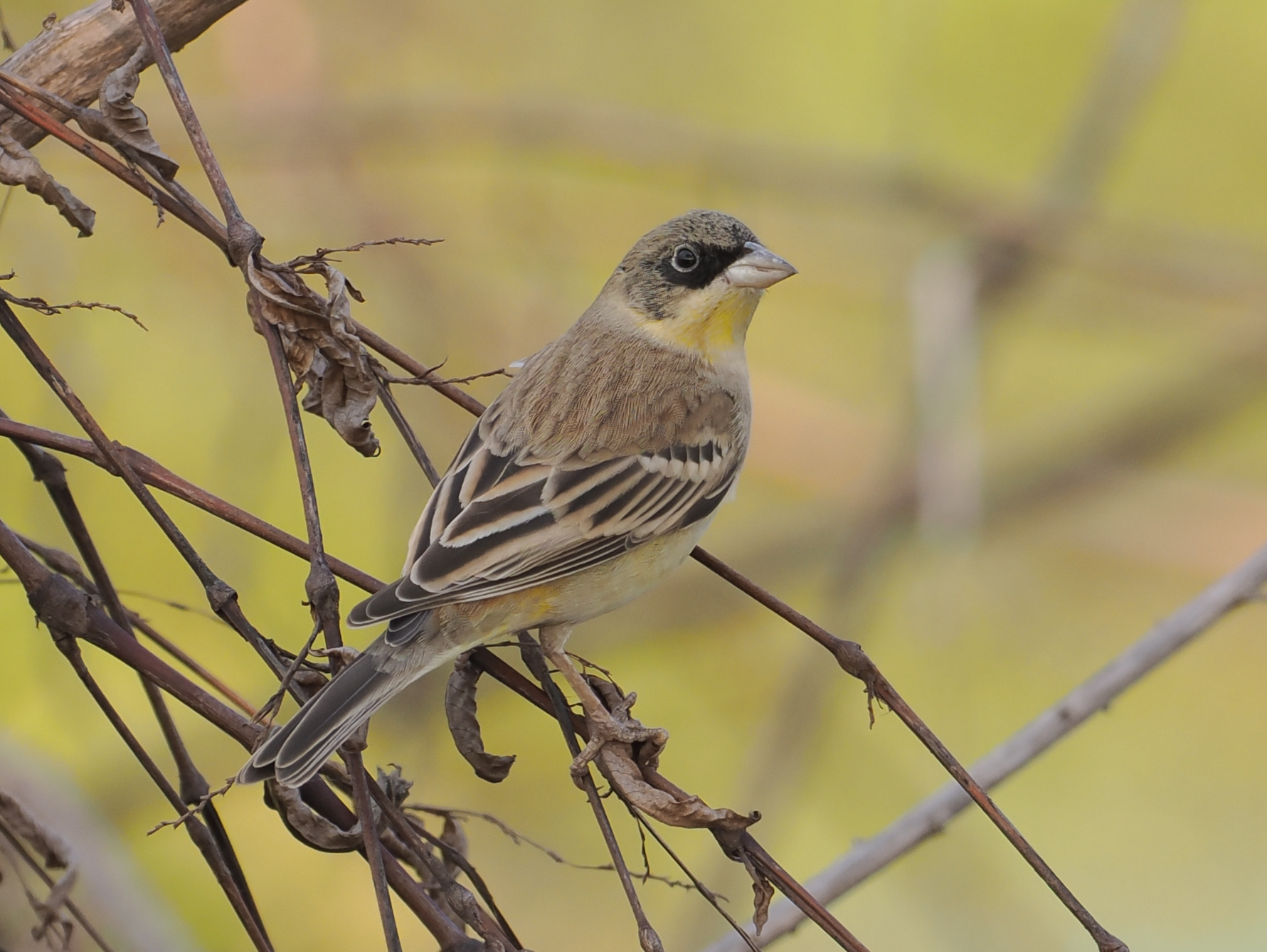 Black-headed Bunting
In short
The Crested Bunting and Black-headed Bunting are both Old World buntings, but they can be distinguished by their head patterns and overall coloration. The Crested Bunting has a distinctive crest and darker plumage, while the Black-headed Bunting features a striking black head and brighter body colors.
Identification tips
1. Look for the crest: The Crested Bunting has a distinctive crest, absent in the Black-headed Bunting. 2. Check head coloration: The Black-headed Bunting male has a black head, while the Crested Bunting has a darker, often blackish head with a crest. 3. Consider body color: The Black-headed Bunting is brighter with a yellow body, especially in males. 4. Observe habitat: Crested Buntings are more likely in hilly areas, while Black-headed Buntings favor open fields.
Size
Both species are similar in size, typical of buntings, with no significant size difference to aid in identification.
Plumage
The Crested Bunting has a dark, often blackish head with a noticeable crest, and its body is generally darker. In contrast, the Black-headed Bunting has a prominent black head (in males) and a bright yellow body, making it more colorful overall. Females of both species are less distinct but the Black-headed Bunting female is generally paler.
Behaviour
Both species exhibit typical bunting behavior, often seen perched in open areas or foraging on the ground. No significant behavioral differences are noted for field identification.
Habitat
The Crested Bunting is more often found in hilly or mountainous regions, whereas the Black-headed Bunting prefers open fields and agricultural areas. Overlapping habitats may occur, but these preferences can help narrow identification.
Voice
Vocalizations are not a primary distinguishing feature between these two species in the field, as both have typical bunting-like calls and songs.