
Cretzschmar's Bunting vs Common Reed Bunting
Emberiza caesia versus Emberiza schoeniclus
Play a quiz with Cretzschmar's Bunting and Common Reed Bunting
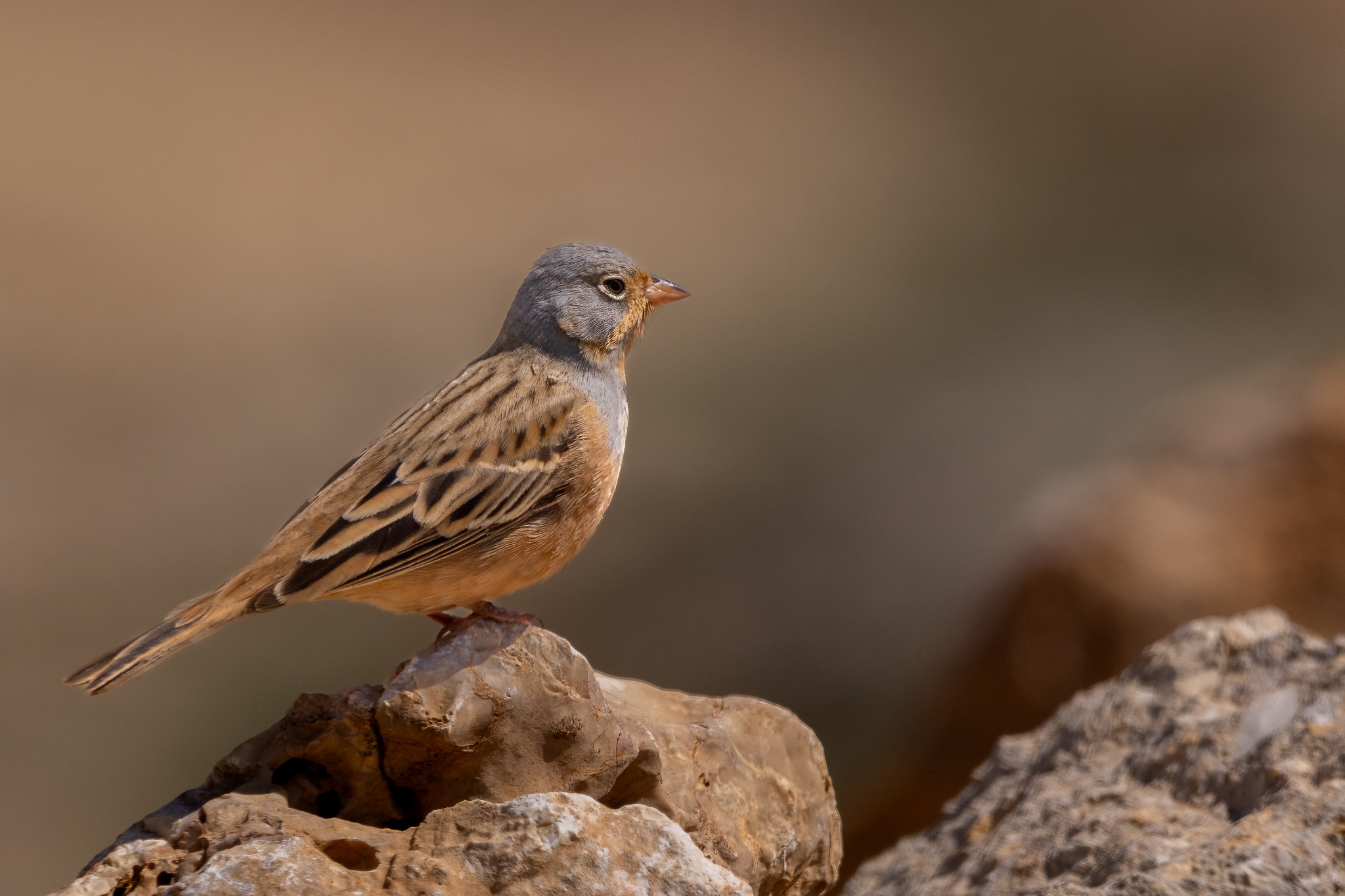 Cretzschmar's Bunting
 Common Reed Bunting
In short
Cretzschmar's Bunting and Common Reed Bunting can be distinguished by their habitat preferences and plumage details. Cretzschmar's Bunting is more colorful with distinct head patterns, while the Common Reed Bunting is more subdued and often found in reed beds.
Identification tips
- Habitat: Look for Cretzschmar's Bunting in dry, open areas; Common Reed Bunting in wetlands. 2. Plumage: Note the bluish-grey head of Cretzschmar's Bunting versus the black head and white collar of male Common Reed Buntings. 3. Song: Listen for the more musical song of Cretzschmar's Bunting compared to the simpler song of the Common Reed Bunting. 4. Seasonal Variations: Be aware that female and non-breeding plumages can be more similar, requiring closer attention to habitat and subtle plumage differences.
Size
Both species are similar in size, typical of small buntings.
Plumage
Cretzschmar's Bunting has a more colorful appearance with a bluish-grey head and chestnut breast, while the Common Reed Bunting is generally more brown and streaked, with a prominent white collar and black head in males.
Behaviour
Both species exhibit typical bunting behavior, but the Common Reed Bunting is more likely to be seen in dense vegetation.
Habitat
Cretzschmar's Bunting prefers dry, open habitats like hillsides and scrub, whereas the Common Reed Bunting is often found in wetlands and reed beds.
Voice
Vocalizations differ, with Cretzschmar's Bunting having a more musical song, while the Common Reed Bunting's song is simpler and more repetitive.
Cretzschmar's Bunting · Common Reed Bunting · My Tricky Birds