
Cretzschmar's Bunting vs Pallas's Reed Bunting
Emberiza caesia versus Emberiza pallasi
Play a quiz with Cretzschmar's Bunting and Pallas's Reed Bunting
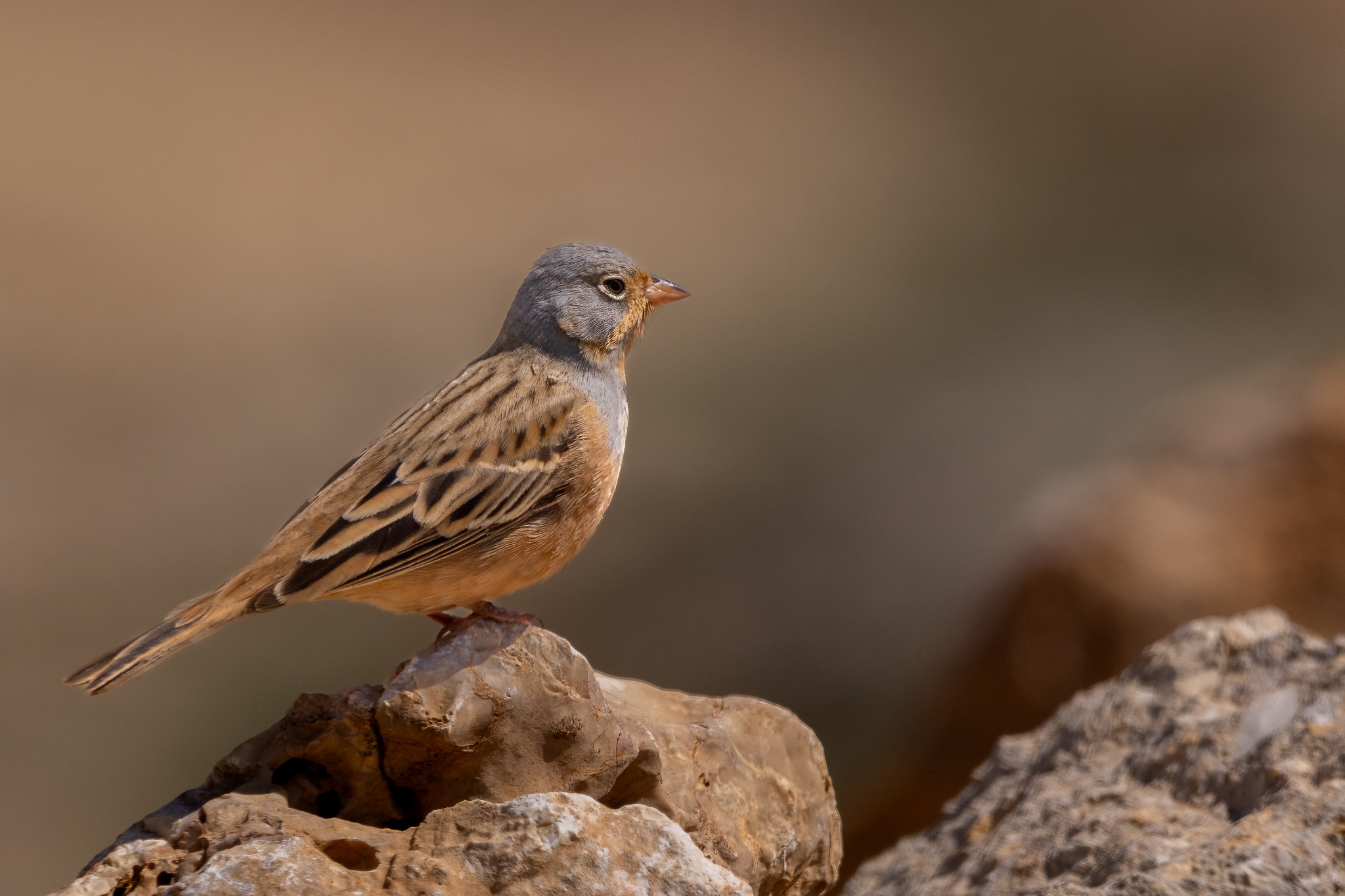 Cretzschmar's Bunting
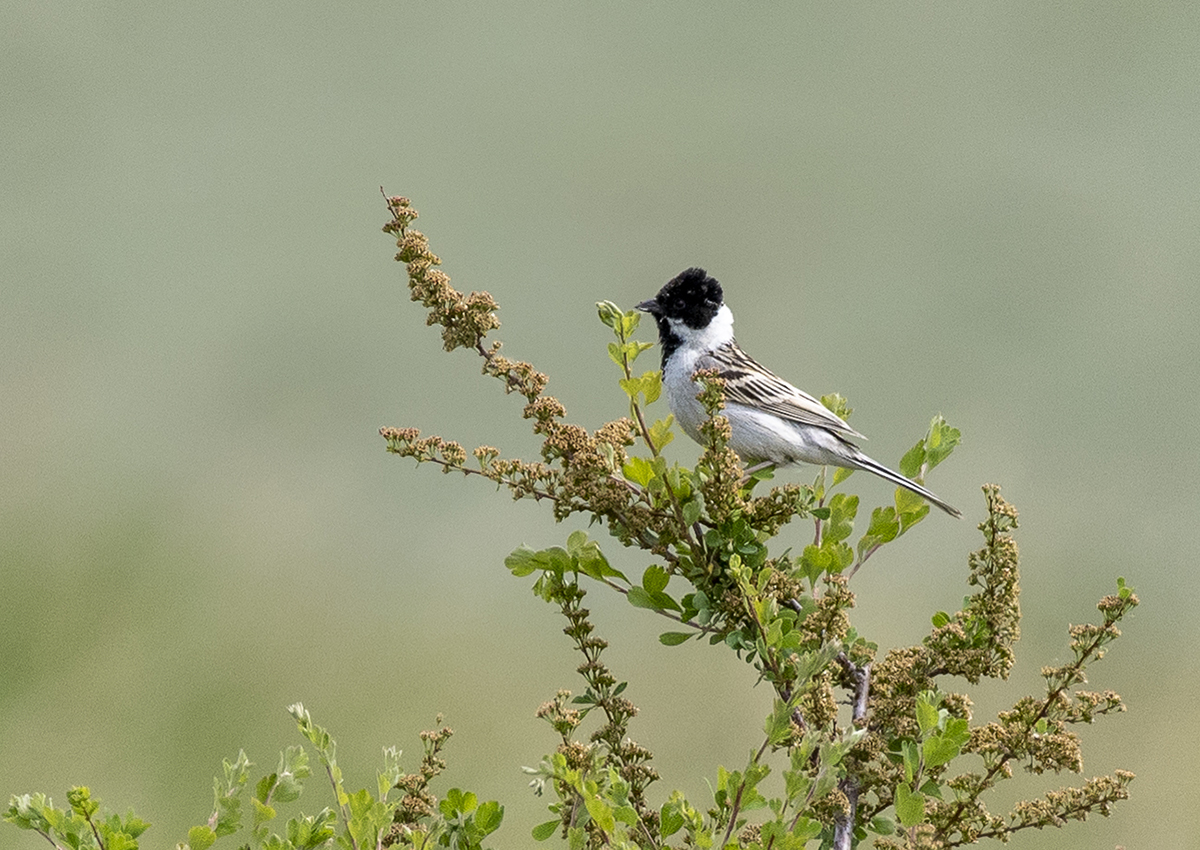 Pallas's Reed Bunting
In short
Cretzschmar's Bunting and Pallas's Reed Bunting are both small buntings, but they differ notably in habitat preference and plumage details. Cretzschmar's Bunting is often found in dry, rocky areas, while Pallas's Reed Bunting prefers reed beds and marshy habitats. Key plumage differences include the head and breast coloration, which are more distinct in Cretzschmar's Bunting.
Identification tips
- Habitat: Check the habitat first; Cretzschmar's in dry, rocky areas vs. Pallas's in reed beds. 2. Head and Breast Color: Look for the bluish-grey head and chestnut breast of male Cretzschmar's. 3. Behavior: Note the foraging behavior; Cretzschmar's is more terrestrial. 4. Plumage Tone: Females are trickier, but Cretzschmar's tends to be warmer-toned.
Size
Both species are similar in size, typical of small buntings.
Plumage
Cretzschmar's Bunting males have a distinctive bluish-grey head and chestnut breast, whereas Pallas's Reed Bunting males have a more subdued brownish head with a less contrasting breast. Females of both species are more similar, with streaked brown plumage, but Cretzschmar's tends to have a warmer tone.
Behaviour
Cretzschmar's Bunting is often seen foraging on the ground in open, rocky areas, while Pallas's Reed Bunting is more likely to be found in dense reed beds.
Habitat
Cretzschmar's Bunting prefers dry, rocky, and open habitats, whereas Pallas's Reed Bunting is typically found in wetland areas, particularly reed beds and marshes.
Voice
Vocalizations are not the most reliable way to differentiate these species in the field, as both have typical bunting-like songs and calls. However, Cretzschmar's Bunting's song is more melodic.
Cretzschmar's Bunting · Pallas's Reed Bunting · My Tricky Birds