
Dark-fronted Babbler vs Black-chinned Babbler
Dumetia atriceps versus Cyanoderma pyrrhops
Play a quiz with Dark-fronted Babbler and Black-chinned Babbler
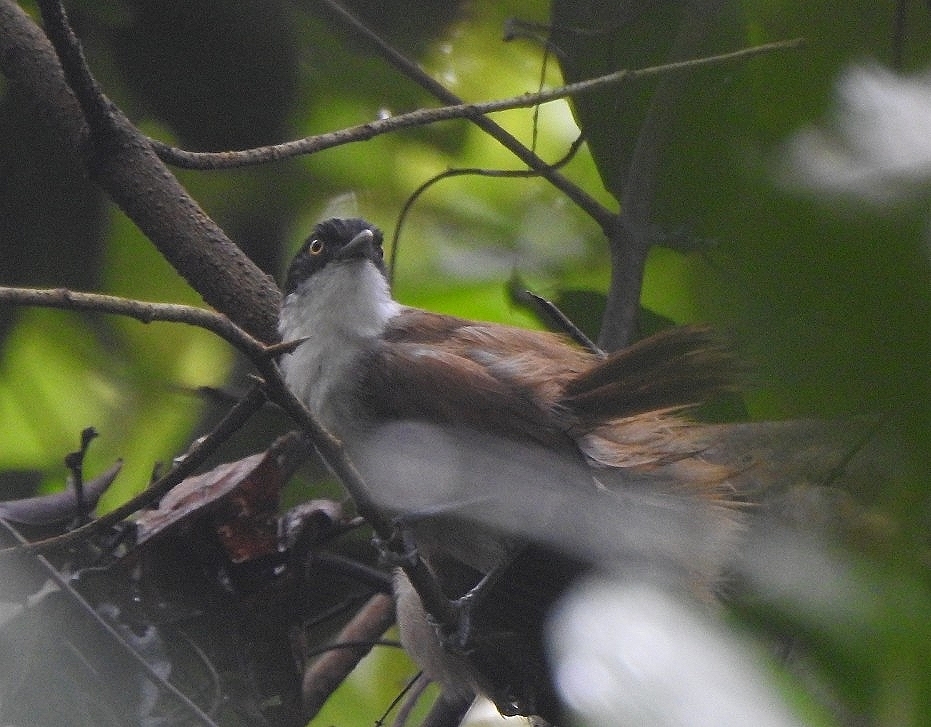 Dark-fronted Babbler
 Black-chinned Babbler
In short
The Dark-fronted Babbler and Black-chinned Babbler can be distinguished primarily by their head markings: the Dark-fronted has a distinct dark cap, while the Black-chinned has a black chin and throat. Both species are small, active babblers often found in similar habitats, making head pattern the most reliable field mark.
Identification tips
- Look for the dark cap on the Dark-fronted Babbler. 2. Check for the black chin and throat on the Black-chinned Babbler. 3. Observe behavior and habitat, as both are similar and may not aid in differentiation. 4. Use vocalizations cautiously, as they are not well-documented for these species.
Size
Both species are small and similar in size, typical of babblers.
Plumage
The Dark-fronted Babbler has a dark cap that contrasts with its lighter body, while the Black-chinned Babbler features a black chin and throat with a more uniform body coloration. Both have subtle brownish tones overall.
Behaviour
Both species are active and often found in small groups, moving through undergrowth and low vegetation.
Habitat
Both species inhabit dense undergrowth in forests and scrubby areas, often overlapping in distribution.
Voice
Vocalizations are not well-documented for these species, and may not be a reliable distinguishing feature in the field.
Dark-fronted Babbler · Black-chinned Babbler · My Tricky Birds