Birdr

Desert Wheatear vs Red-rumped Wheatear

Oenanthe deserti versus Oenanthe moesta

Play a quiz with Desert Wheatear and Red-rumped Wheatear

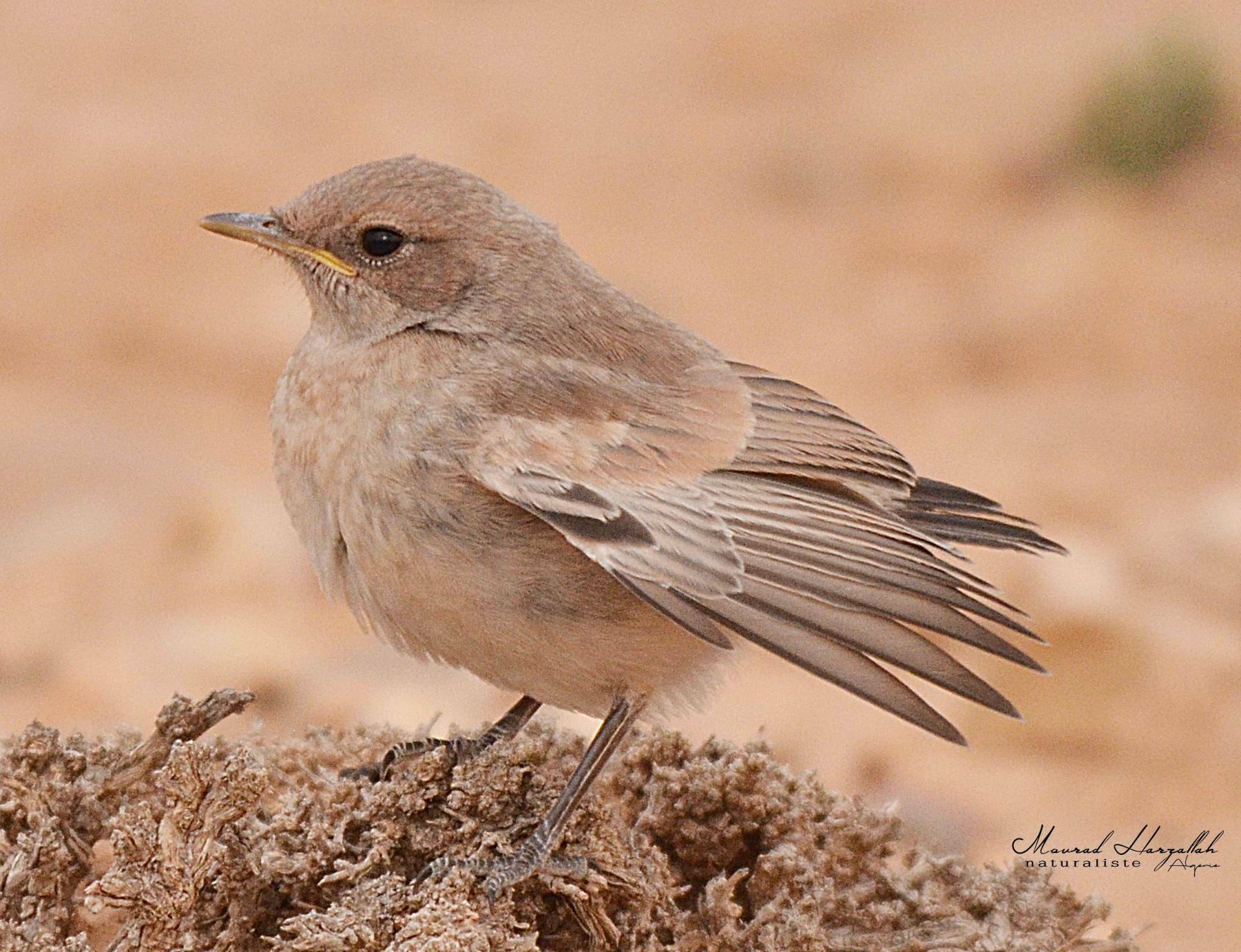
Desert Wheatear (Oenanthe deserti) Desert Wheatear
Red-rumped Wheatear (Oenanthe moesta) Red-rumped Wheatear

Media

Loading…

In short

The Desert Wheatear and Red-rumped Wheatear are both small, ground-dwelling birds found in arid regions. The most reliable field mark is the tail pattern: the Desert Wheatear has a black tail with a white base, while the Red-rumped Wheatear has a rufous rump and tail. Both species are similar in size and structure, making plumage and tail pattern key for identification.

Identification tips

  1. Tail Pattern: Look for the black tail with a white base in Desert Wheatear versus the rufous rump and tail in Red-rumped Wheatear. 2. Plumage: Note the more uniform sandy color in Desert Wheatear compared to the Red-rumped Wheatear's rufous tones. 3. Habitat Overlap: Be aware that both species can be found in similar arid environments, so rely on visual cues rather than habitat alone.

Size

Both species are similar in size, typical of small wheatears.

Plumage

The Desert Wheatear has a more uniform sandy coloration with a distinctive black tail and white base. In contrast, the Red-rumped Wheatear features a rufous rump and tail, which is a key differentiator.

Behaviour

Both species exhibit similar ground-dwelling behavior, often seen perched on rocks or low shrubs.

Habitat

Both species inhabit arid and semi-arid regions, often overlapping in range, which can complicate identification based solely on habitat.

Voice

Vocalizations are not distinctly different enough to be a reliable field mark for separation.

Submit a better description

Use the same sections as the comparison. Your text is published immediately.

The Desert Wheatear and Red-rumped Wheatear are both small, ground-dwelling birds found in arid regions. The most reliable field mark is the tail pattern: the Desert Wheatear has a black tail with a white base, while the Red-rumped Wheatear has a rufous rump and tail. Both species are similar in size and structure, making plumage and tail pattern key for identification.

  1. Tail Pattern: Look for the black tail with a white base in Desert Wheatear versus the rufous rump and tail in Red-rumped Wheatear. 2. Plumage: Note the more uniform sandy color in Desert Wheatear compared to the Red-rumped Wheatear's rufous tones. 3. Habitat Overlap: Be aware that both species can be found in similar arid environments, so rely on visual cues rather than habitat alone.

Both species are similar in size, typical of small wheatears.

The Desert Wheatear has a more uniform sandy coloration with a distinctive black tail and white base. In contrast, the Red-rumped Wheatear features a rufous rump and tail, which is a key differentiator.

Both species exhibit similar ground-dwelling behavior, often seen perched on rocks or low shrubs.

Both species inhabit arid and semi-arid regions, often overlapping in range, which can complicate identification based solely on habitat.

Vocalizations are not distinctly different enough to be a reliable field mark for separation.

Discard your changes?

You have unsaved edits. If you leave now, those changes will be lost.

Desert Wheatear · Red-rumped Wheatear · My Tricky Birds