
Eastern Crested Guineafowl vs Western Crested Guineafowl
Guttera pucherani versus Guttera verreauxi
Play a quiz with Eastern Crested Guineafowl and Western Crested Guineafowl
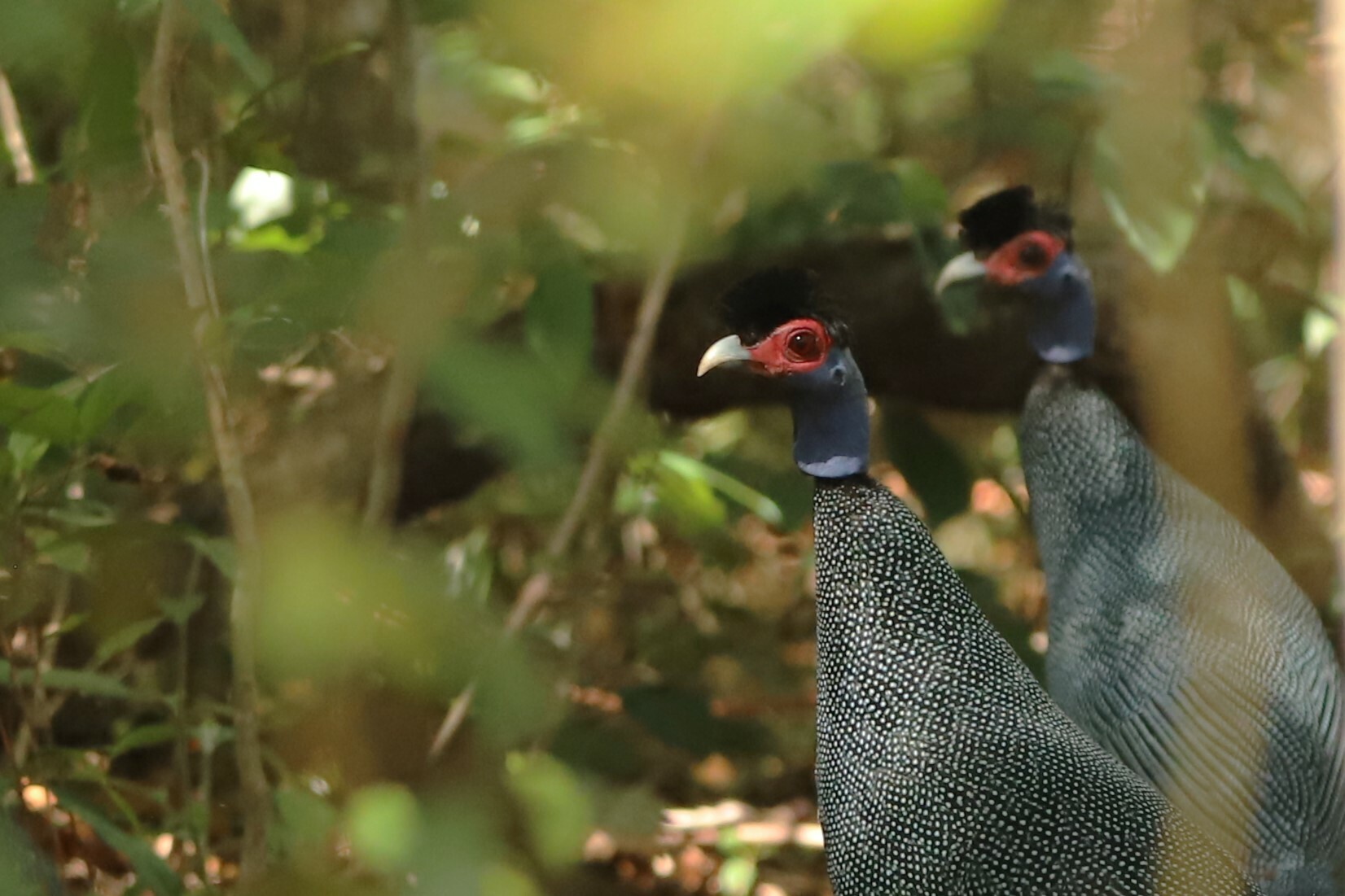 Eastern Crested Guineafowl
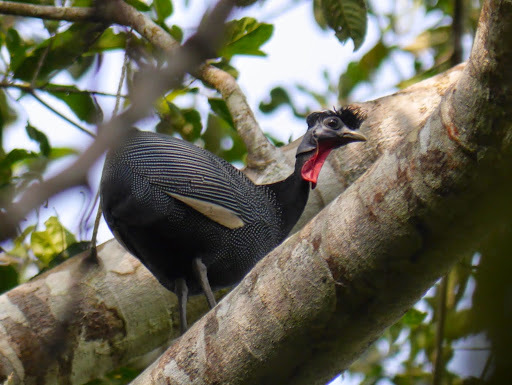 Western Crested Guineafowl
In short
The Eastern and Western Crested Guineafowl are best distinguished by the color of the bare skin on their head and neck. Both species share similar body structure and plumage patterns, making these head and neck color differences crucial for identification.
Identification tips
- Focus on the color of the bare skin on the head and neck for reliable identification. 2. Observe the overall plumage pattern, but note that it is quite similar between the two species. 3. Consider the habitat and social behavior, which are similar but can provide context for identification.
Size
Both species are similar in size, typical of guineafowl, with no significant differences noted.
Plumage
Both species have similar plumage with dark bodies speckled with white spots. The main difference lies in the color of the bare skin on the head and neck, which is more distinctive in the field.
Behaviour
Both species are ground-dwelling omnivores that forage for plant matter and invertebrates. They nest on the ground and exhibit similar social behaviors, often forming large groups post-breeding.
Habitat
Both species inhabit similar environments, typically found in forested or wooded areas.
Voice
There are no significant differences in vocalizations noted between the two species.
Eastern Crested Guineafowl · Western Crested Guineafowl · My Tricky Birds