
Eastern Wattled-Honeyeater vs Polynesian Starling
Foulehaio carunculatus versus Aplonis tabuensis
Play a quiz with Eastern Wattled-Honeyeater and Polynesian Starling
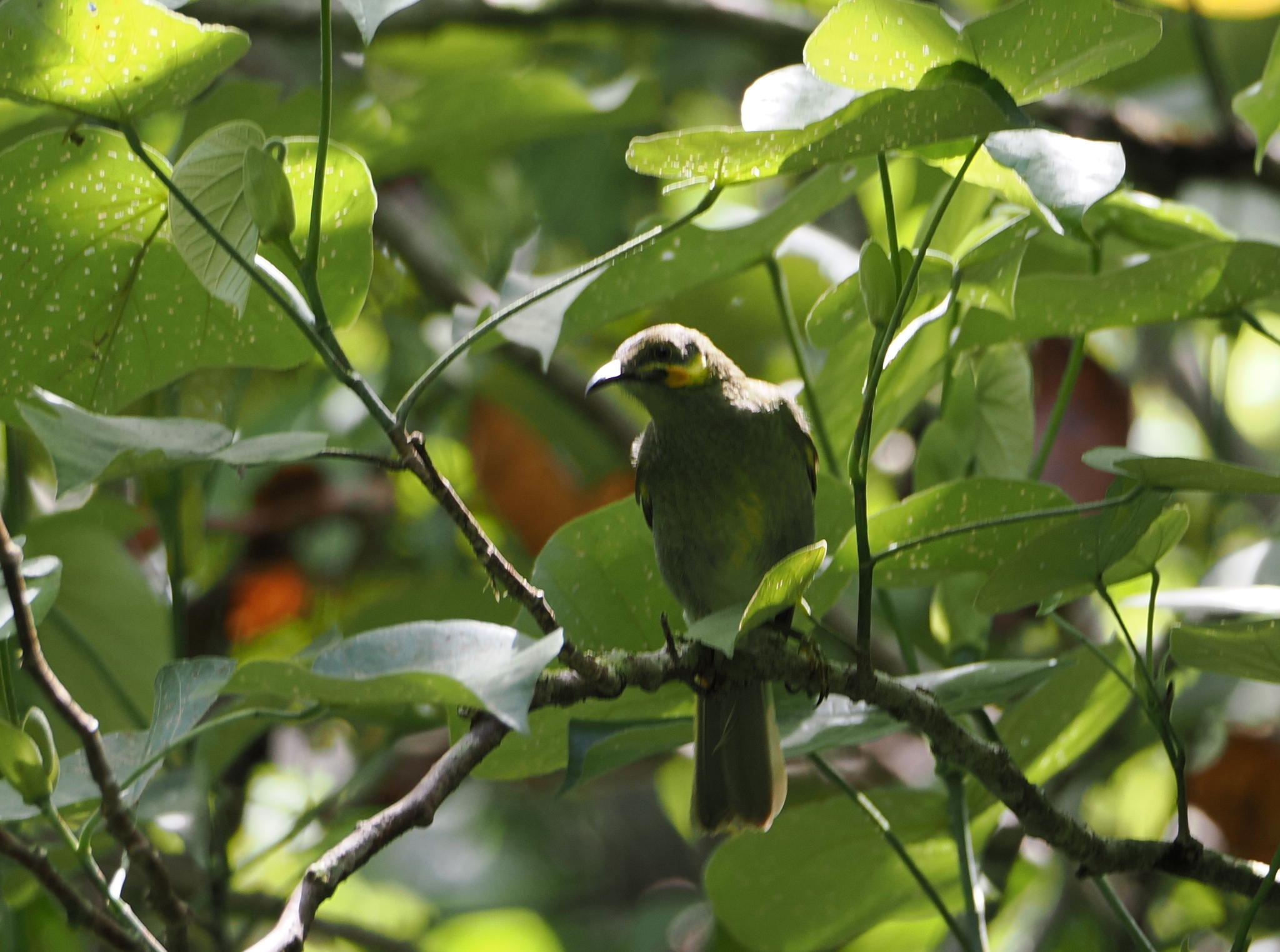 Eastern Wattled-Honeyeater
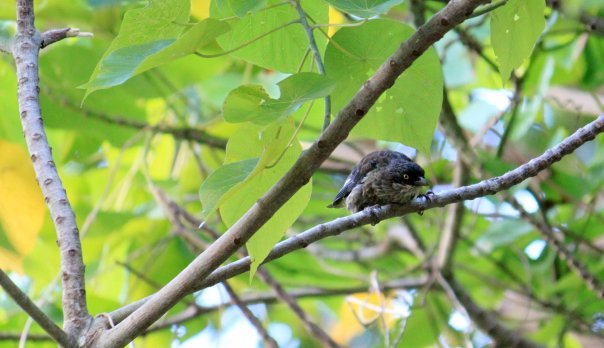 Polynesian Starling
In short
The Eastern Wattled-Honeyeater and Polynesian Starling can be differentiated by their bill shape and facial features. The honeyeater has a distinct wattle on its face, while the starling lacks this feature and has a more typical starling appearance. Both species inhabit similar environments, but their behaviors and vocalizations differ.
Identification tips
- Look for the facial wattle on the Eastern Wattled-Honeyeater. 2. Note the bill shape: slender and curved in honeyeaters, more robust in starlings. 3. Observe plumage: olive-green in honeyeaters vs. dark glossy in starlings. 4. Listen for vocalizations: more melodious in honeyeaters. 5. Consider feeding behavior: honeyeaters often in flowering trees, starlings in varied habitats.
Size
Both species are similar in size, but the Polynesian Starling may appear slightly bulkier due to its more robust body structure.
Plumage
The Eastern Wattled-Honeyeater has a more olive-green plumage with a noticeable facial wattle, whereas the Polynesian Starling is generally darker with a glossy sheen and lacks any facial wattles.
Behaviour
The Eastern Wattled-Honeyeater is more likely to be seen feeding on nectar and insects, often in flowering trees. The Polynesian Starling, on the other hand, may be observed foraging for fruits and insects, often in more varied habitats.
Habitat
Both species can be found in forested areas, but the Eastern Wattled-Honeyeater is more specialized in its habitat preference, often found in areas with abundant flowering plants.
Voice
The Eastern Wattled-Honeyeater has a more melodious and varied song compared to the harsher calls of the Polynesian Starling.
Eastern Wattled-Honeyeater · Polynesian Starling · My Tricky Birds