Birdr

Egyptian Goose vs Wood Duck

Alopochen aegyptiaca versus Aix sponsa

Play a quiz with Egyptian Goose and Wood Duck
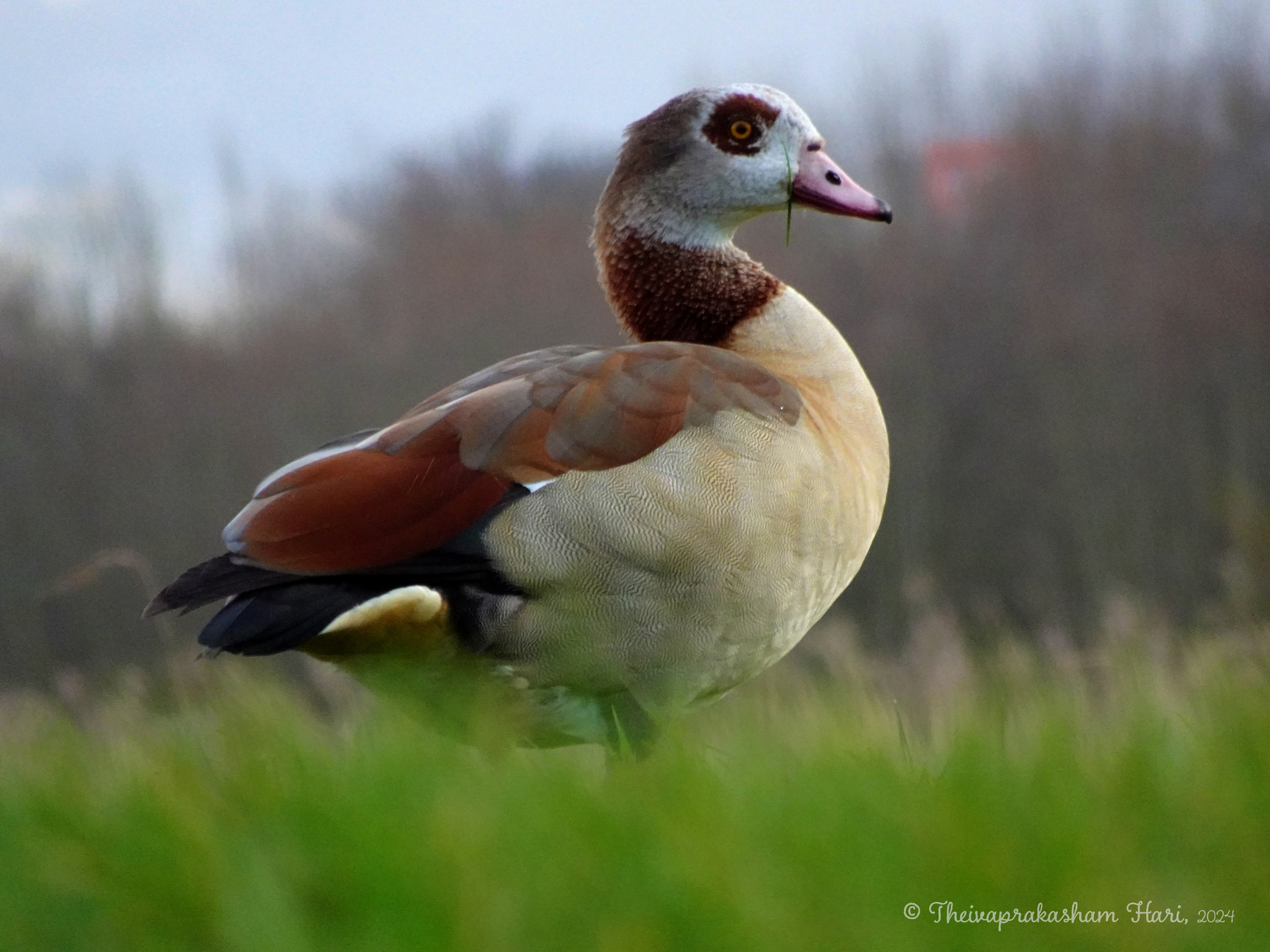
Egyptian Goose (Alopochen aegyptiaca) Egyptian Goose
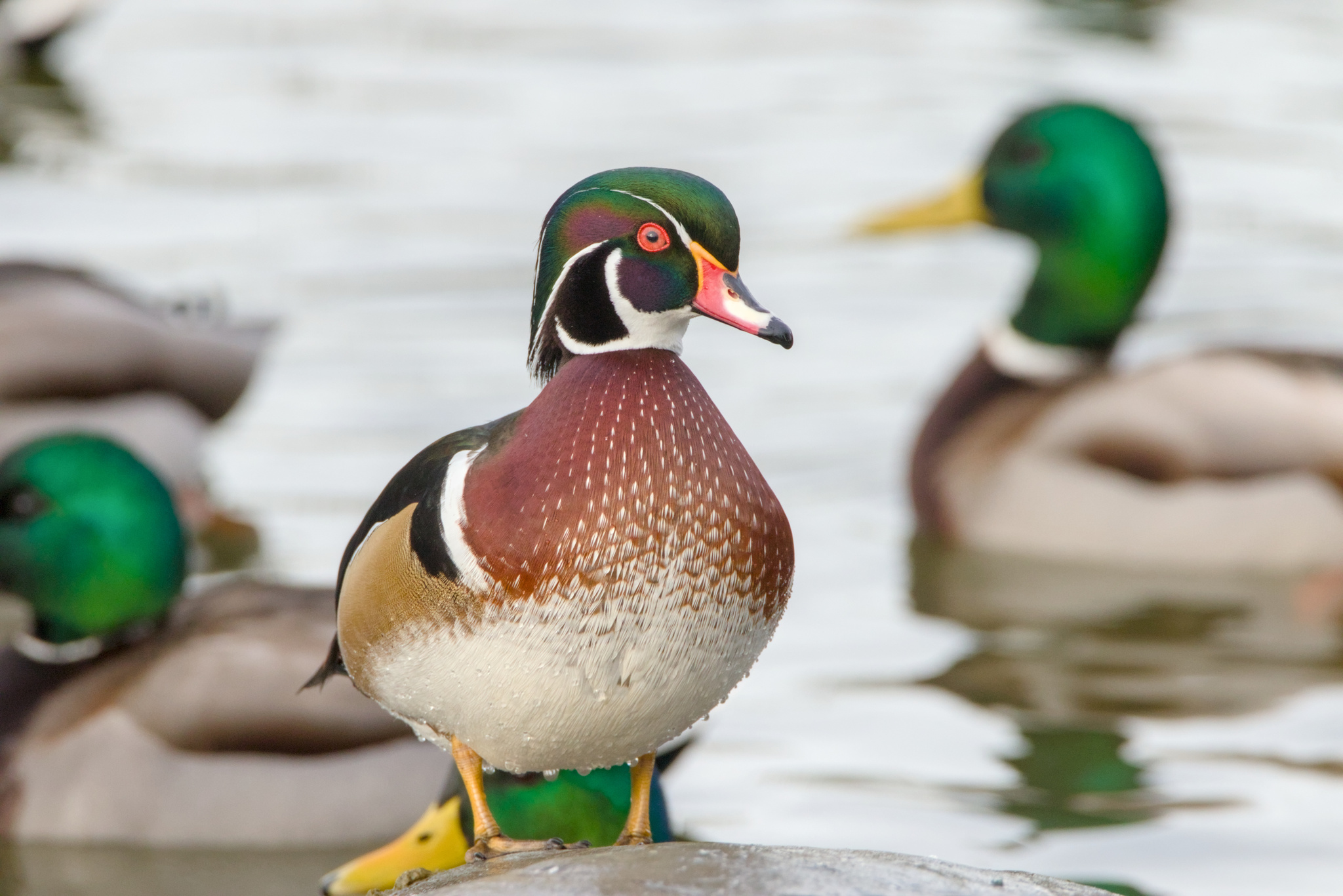
Wood Duck (Aix sponsa) Wood Duck

Media

Loading…

In short

The Egyptian Goose and Wood Duck are both medium-sized waterfowl, but they differ notably in plumage and habitat preferences. The Egyptian Goose is more terrestrial with a distinctive facial pattern, while the Wood Duck is adapted to wooded wetlands with striking iridescent plumage.

Identification tips

1. Facial Pattern: Look for the dark eye patch on the Egyptian Goose versus the white throat markings on the Wood Duck. 2. Plumage: Note the chestnut patches on the Egyptian Goose compared to the iridescent colors of the Wood Duck. 3. Habitat: Observe the environment; Egyptian Geese are more likely in open areas, while Wood Ducks are found in wooded wetlands. 4. Behavior: Egyptian Geese are often seen on land, while Wood Ducks may be spotted in trees or near tree cavities.

Size

Both species are similar in size, but the Egyptian Goose is slightly larger and bulkier than the Wood Duck.

Plumage

The Egyptian Goose has a pale body with a distinctive dark eye patch and chestnut patches on the chest and wings. In contrast, the Wood Duck is known for its iridescent plumage, with males displaying a glossy green head, white throat markings, and chestnut breast.

Behaviour

Egyptian Geese are often seen grazing on land, while Wood Ducks are more arboreal, frequently perching in trees and using cavities for nesting.

Habitat

Egyptian Geese are found in open areas near water, such as lakes and rivers, while Wood Ducks prefer wooded swamps and freshwater marshes.

Voice

The Egyptian Goose has a loud, honking call, whereas the Wood Duck produces a high-pitched, rising whistle.

Submit a better description

Use the same sections as the comparison. Your text is published immediately.

The Egyptian Goose and Wood Duck are both medium-sized waterfowl, but they differ notably in plumage and habitat preferences. The Egyptian Goose is more terrestrial with a distinctive facial pattern, while the Wood Duck is adapted to wooded wetlands with striking iridescent plumage.

1. Facial Pattern: Look for the dark eye patch on the Egyptian Goose versus the white throat markings on the Wood Duck. 2. Plumage: Note the chestnut patches on the Egyptian Goose compared to the iridescent colors of the Wood Duck. 3. Habitat: Observe the environment; Egyptian Geese are more likely in open areas, while Wood Ducks are found in wooded wetlands. 4. Behavior: Egyptian Geese are often seen on land, while Wood Ducks may be spotted in trees or near tree cavities.

Both species are similar in size, but the Egyptian Goose is slightly larger and bulkier than the Wood Duck.

The Egyptian Goose has a pale body with a distinctive dark eye patch and chestnut patches on the chest and wings. In contrast, the Wood Duck is known for its iridescent plumage, with males displaying a glossy green head, white throat markings, and chestnut breast.

Egyptian Geese are often seen grazing on land, while Wood Ducks are more arboreal, frequently perching in trees and using cavities for nesting.

Egyptian Geese are found in open areas near water, such as lakes and rivers, while Wood Ducks prefer wooded swamps and freshwater marshes.

The Egyptian Goose has a loud, honking call, whereas the Wood Duck produces a high-pitched, rising whistle.

Discard your changes?

You have unsaved edits. If you leave now, those changes will be lost.

Egyptian Goose · Wood Duck · My Tricky Birds