Birdr

Egyptian Vulture vs Lappet-faced Vulture

Neophron percnopterus versus Torgos tracheliotos

Play a quiz with Egyptian Vulture and Lappet-faced Vulture
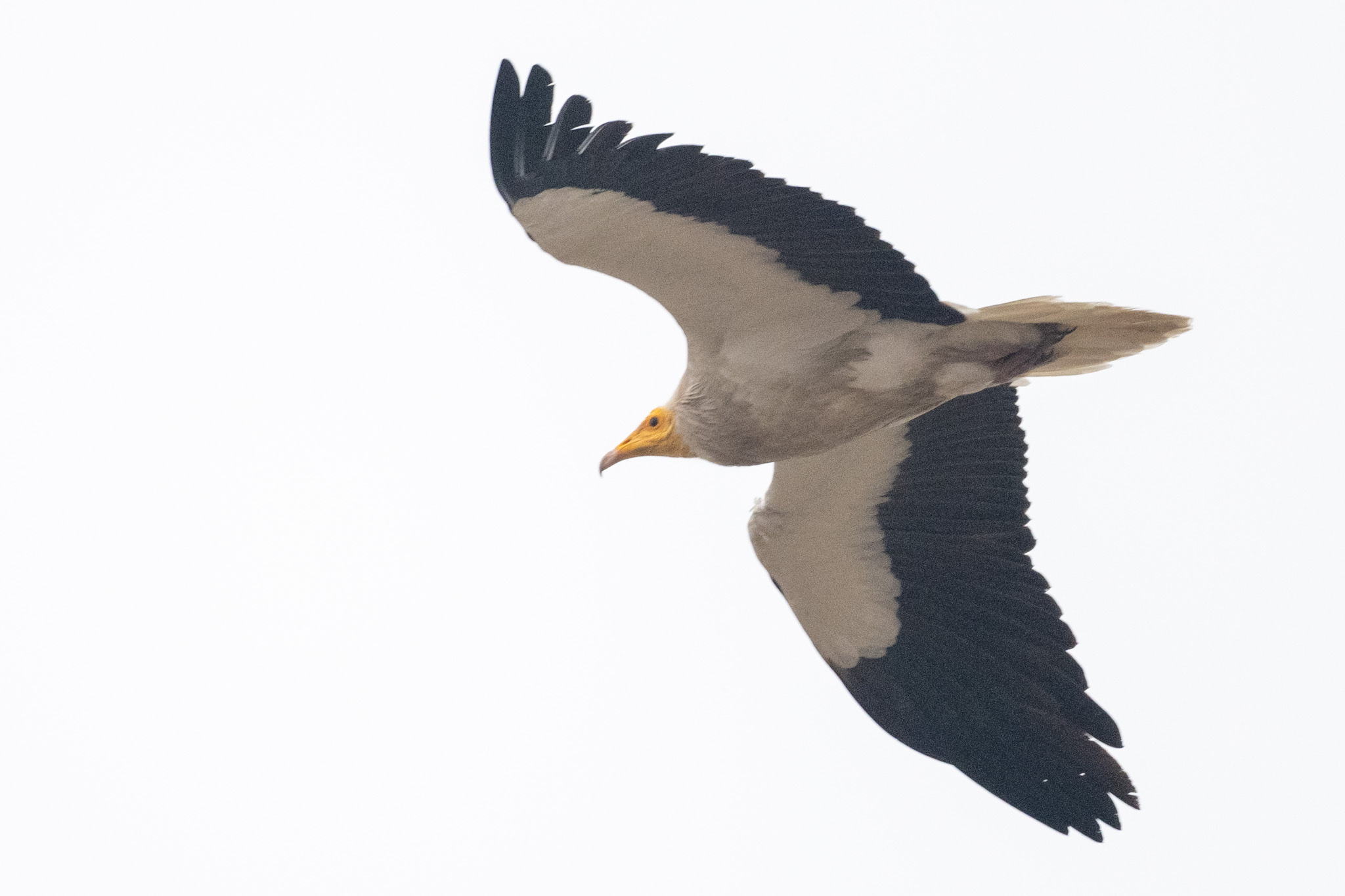
Egyptian Vulture (Neophron percnopterus) Egyptian Vulture
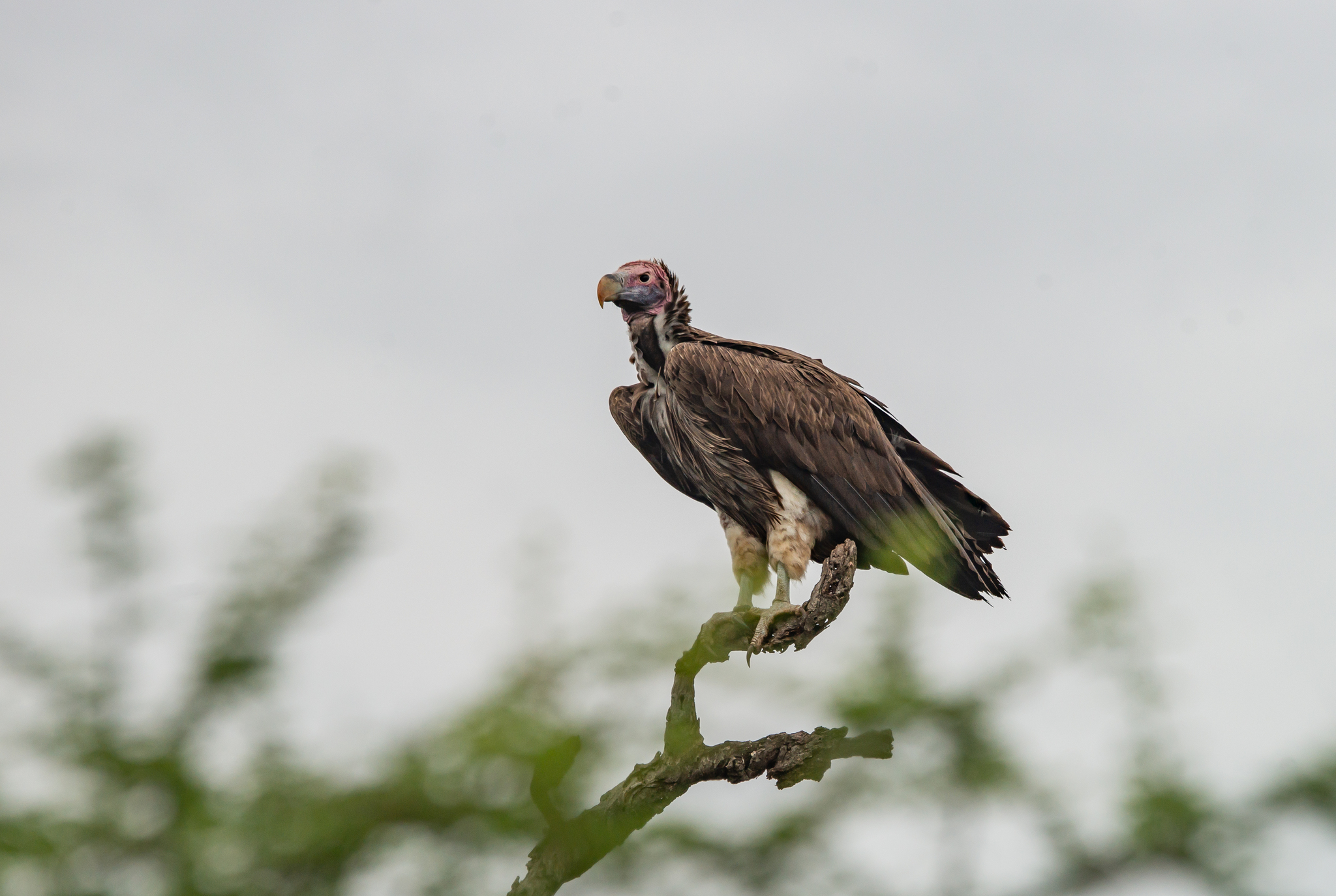
Lappet-faced Vulture (Torgos tracheliotos) Lappet-faced Vulture

Media

Loading…

In short

The Egyptian Vulture is easily distinguished by its smaller size and striking white plumage with black flight feathers, while the Lappet-faced Vulture is much larger, with a predominantly dark plumage and a distinctive bare, red face. Both species are scavengers, but their size and plumage differences are the most reliable field marks.

Identification tips

  1. Look for size: Egyptian Vultures are much smaller. 2. Check plumage: white with black wings for Egyptian, dark for Lappet-faced. 3. Observe the face: yellow and feathered for Egyptian, red and bare for Lappet-faced. 4. Note habitat: Egyptian Vultures are more adaptable to human presence.

Size

The Egyptian Vulture is significantly smaller, with a wingspan of about 1.7 meters, compared to the Lappet-faced Vulture's wingspan of up to 2.9 meters.

Plumage

Egyptian Vultures have white plumage with contrasting black flight feathers and a yellow face. Lappet-faced Vultures have dark brown to black plumage with a bare, red face and large, fleshy lappets.

Behaviour

Both species are scavengers, often seen soaring high in the sky. However, the Lappet-faced Vulture is more dominant at carcasses due to its larger size.

Habitat

Both species inhabit open and semi-arid areas, but the Egyptian Vulture is more likely to be found in a wider range of habitats, including urban areas, while the Lappet-faced Vulture prefers more remote, arid regions.

Voice

Both species are generally silent, but the Lappet-faced Vulture may produce grunts and hisses at carcasses.

Submit a better description

Use the same sections as the comparison. Your text is published immediately.

The Egyptian Vulture is easily distinguished by its smaller size and striking white plumage with black flight feathers, while the Lappet-faced Vulture is much larger, with a predominantly dark plumage and a distinctive bare, red face. Both species are scavengers, but their size and plumage differences are the most reliable field marks.

  1. Look for size: Egyptian Vultures are much smaller. 2. Check plumage: white with black wings for Egyptian, dark for Lappet-faced. 3. Observe the face: yellow and feathered for Egyptian, red and bare for Lappet-faced. 4. Note habitat: Egyptian Vultures are more adaptable to human presence.

The Egyptian Vulture is significantly smaller, with a wingspan of about 1.7 meters, compared to the Lappet-faced Vulture's wingspan of up to 2.9 meters.

Egyptian Vultures have white plumage with contrasting black flight feathers and a yellow face. Lappet-faced Vultures have dark brown to black plumage with a bare, red face and large, fleshy lappets.

Both species are scavengers, often seen soaring high in the sky. However, the Lappet-faced Vulture is more dominant at carcasses due to its larger size.

Both species inhabit open and semi-arid areas, but the Egyptian Vulture is more likely to be found in a wider range of habitats, including urban areas, while the Lappet-faced Vulture prefers more remote, arid regions.

Both species are generally silent, but the Lappet-faced Vulture may produce grunts and hisses at carcasses.

Discard your changes?

You have unsaved edits. If you leave now, those changes will be lost.

Egyptian Vulture · Lappet-faced Vulture · My Tricky Birds