
Eleonora's Falcon vs Peregrine Falcon
Falco eleonorae versus Falco peregrinus
Play a quiz with Eleonora's Falcon and Peregrine Falcon
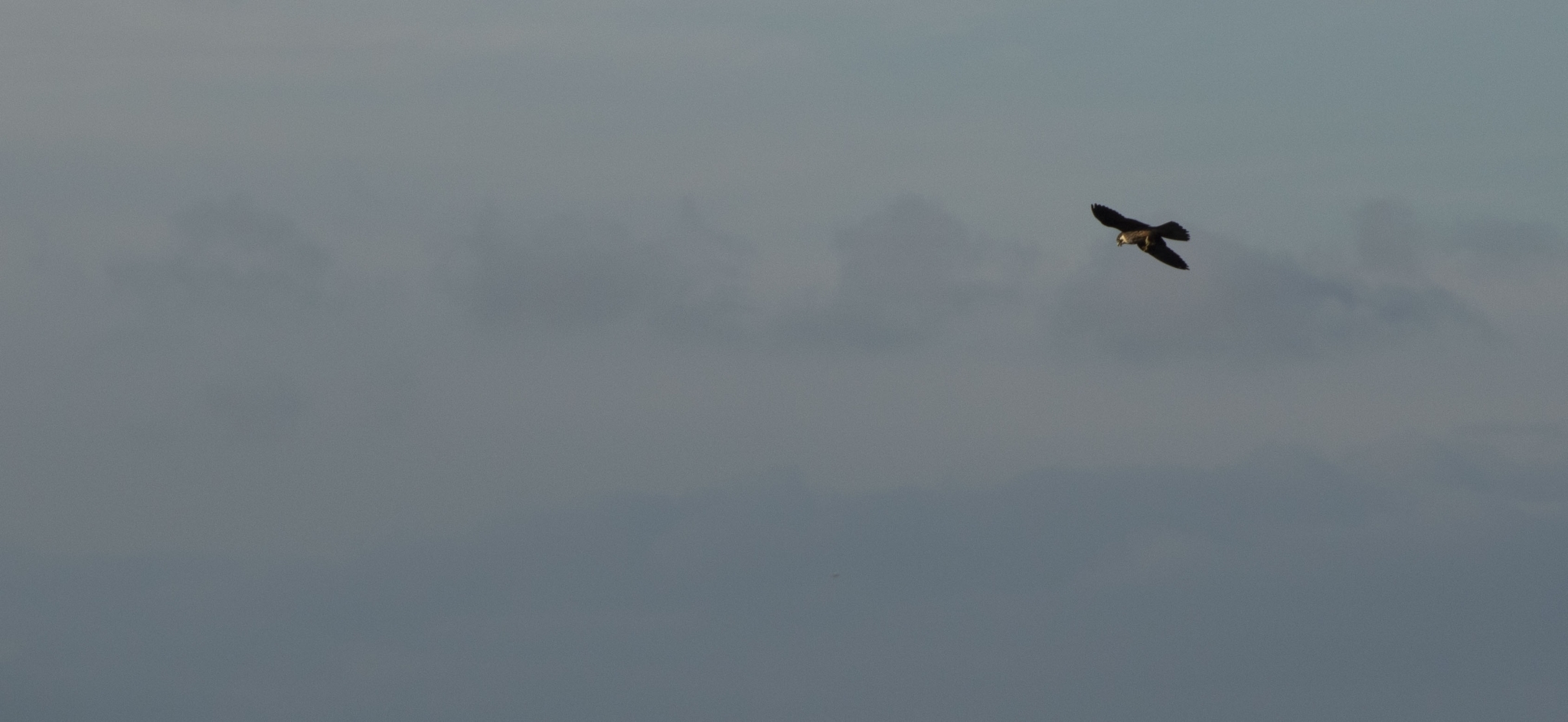 Eleonora's Falcon
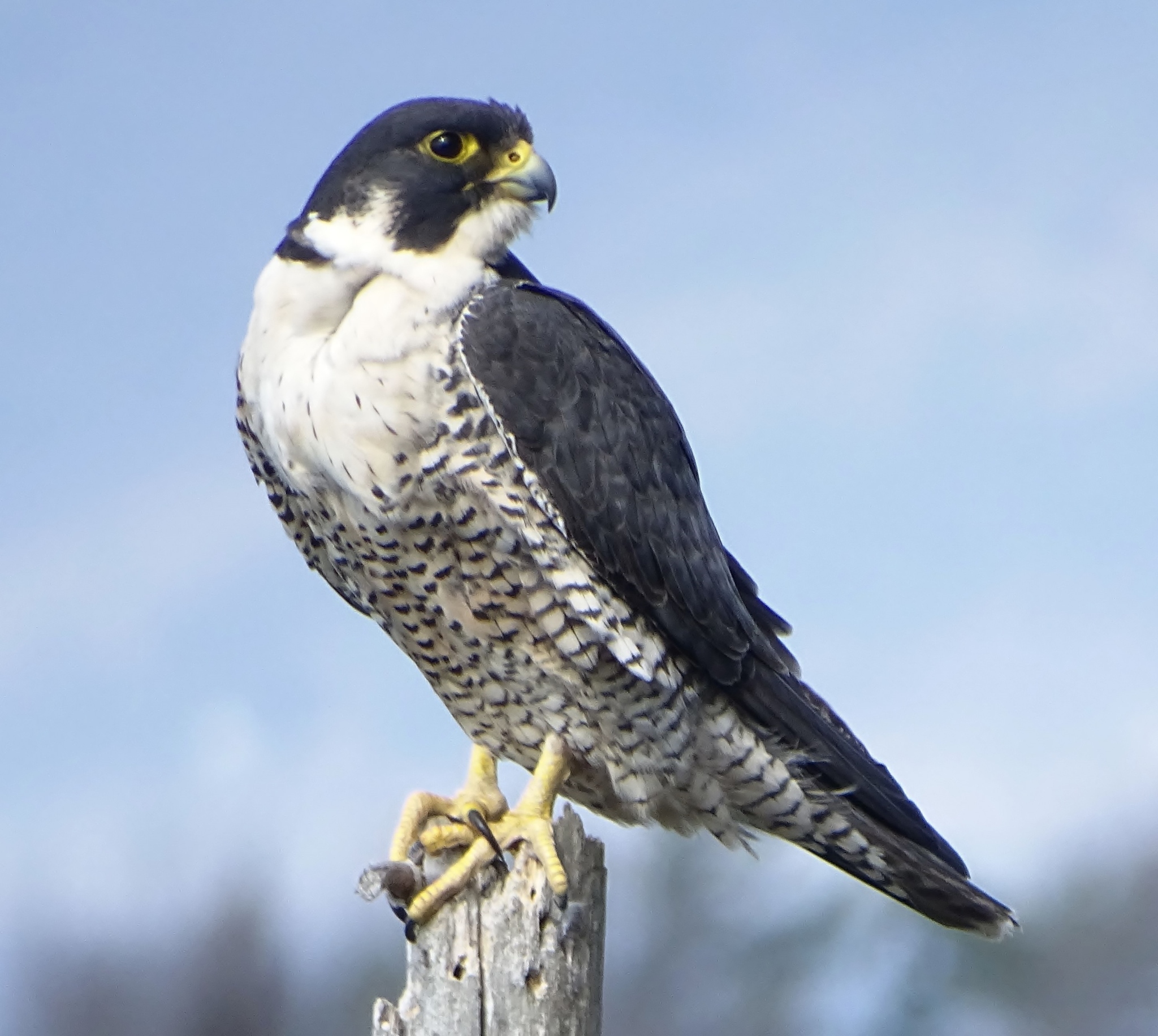 Peregrine Falcon
In short
The Peregrine Falcon (Falco peregrinus) and Eleonora's Falcon (Falco eleonorae) are both members of the falcon family but differ significantly in size, plumage, behavior, and habitat preferences. The Peregrine is renowned for its speed and adaptability to urban environments, while Eleonora's Falcon is more specialized, primarily preying on migrating birds and nesting in colonies on remote islands.
Identification tips
- Birds of the World Similar-Species Diagnostics:
- Peregrine Falcon: "Most North American Peregrines used to nest on cliffs, their establishment as urban denizens... has been dramatic and highly publicized. Increasingly, they use other unconventional nest sites such as old Common Raven nests on electric pylons."
-
Eleonora's Falcon: "An adult Eleonora's Falcon exhibits a brown body with a lighter underside and distinctive barring, as well as a white mustache marking that sets it apart from other falcons."
-
AI Field Diagnostics:
- Size and Shape: Look for the larger size of the Peregrine Falcon compared to Eleonora's Falcon. The Peregrine also has a more robust body and wider wings.
- Plumage Patterns: Identify the blue-gray back and streaked breast of the Peregrine. In contrast, Eleonora's Falcons are more uniformly brown and have less distinctive streaking.
- Behavioral Cues: Observe hunting behavior; if the falcon is hunting at dusk and targeting flocks of small birds, it is likely an Eleonora's. If it is soaring high or diving rapidly, it is likely a Peregrine.
- Habitat: Note the nesting sites; Peregrines are often found in urban settings or cliffs near human structures, while Eleonora's prefer isolated islands or cliffs away from human activity.
- Vocalizations: Pay attention to calls; the Peregrine's sharp, rapid calls contrast with the softer, plaintive calls of Eleonora's Falcon.
By focusing on these distinct characteristics, birdwatchers can effectively differentiate between the Peregrine Falcon and Eleonora's Falcon in the field.
Size
- Peregrine Falcon: Adult Peregrine Falcons typically measure between 15 to 20 inches (38 to 50 cm) in length with a wingspan of about 3.3 to 3.6 feet (1.0 to 1.1 m). They exhibit sexual dimorphism, with females being larger than males.
- Eleonora's Falcon: Eleonora's Falcons are slightly smaller, measuring about 13 to 16 inches (33 to 40 cm) in length and having a wingspan of 2.6 to 3.0 feet (0.8 to 0.9 m). They also display sexual dimorphism, but the size difference is less pronounced than in Peregrines.
Plumage
- Peregrine Falcon: Adults possess a characteristic blue-gray plumage on the back with a pale underside that is streaked with dark spots. The face features a distinct black "mustache" marking. Juveniles are brown and streaked, resembling adults but with a more mottled appearance.
- Eleonora's Falcon: Adults are largely brown with a lighter underside and more pronounced barring. They have a distinctive white mustache mark and a less robust face pattern compared to Peregrines. Their juvenile plumage is similarly streaky but can be distinguished by their more uniform brown coloration.
Behaviour
- Peregrine Falcon: Known for their incredible speed, Peregrines can reach over 240 mph (386 km/h) during hunting stoops (high-speed dives). They are versatile hunters, often preying on birds in flight and can adapt well to urban settings, often nesting on skyscrapers and bridges.
- Eleonora's Falcon: Unlike the Peregrine, Eleonora's Falcon primarily hunts during the migration season, specifically targeting small birds. They have a unique hunting strategy, often hunting at dusk, which is atypical for falcons. They are also known to nest in colonies on cliff ledges or isolated islands.
Habitat
- Peregrine Falcon: This species inhabits a wide range of environments, including coastal areas, mountains, and increasingly urban landscapes. They prefer open spaces for hunting but will nest on cliffs and high-rise structures.
- Eleonora's Falcon: Prefers more remote habitats, often found in Mediterranean regions on rocky islands or cliffs. They are less adaptable to urban environments compared to Peregrines.
Voice
- Peregrine Falcon: Their call is a series of short, harsh "kak-kak-kak" sounds. They are generally more vocal during the breeding season and when defending their territory.
- Eleonora's Falcon: Their calls are less frequent and consist of a softer, more plaintive "kree-kree" sound, particularly during the breeding season.