
Emperor Goose vs Upland Goose
Anser canagicus versus Chloephaga picta
Play a quiz with Emperor Goose and Upland Goose
 Emperor Goose
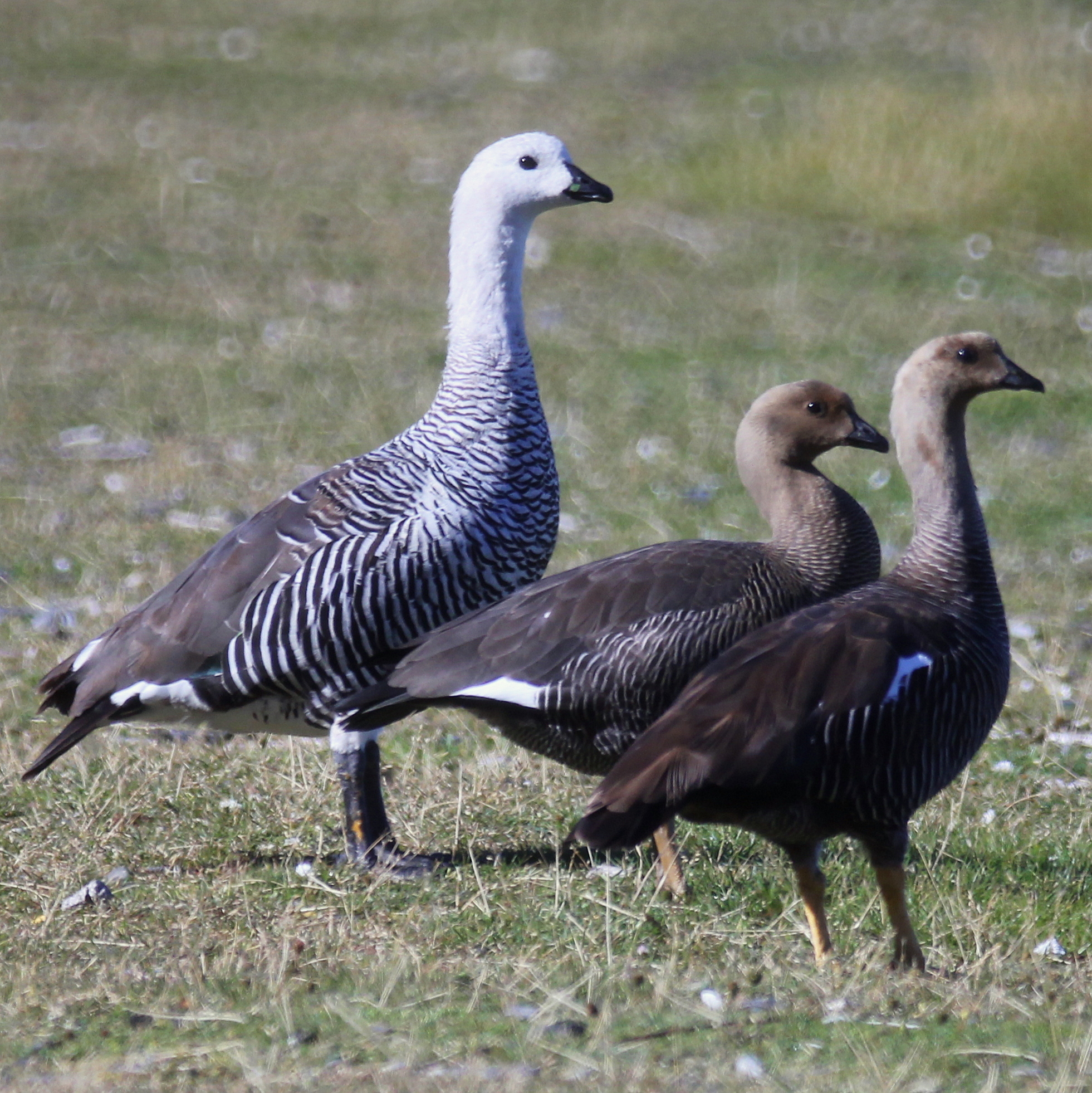 Upland Goose
In short
The Emperor Goose is distinguished by its striking white head and neck, contrasting with its dark body, while the Upland Goose features a more uniform plumage with a white chest and belly. Both species are part of the Anatidae family but differ significantly in habitat and behavior, aiding in field identification.
Identification tips
1. Head and Neck: Look for the white head and neck of the Emperor Goose versus the white chest and belly of the male Upland Goose. 2. Habitat: Consider the habitat; Emperor Geese are coastal, while Upland Geese are terrestrial. 3. Grouping: Upland Geese are more likely to be seen in pairs or small groups, whereas Emperor Geese are often solitary or in small flocks. 4. Vocalizations: Listen for the low calls of the Emperor Goose compared to the higher-pitched calls of the Upland Goose.
Size
Emperor Goose is medium-sized, similar in size to the Upland Goose, but the Upland Goose may appear slightly bulkier due to its stockier build.
Plumage
Emperor Goose has a distinctive white head and neck with a dark, barred body. In contrast, the male Upland Goose has a white chest and belly with a grey back, while the female is brown with dark barring.
Behaviour
Emperor Geese are often seen in coastal areas and are less likely to be found in large flocks compared to Upland Geese, which are more terrestrial and often found in pairs or small groups.
Habitat
Emperor Geese inhabit coastal tundra and are often found near water bodies in Alaska and northeastern Russia. Upland Geese prefer open grasslands and pastures in southern South America.
Voice
Emperor Goose calls are generally low and guttural, while Upland Goose vocalizations are higher-pitched and more varied, often described as whistling or honking.