
Eurasian Coot vs Demoiselle Crane
Fulica atra versus Grus virgo
Play a quiz with Eurasian Coot and Demoiselle Crane
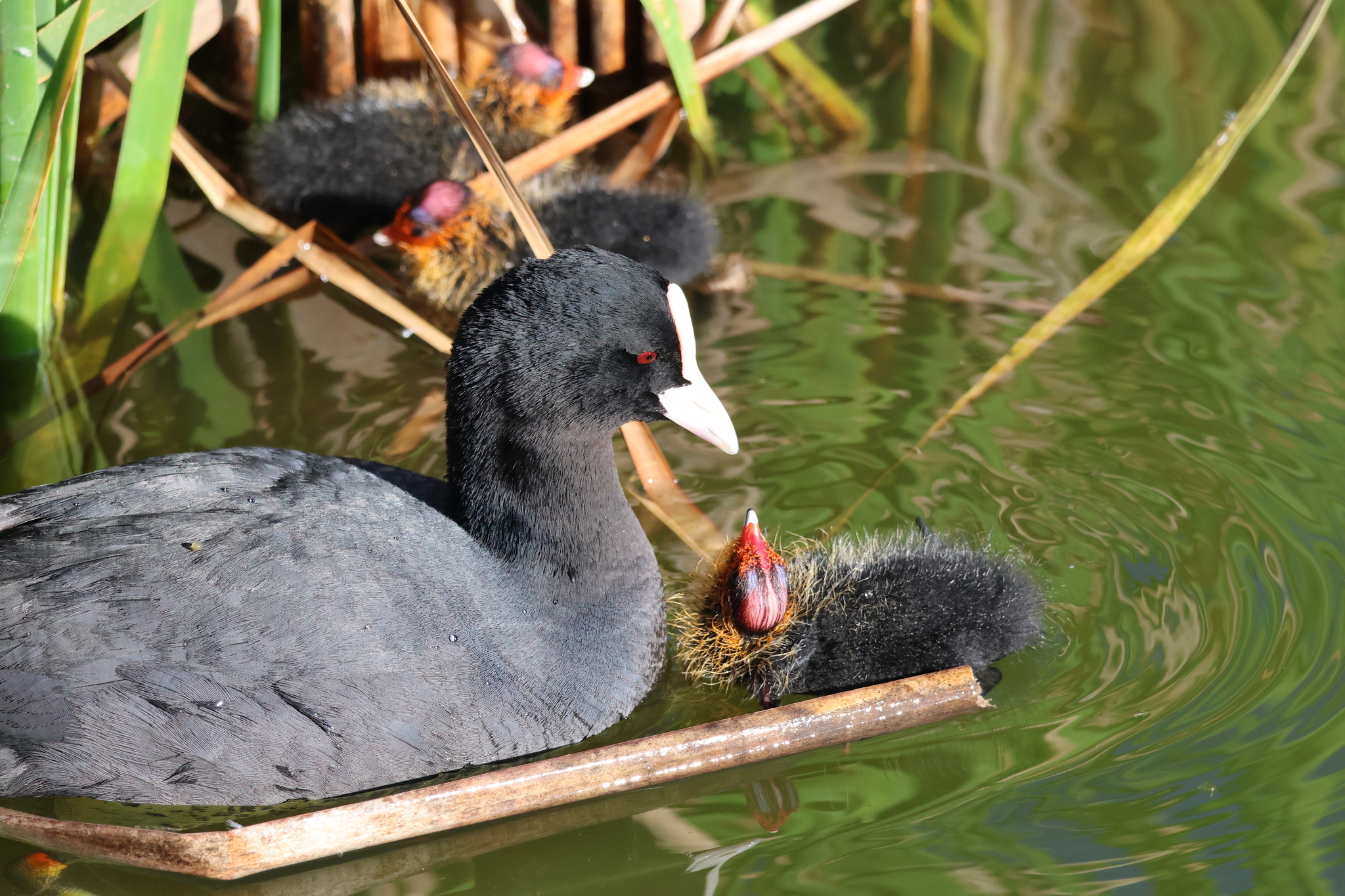 Eurasian Coot
 Demoiselle Crane
In short
The Eurasian Coot and Demoiselle Crane are easily distinguished by size and structure. The coot is a small, dark waterbird with a distinctive white frontal shield, while the crane is a tall, elegant bird with long legs and neck, and a striking black and white head pattern.
Identification tips
- Size and Shape: Look for the smaller, round-bodied coot with a white frontal shield versus the tall, slender crane with long legs and neck. 2. Plumage: Note the coot's uniform dark color with a white bill, contrasting with the crane's gray body and black-and-white head. 3. Habitat: Coots are in water bodies, cranes in open fields. 4. Vocalization: Listen for the coot's varied calls versus the crane's trumpeting sounds.
Size
The Eurasian Coot is much smaller, about the size of a duck, whereas the Demoiselle Crane is significantly larger, standing as tall as a large heron.
Plumage
Eurasian Coots are mostly dark gray to black with a white bill and frontal shield. Demoiselle Cranes have a light gray body, with a black neck and face, and a white line extending from the eye to the back of the head.
Behaviour
Eurasian Coots are often seen swimming in water, diving for food, or walking on land near water bodies. Demoiselle Cranes are typically seen walking in open fields or flying in flocks during migration.
Habitat
Eurasian Coots prefer freshwater habitats like lakes and ponds with emergent vegetation. Demoiselle Cranes are found in open grasslands, steppes, and agricultural fields.
Voice
Eurasian Coots have raucous and complex calls, while Demoiselle Cranes produce loud, trumpeting calls that are often heard during flight.