Birdr

Eurasian Coot vs Western Swamphen

Fulica atra versus Porphyrio porphyrio

Play a quiz with Eurasian Coot and Western Swamphen
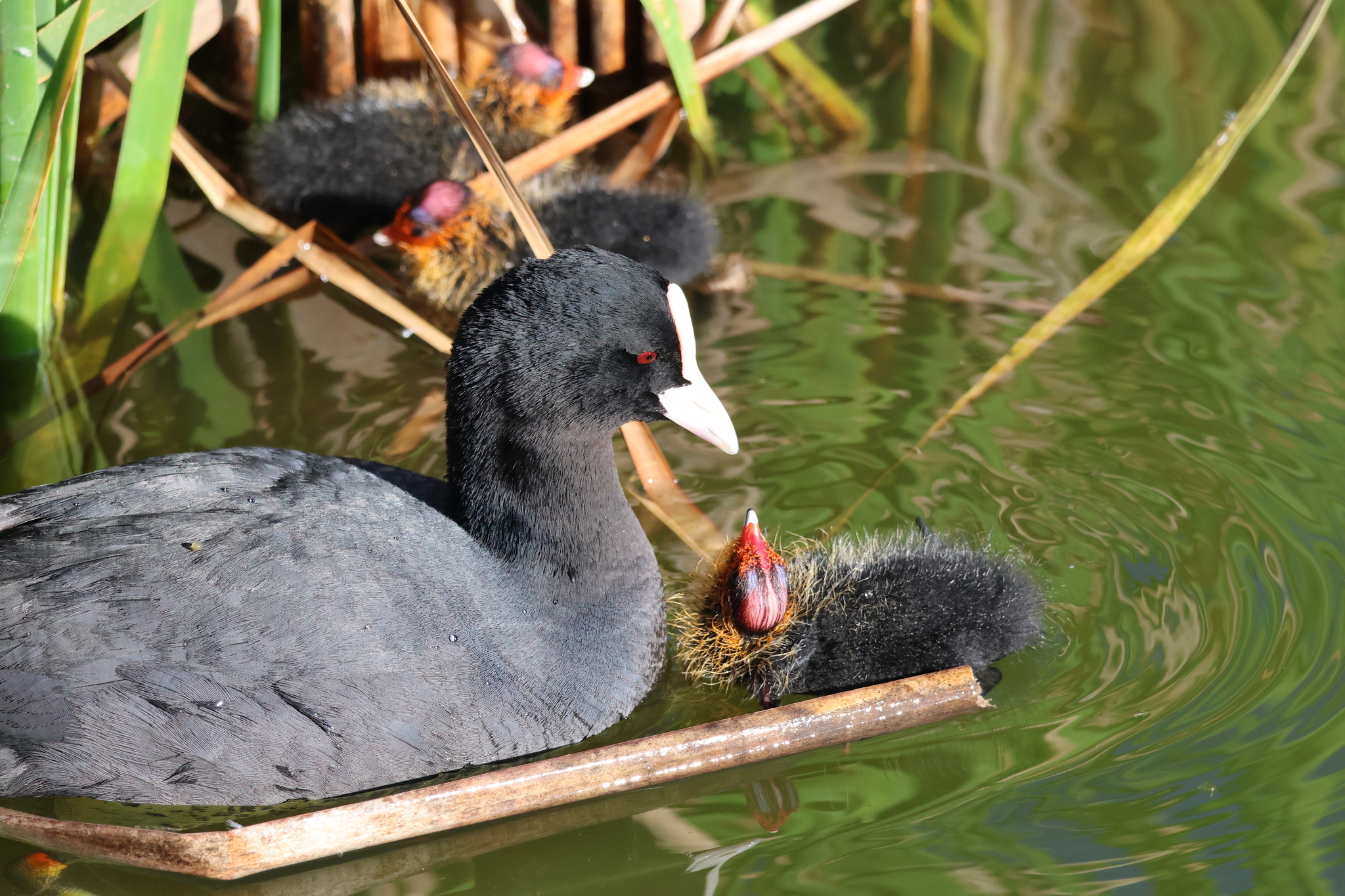
Eurasian Coot (Fulica atra) Eurasian Coot
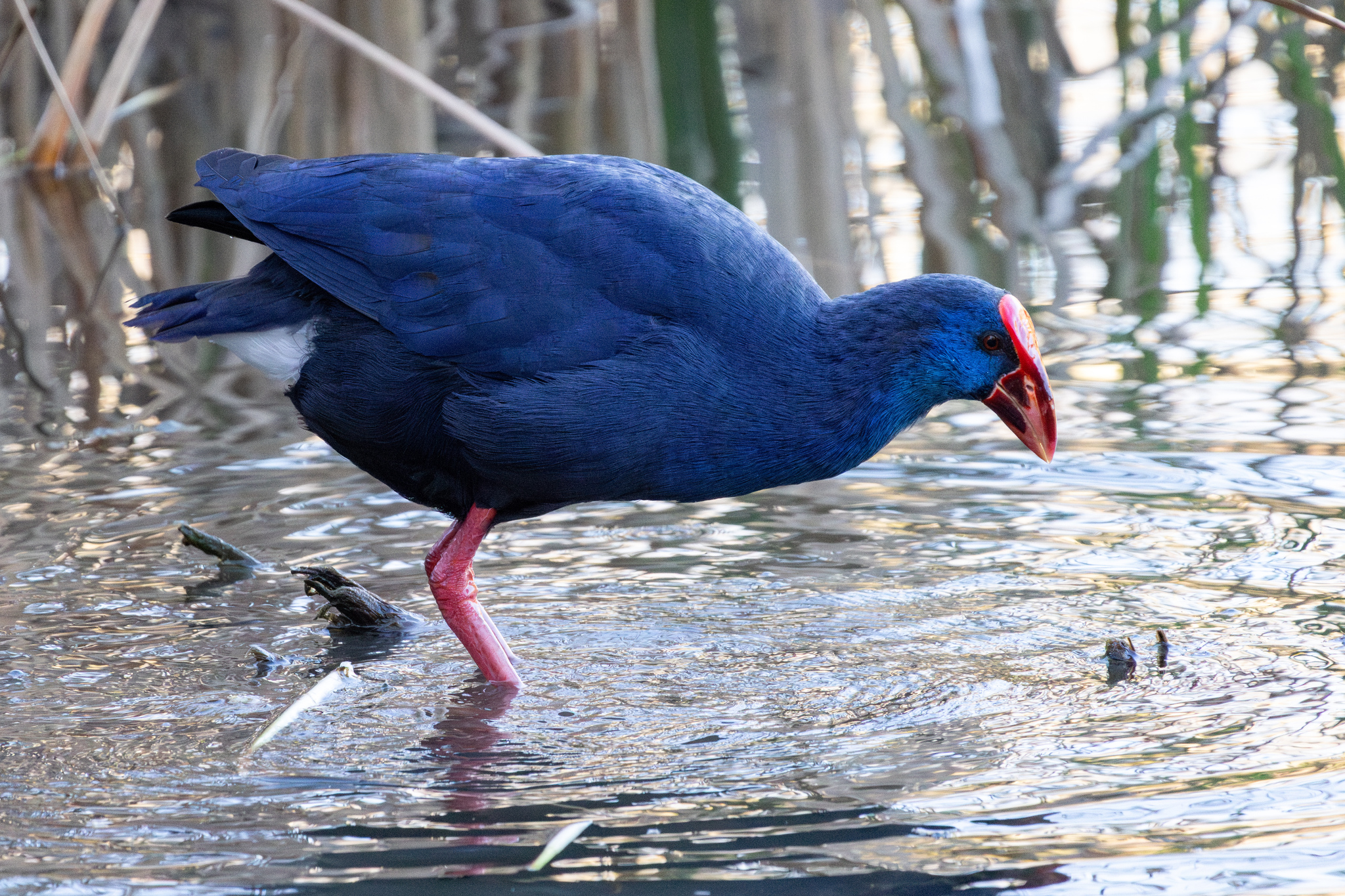
Western Swamphen (Porphyrio porphyrio) Western Swamphen

Media

Loading…

In short

The Eurasian Coot and Western Swamphen are both waterbirds but can be distinguished by their size, coloration, and bill shape. The Eurasian Coot is smaller and has a distinctive white frontal shield, while the Western Swamphen is larger with a bright red bill and frontal shield.

Identification tips

  1. Size and Structure: Look for the larger size and bulkier build of the Western Swamphen. 2. Bill and Shield: Note the white bill and shield of the Eurasian Coot versus the red bill and shield of the Western Swamphen. 3. Plumage Color: Observe the black plumage of the Eurasian Coot compared to the vibrant blue-purple of the Western Swamphen. 4. Behavior: Watch for diving behavior in Eurasian Coots and walking on vegetation in Western Swamphens.

Size

The Western Swamphen is larger and bulkier compared to the smaller, more compact Eurasian Coot.

Plumage

Eurasian Coots are mostly black with a white frontal shield and bill. Western Swamphens have a more vibrant plumage with deep blue and purple tones and a bright red bill and shield.

Behaviour

Eurasian Coots are often seen diving and upending in the water, while Western Swamphens are more likely to be seen walking on vegetation or mudflats, using their long toes to grasp plants.

Habitat

Both species inhabit wetlands, but Eurasian Coots are more tolerant of human-altered environments. Western Swamphens prefer dense reed beds and marshes.

Voice

Eurasian Coots have raucous and complex vocalizations, often heard during aggressive encounters. Western Swamphens have a variety of loud, trumpeting calls.

Submit a better description

Use the same sections as the comparison. Your text is published immediately.

The Eurasian Coot and Western Swamphen are both waterbirds but can be distinguished by their size, coloration, and bill shape. The Eurasian Coot is smaller and has a distinctive white frontal shield, while the Western Swamphen is larger with a bright red bill and frontal shield.

  1. Size and Structure: Look for the larger size and bulkier build of the Western Swamphen. 2. Bill and Shield: Note the white bill and shield of the Eurasian Coot versus the red bill and shield of the Western Swamphen. 3. Plumage Color: Observe the black plumage of the Eurasian Coot compared to the vibrant blue-purple of the Western Swamphen. 4. Behavior: Watch for diving behavior in Eurasian Coots and walking on vegetation in Western Swamphens.

The Western Swamphen is larger and bulkier compared to the smaller, more compact Eurasian Coot.

Eurasian Coots are mostly black with a white frontal shield and bill. Western Swamphens have a more vibrant plumage with deep blue and purple tones and a bright red bill and shield.

Eurasian Coots are often seen diving and upending in the water, while Western Swamphens are more likely to be seen walking on vegetation or mudflats, using their long toes to grasp plants.

Both species inhabit wetlands, but Eurasian Coots are more tolerant of human-altered environments. Western Swamphens prefer dense reed beds and marshes.

Eurasian Coots have raucous and complex vocalizations, often heard during aggressive encounters. Western Swamphens have a variety of loud, trumpeting calls.

Discard your changes?

You have unsaved edits. If you leave now, those changes will be lost.

Eurasian Coot · Western Swamphen · My Tricky Birds