
Eurasian Curlew vs Ortolan Bunting
Numenius arquata versus Emberiza hortulana
Play a quiz with Eurasian Curlew and Ortolan Bunting
 Eurasian Curlew
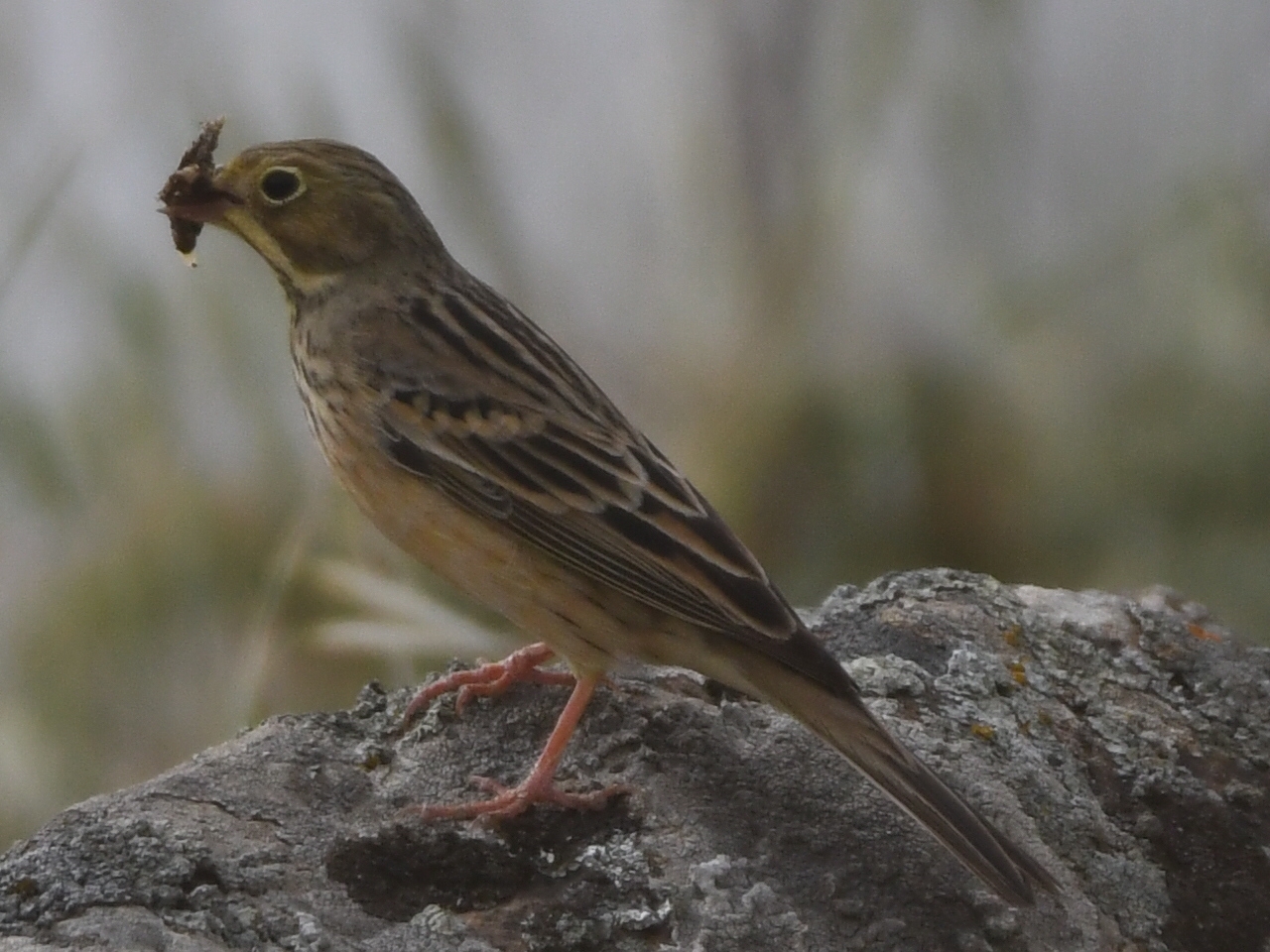 Ortolan Bunting
In short
The Ortolan Bunting (Emberiza hortulana) is a small, seed-eating passerine known for its distinctive coloration and song, while the Eurasian Curlew (Numenius arquata) is a large wader with a long, curved bill and a prominent, loud call. Key differences include size, with the Curlew being significantly larger, and habitat preferences, as the Ortolan prefers grasslands and fields, whereas the Curlew is often found in wetlands and coastal areas.
Identification tips
- Birds of the World Similar-Species Diagnostics:
- "The Ortolan Bunting is often confused with other small, brown-streaked passerines, but its distinctive yellow throat and rufous crown in males are key identifiers (Birds of the World)."
-
"The Eurasian Curlew can be mistaken for other waders, but its long, curved bill and distinctive call set it apart from similar species like the Bar-tailed Godwit or Whimbrel (Birds of the World)."
-
AI Field Diagnostics:
- Size and Shape: Look for the size difference; the Ortolan is small and compact while the Curlew is large with a long, slender, curved bill.
- Plumage Details: The Ortolan’s colorful and streaked plumage, particularly the yellow throat, contrasts sharply with the Curlew's more muted, streaked brown and buff coloration.
- Behavior: If you see a small bird hopping in fields, it's likely an Ortolan Bunting. If you see a larger bird wading in mudflats or shallow waters with a long bill, it's definitely a Eurasian Curlew.
- Vocalization: Listen for the Ortolan’s sweet, whistled song versus the loud, distinctive call of the Curlew, which is much more resonant and can be heard from a distance.
- Habitat: Pay attention to the habitat; Ortolans prefer open fields, while Curlews are found in wetlands or coastal regions, which can also help in identification.
By focusing on these field-identifiable characteristics, birdwatchers can effectively distinguish between the Ortolan Bunting and the Eurasian Curlew.
Size
The Ortolan Bunting is a small bird, measuring about 15-17 cm in length with a wingspan of approximately 25-30 cm. In contrast, the Eurasian Curlew is much larger, reaching lengths of 45-60 cm and a wingspan of 84-100 cm. The significant size difference is one of the easiest ways to distinguish between the two.
Plumage
The Ortolan Bunting features a distinctive plumage with a yellowish-green back, a pale underbelly, and streaked sides, with males exhibiting brighter colors than females. In breeding plumage, the male has a rufous crown and a characteristic yellow throat. The Eurasian Curlew has a more muted plumage, primarily brown and buff with a streaked pattern on its back and a pale belly. Its long, curved bill is a standout feature, while Ortolan Buntings do not possess such a bill shape.
Behaviour
The Ortolan Bunting is often seen foraging on the ground for seeds and insects, often in small groups or alone. It has a characteristic hopping behavior when feeding. The Eurasian Curlew is typically seen wading in shallow waters or mudflats, using its long bill to probe for invertebrates. Its flight is strong and direct, often accompanied by a distinctive, buoyant style.
Habitat
The Ortolan Bunting prefers open habitats such as agricultural fields, grasslands, and scrub areas, often in more temperate regions. The Eurasian Curlew, however, is associated with wetlands, marshes, estuaries, and coastal areas, where it can find ample food sources.
Voice
The Ortolan Bunting is known for its melodic song, often described as a series of sweet, whistled notes. The male sings during the breeding season to attract females. In contrast, the Eurasian Curlew produces loud, distinct calls that sound like “cur-lee” or “cur-lee-oo,” which can carry over long distances, especially in its coastal habitats.