
Eurasian Spoonbill vs Bearded Vulture
Platalea leucorodia versus Gypaetus barbatus
Play a quiz with Eurasian Spoonbill and Bearded Vulture
 Eurasian Spoonbill
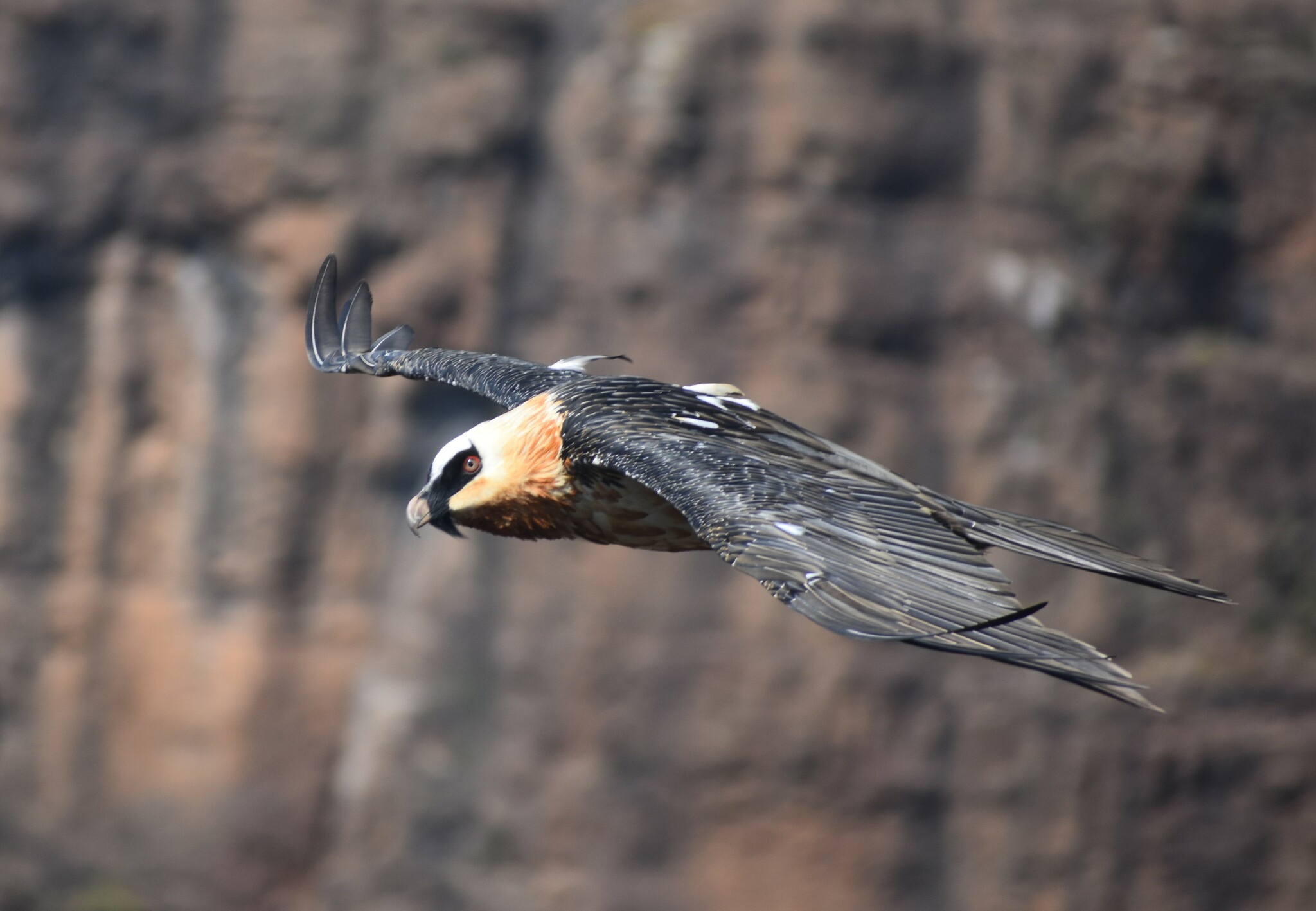 Bearded Vulture
In short
The Eurasian Spoonbill and Bearded Vulture are easily distinguished by their size and bill shape. The Spoonbill has a distinctive spatula-shaped bill, while the Bearded Vulture has a sharp, hooked beak. These differences are apparent even at a distance.
Identification tips
Look for the spatula-shaped bill of the Spoonbill when near water bodies. In contrast, the Bearded Vulture's hooked beak and large size are key identifiers when seen soaring in mountainous areas. Plumage color can also help: Spoonbills are mostly white, while Bearded Vultures have a more varied and striking color pattern.
Size
The Bearded Vulture is significantly larger, with a wingspan of up to 2.8 meters, compared to the Eurasian Spoonbill's more modest wingspan of about 1.2 meters.
Plumage
The Eurasian Spoonbill is mostly white with a yellowish wash on the breast during breeding season, whereas the Bearded Vulture has a striking appearance with a mix of white, black, and rusty-orange plumage.
Behaviour
Spoonbills are often seen wading in shallow waters, sweeping their bills side to side to feed, while Bearded Vultures are typically soaring high in mountainous regions, known for dropping bones to crack them open.
Habitat
Eurasian Spoonbills are found in wetlands, marshes, and shallow lakes, whereas Bearded Vultures inhabit mountainous regions and are often seen near cliffs.
Voice
The Eurasian Spoonbill is generally silent, while the Bearded Vulture is also not known for vocalizations, making voice an unreliable field mark for both.