
Eurasian Three-toed Woodpecker vs Pine Grosbeak
Picoides tridactylus versus Pinicola enucleator
Play a quiz with Eurasian Three-toed Woodpecker and Pine Grosbeak
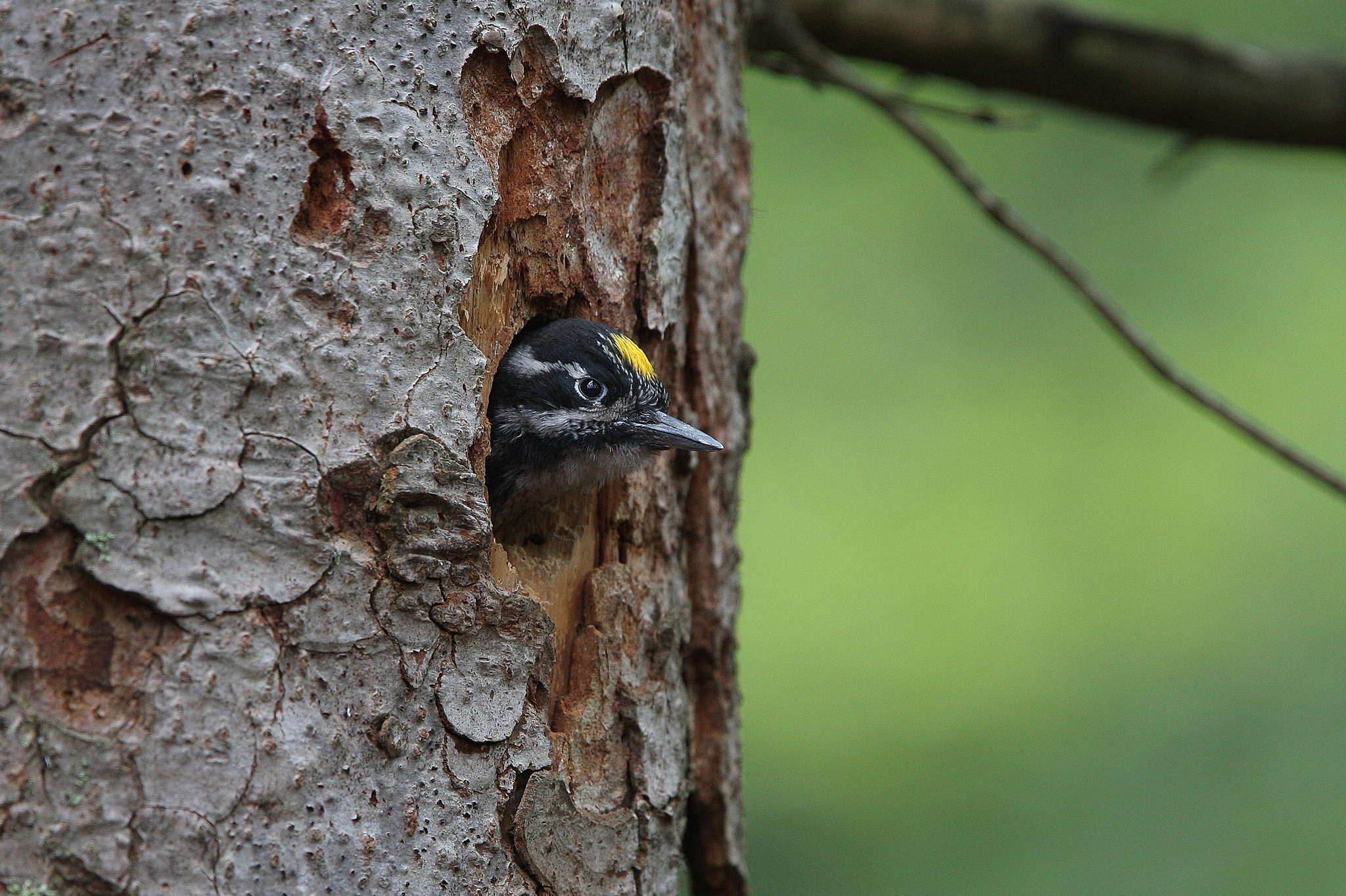 Eurasian Three-toed Woodpecker
 Pine Grosbeak
In short
The Eurasian Three-toed Woodpecker and Pine Grosbeak are distinct in both appearance and behavior, making them relatively easy to differentiate in the field. The woodpecker is a small, black-and-white bird with a distinctive barred back, while the grosbeak is a larger, colorful finch with a stout bill. Their habitats and behaviors also differ significantly.
Identification tips
Look for the barred back and three-toed feet of the woodpecker, and its behavior of pecking at tree trunks. For the grosbeak, note the stout bill and vibrant red or pink plumage in males. Listen for the woodpecker's sharp calls versus the grosbeak's melodic whistles.
Size
The Eurasian Three-toed Woodpecker is smaller and more slender compared to the larger, bulkier Pine Grosbeak.
Plumage
The woodpecker has a black-and-white barred pattern on its back and lacks the bright colors of the grosbeak. The Pine Grosbeak, especially males, displays vibrant red or pink plumage, while females and juveniles are more subdued with grayish tones.
Behaviour
Eurasian Three-toed Woodpeckers are often seen clinging to tree trunks, pecking for insects, while Pine Grosbeaks are more likely to be seen perched on branches, feeding on seeds and berries.
Habitat
The woodpecker is typically found in coniferous forests, often in boreal regions, whereas the grosbeak is also found in coniferous forests but can be seen in a wider range of northern habitats, including mixed woodlands.
Voice
The woodpecker's calls are sharp and metallic, typical of woodpeckers, while the grosbeak's vocalizations are more melodic, consisting of soft whistles and trills.
Eurasian Three-toed Woodpecker · Pine Grosbeak · My Tricky Birds