
Eurasian Treecreeper vs Scottish Crossbill
Certhia familiaris versus Loxia scotica
Play a quiz with Eurasian Treecreeper and Scottish Crossbill
 Eurasian Treecreeper
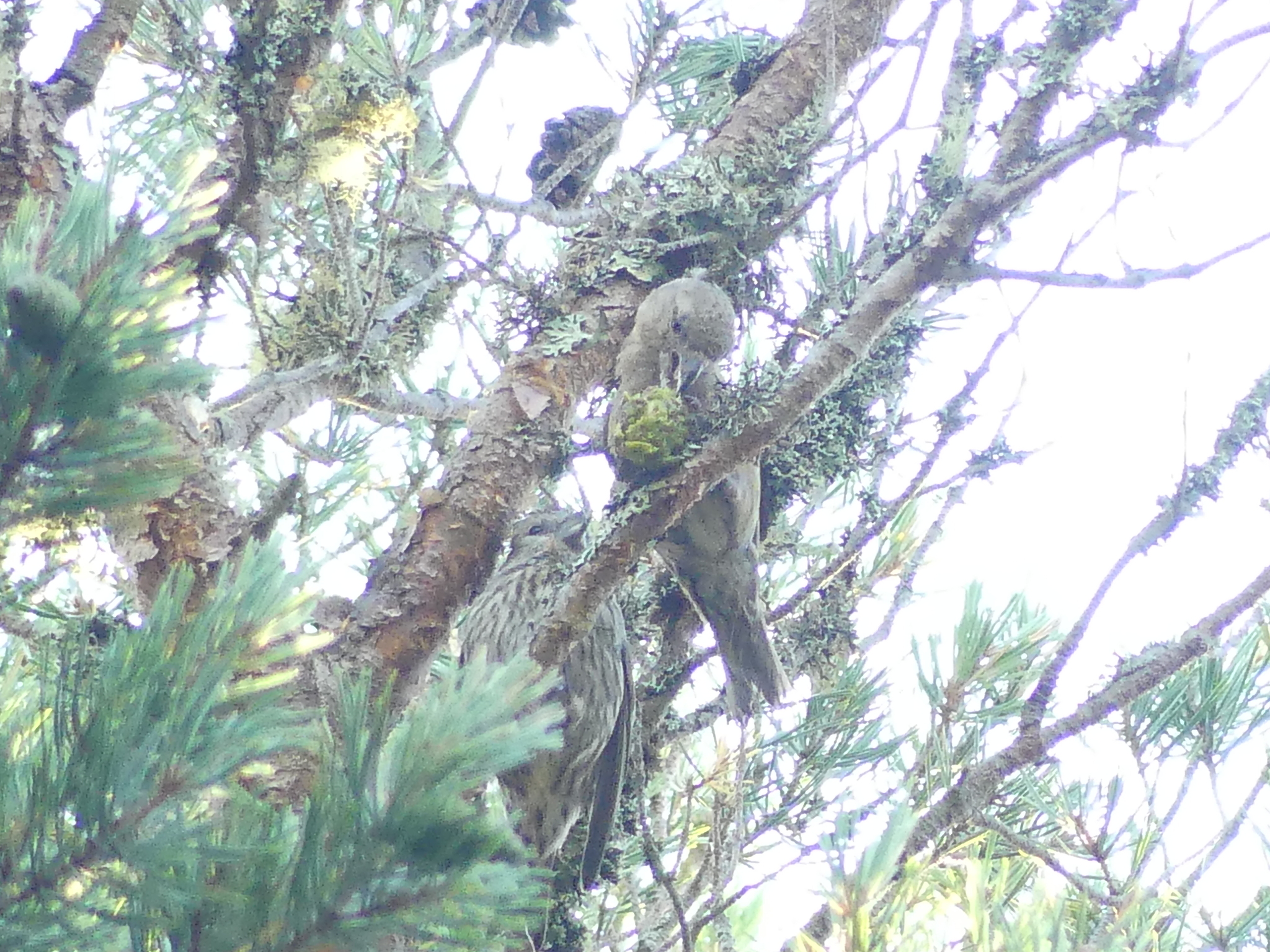 Scottish Crossbill
In short
The Eurasian Treecreeper and Scottish Crossbill are distinct in both appearance and behavior. The Treecreeper is a small, slender bird with a distinctive curved bill, adapted for climbing tree trunks, while the Crossbill is a larger finch with a unique crossed bill for extracting seeds from cones. Vocalizations are crucial for identifying the Scottish Crossbill, as it is visually similar to other crossbill species.
Identification tips
- Bill shape: Treecreeper has a thin, curved bill; Crossbill has a distinctive crossed bill.
- Plumage: Look for streaked brown and white in Treecreeper, versus red/orange or olive in Crossbill.
- Behavior: Treecreeper climbs tree trunks; Crossbill forages in conifers.
- Vocalizations: Listen for the metallic calls of the Crossbill, especially in mixed crossbill flocks.
Size
The Eurasian Treecreeper is smaller and more slender compared to the bulkier Scottish Crossbill.
Plumage
The Eurasian Treecreeper has brown and white streaked plumage, blending with tree bark, while the Scottish Crossbill displays a more vibrant plumage: males are brick-red to orange, and females are olive-green to grayish yellow.
Behaviour
Treecreepers are often seen spiraling up tree trunks in search of insects, whereas Scottish Crossbills are more likely to be found in flocks, foraging for seeds in coniferous trees.
Habitat
Eurasian Treecreepers inhabit woodlands across Europe and Asia, while Scottish Crossbills are restricted to the Caledonian pinewoods and commercial plantations in Scotland.
Voice
Scottish Crossbills have distinctive metallic flight calls and excitement calls, which are essential for identification, as they are visually similar to other crossbills. Eurasian Treecreepers have high-pitched, thin calls.