
European Turtle Dove vs Great Bustard
Streptopelia turtur versus Otis tarda
Play a quiz with European Turtle Dove and Great Bustard
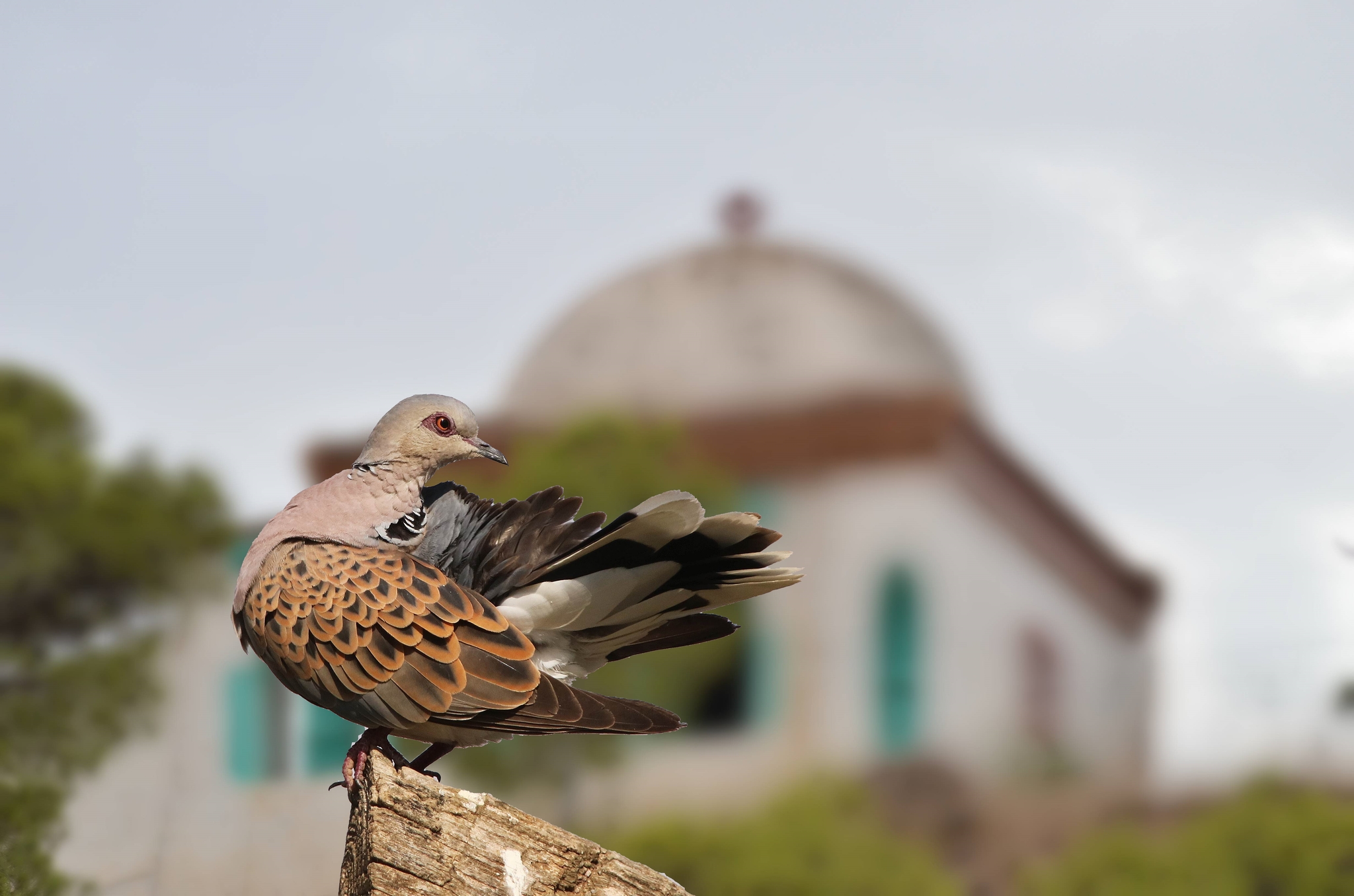 European Turtle Dove
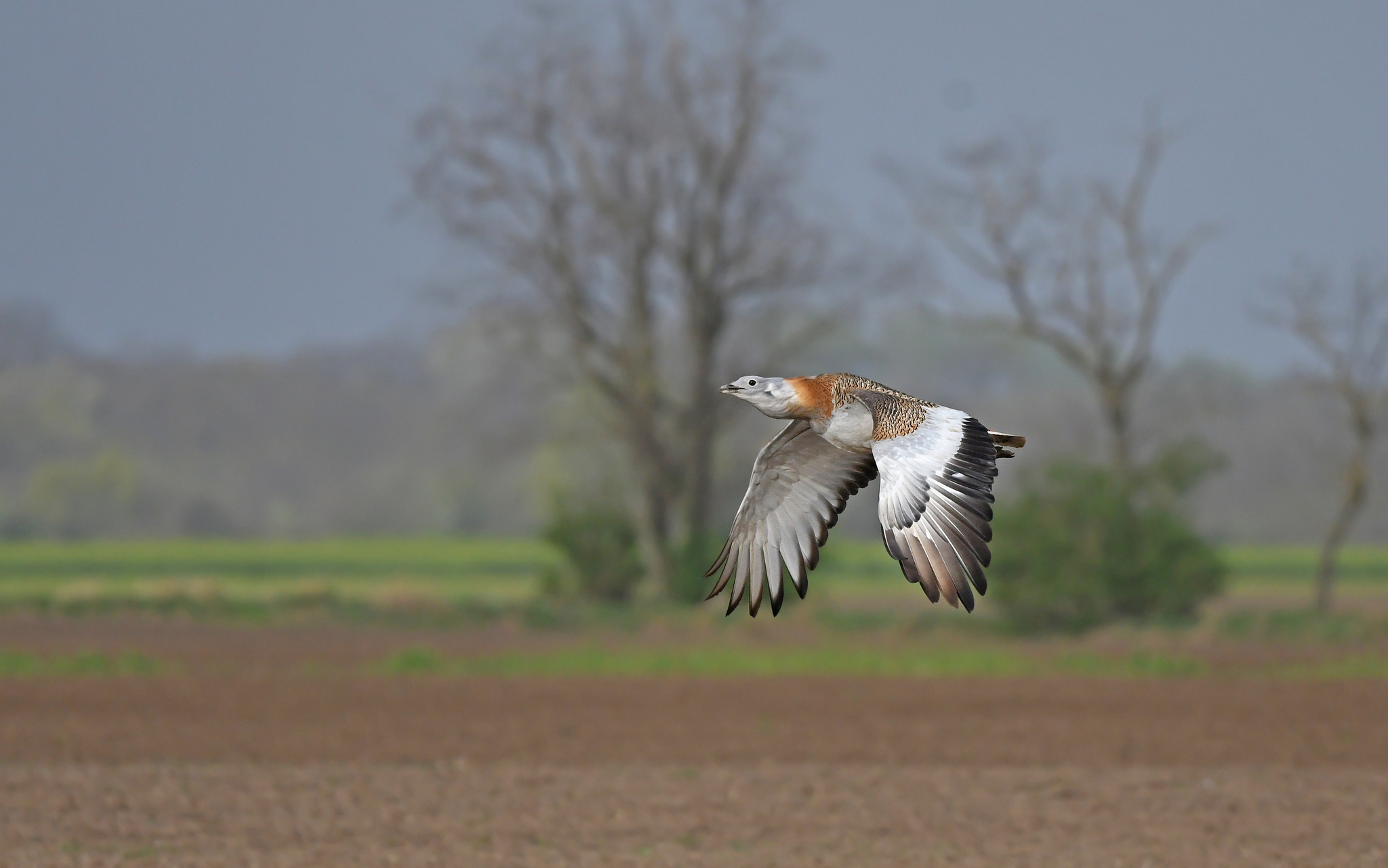 Great Bustard
In short
The European Turtle Dove and Great Bustard are easily distinguishable by size and structure. The Turtle Dove is a small, slender dove, while the Great Bustard is a large, robust bird. Their habitats and behaviors also differ significantly, aiding identification.
Identification tips
1. Size and Structure: Note the significant size difference; the Turtle Dove is much smaller and more slender. 2. Plumage: Look for the Turtle Dove's pinkish hue and neck patch versus the Bustard's brown and white coloration. 3. Habitat: Observe the environment; Turtle Doves are in wooded areas, while Bustards are in open fields. 4. Behavior: Turtle Doves perch in trees, Bustards are ground-dwellers. 5. Vocalization: Listen for the Turtle Dove's purring call, as Bustards are mostly silent.
Size
The European Turtle Dove is much smaller, about the size of a common pigeon, whereas the Great Bustard is one of the heaviest flying birds, comparable to a large turkey.
Plumage
The Turtle Dove has a distinctive mottled brown and black plumage with a pinkish hue and a black-and-white striped patch on the neck. The Great Bustard, in contrast, has a predominantly brown and white plumage with a striking white neck and head in males, and a more uniform brown in females.
Behaviour
Turtle Doves are often seen perched in trees or foraging on the ground in pairs or small groups. Great Bustards are more terrestrial, often found walking in open fields and displaying in leks during the breeding season.
Habitat
Turtle Doves are typically found in woodland edges, hedgerows, and farmland. Great Bustards prefer open grasslands and steppes, avoiding wooded areas.
Voice
The Turtle Dove has a soft, purring call, whereas the Great Bustard is generally silent, with males producing low-frequency booming sounds during display.