
European Turtle Dove vs Pallas's Sandgrouse
Streptopelia turtur versus Syrrhaptes paradoxus
Play a quiz with European Turtle Dove and Pallas's Sandgrouse
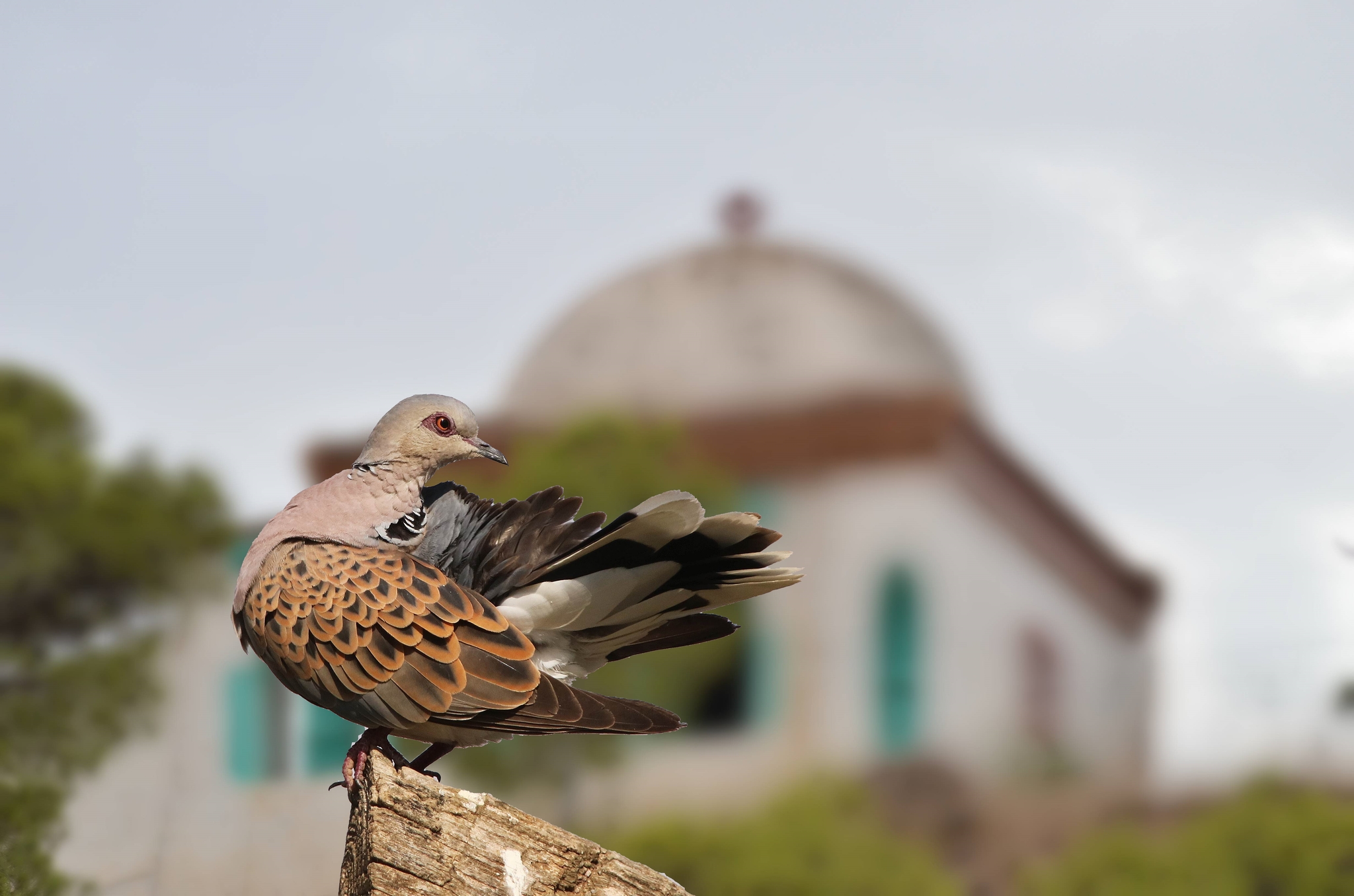 European Turtle Dove
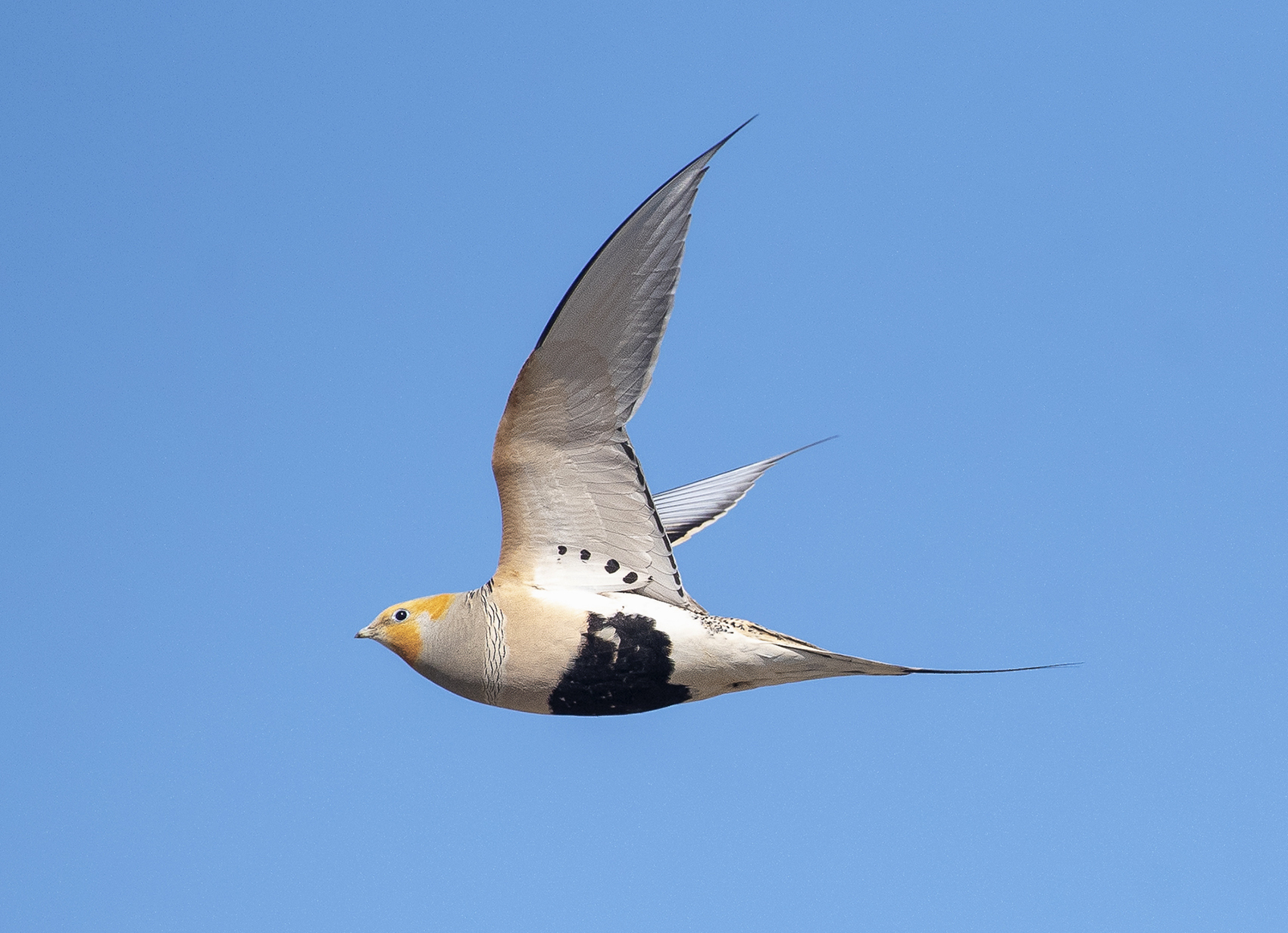 Pallas's Sandgrouse
In short
The European Turtle Dove and Pallas's Sandgrouse are distinct in both appearance and habitat. The Turtle Dove is a slender, medium-sized dove with a distinctive scaly pattern on its neck and wings, while Pallas's Sandgrouse is a stocky bird with long pointed wings and tail, adapted for arid environments.
Identification tips
- Neck Pattern: Look for the Turtle Dove's black and white neck patch, absent in Pallas's Sandgrouse. 2. Body Shape: Note the Turtle Dove's slender build versus the Sandgrouse's stocky form. 3. Wing and Tail: Pallas's Sandgrouse has long, pointed wings and tail, unlike the Turtle Dove. 4. Habitat: Consider the environment; Turtle Doves prefer woodlands, while Sandgrouse favor deserts. 5. Vocalization: Listen for the Turtle Dove's purring versus the Sandgrouse's 'kurru-kurru' calls.
Size
The European Turtle Dove is smaller and more slender compared to the bulkier Pallas's Sandgrouse.
Plumage
The Turtle Dove has a warm brown plumage with a characteristic black and white striped patch on the side of its neck, and a pinkish breast. In contrast, Pallas's Sandgrouse has a sandy brown plumage with a more uniform appearance and lacks the distinctive neck pattern.
Behaviour
Turtle Doves are often seen perched in trees or on wires, while Pallas's Sandgrouse is more likely to be found on the ground, often in flocks, and is known for its long-distance flights to water sources.
Habitat
European Turtle Doves are typically found in open woodlands and agricultural areas, whereas Pallas's Sandgrouse inhabits arid steppes and deserts.
Voice
The Turtle Dove has a soft, purring call, while Pallas's Sandgrouse is known for its distinctive, repetitive 'kurru-kurru' calls, often heard during flight.
European Turtle Dove · Pallas's Sandgrouse · My Tricky Birds