
Falcated Duck vs Eurasian/Green-winged Teal
Mareca falcata versus Anas crecca
Play a quiz with Falcated Duck and Eurasian/Green-winged Teal
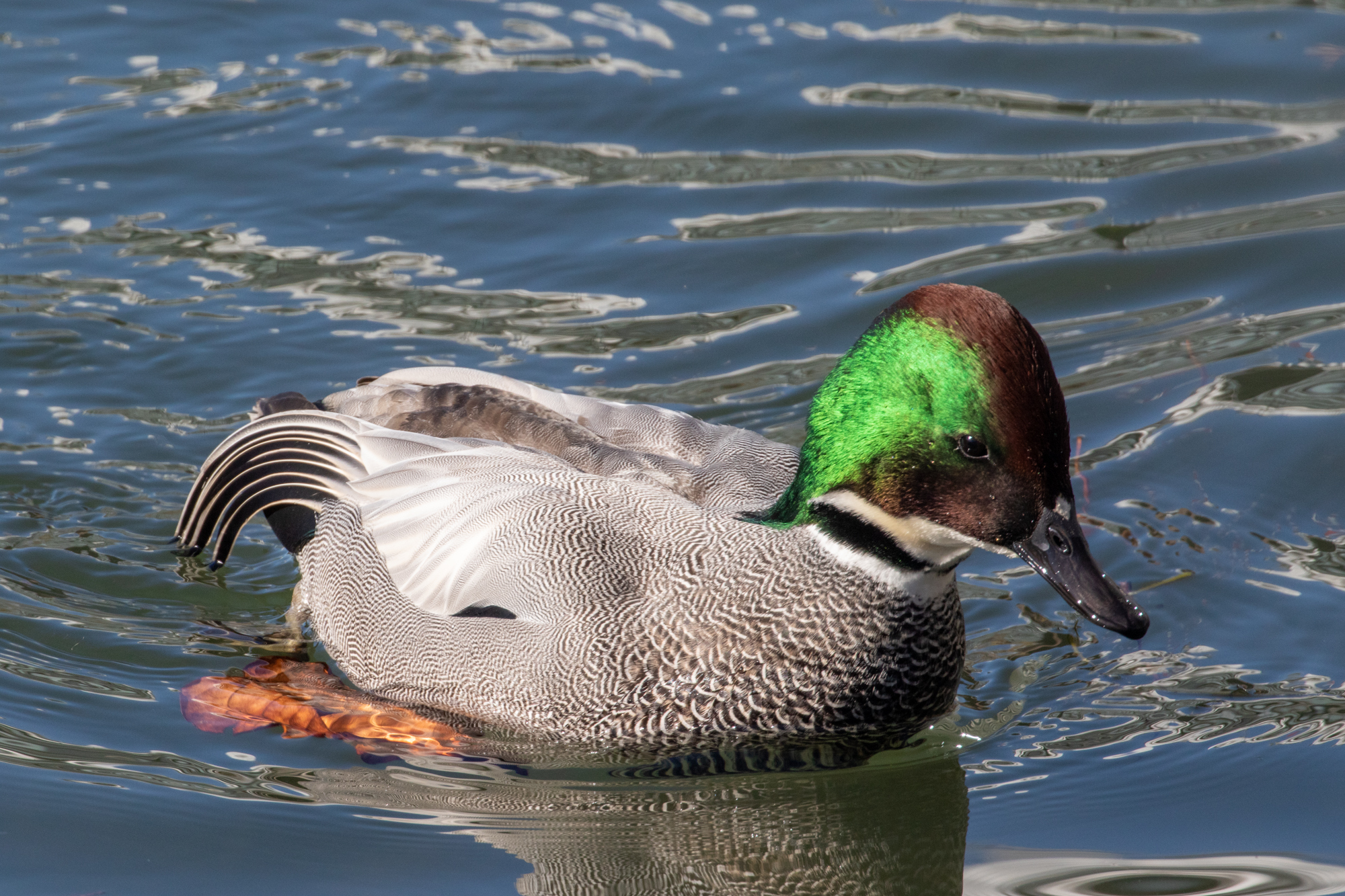 Falcated Duck
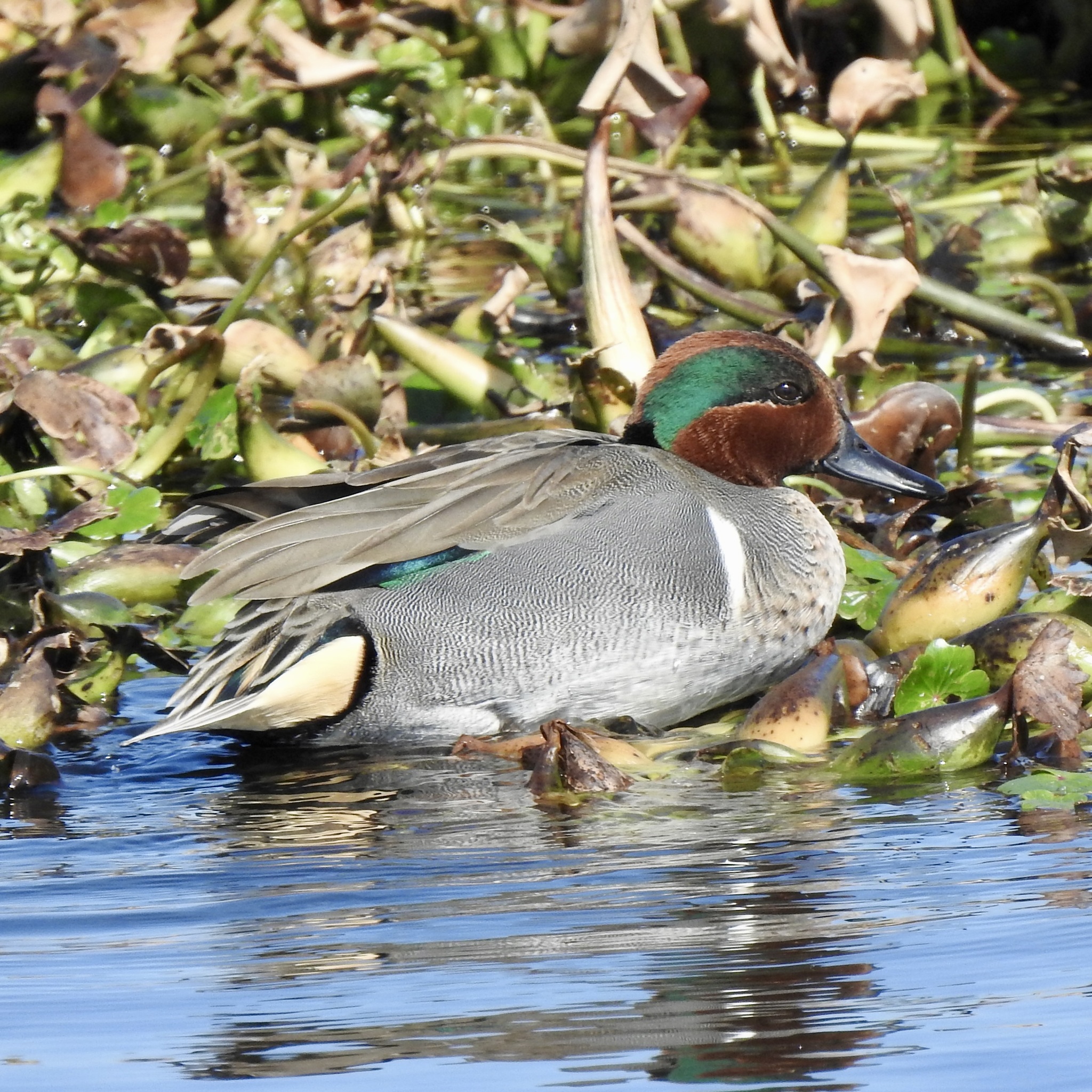 Eurasian/Green-winged Teal
In short
The Falcated Duck and Eurasian/Green-winged Teal are both small dabbling ducks, but they can be distinguished by their plumage and structure. The Falcated Duck is notable for its iridescent green head and long, sickle-shaped tertials, while the Eurasian/Green-winged Teal has a distinctive green eye-stripe and lacks the elongated tertials.
Identification tips
1. Look for the Falcated Duck's iridescent green head and long, curved tertials. 2. Note the Eurasian/Green-winged Teal's green eye-stripe and chestnut head. 3. Consider habitat and range: Falcated Ducks are more common in East Asia, while Eurasian/Green-winged Teals have a wider range. 4. Listen for the Eurasian/Green-winged Teal's distinctive calls.
Size
Both species are small ducks, but the Falcated Duck is slightly larger and more robust than the Eurasian/Green-winged Teal.
Plumage
The Falcated Duck has a striking iridescent green head, white throat, and long, curved tertials that form a 'falcate' shape. The Eurasian/Green-winged Teal features a chestnut head with a bold green eye-stripe and lacks the elongated tertials.
Behaviour
Both species are dabbling ducks, often seen feeding in shallow water. The Falcated Duck may appear more deliberate in its movements compared to the more agile Eurasian/Green-winged Teal.
Habitat
Both species can be found in wetlands, but the Falcated Duck is more likely to be seen in East Asia, while the Eurasian/Green-winged Teal has a broader range across Europe and Asia.
Voice
The Falcated Duck's vocalizations are less documented, but the Eurasian/Green-winged Teal is known for its high-pitched, flute-like calls.
Falcated Duck · Eurasian/Green-winged Teal · My Tricky Birds