Birdr

Ferruginous Duck vs Baer's Pochard

Aythya nyroca versus Aythya baeri

Play a quiz with Ferruginous Duck and Baer's Pochard
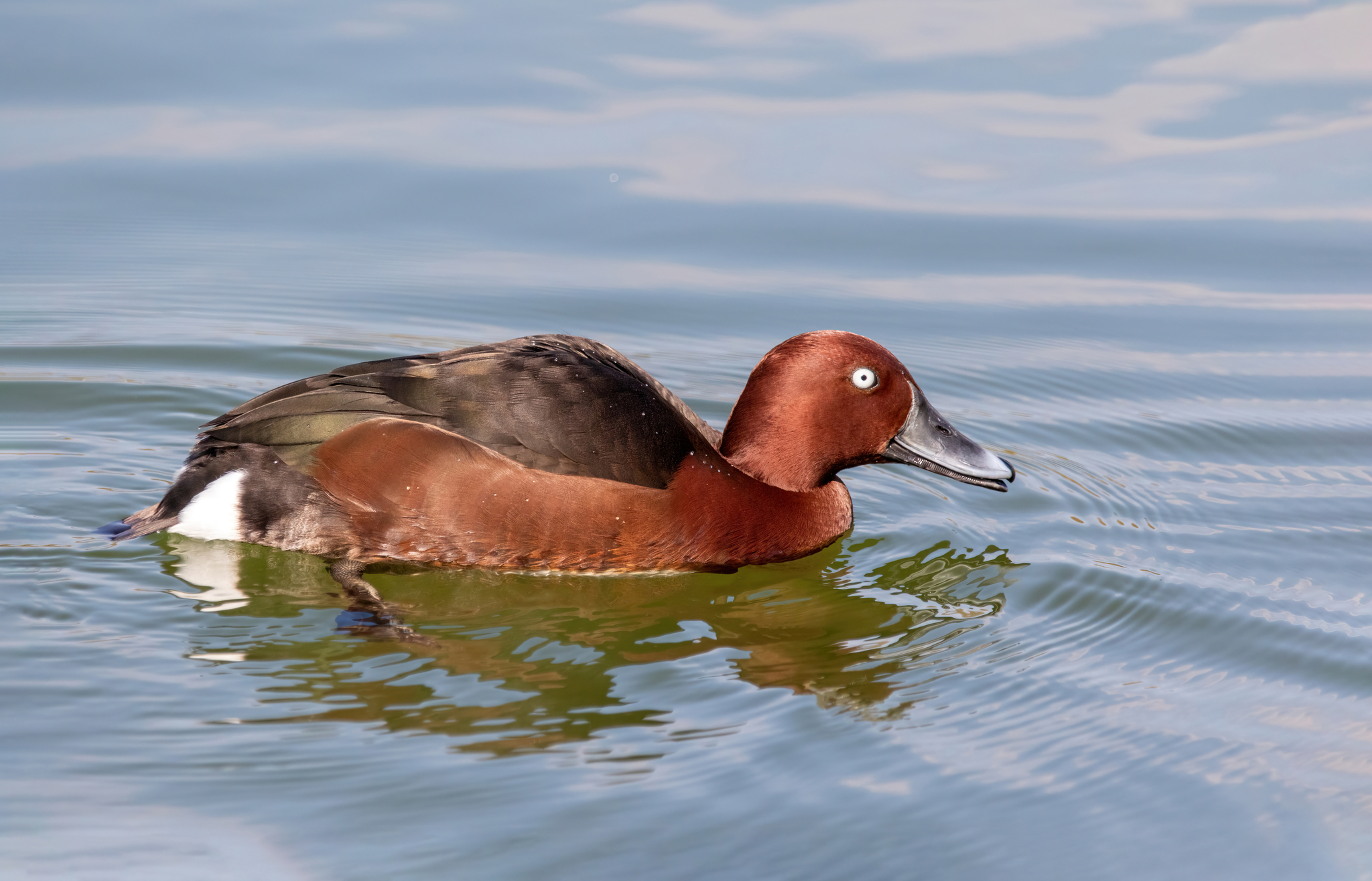
Ferruginous Duck (Aythya nyroca) Ferruginous Duck
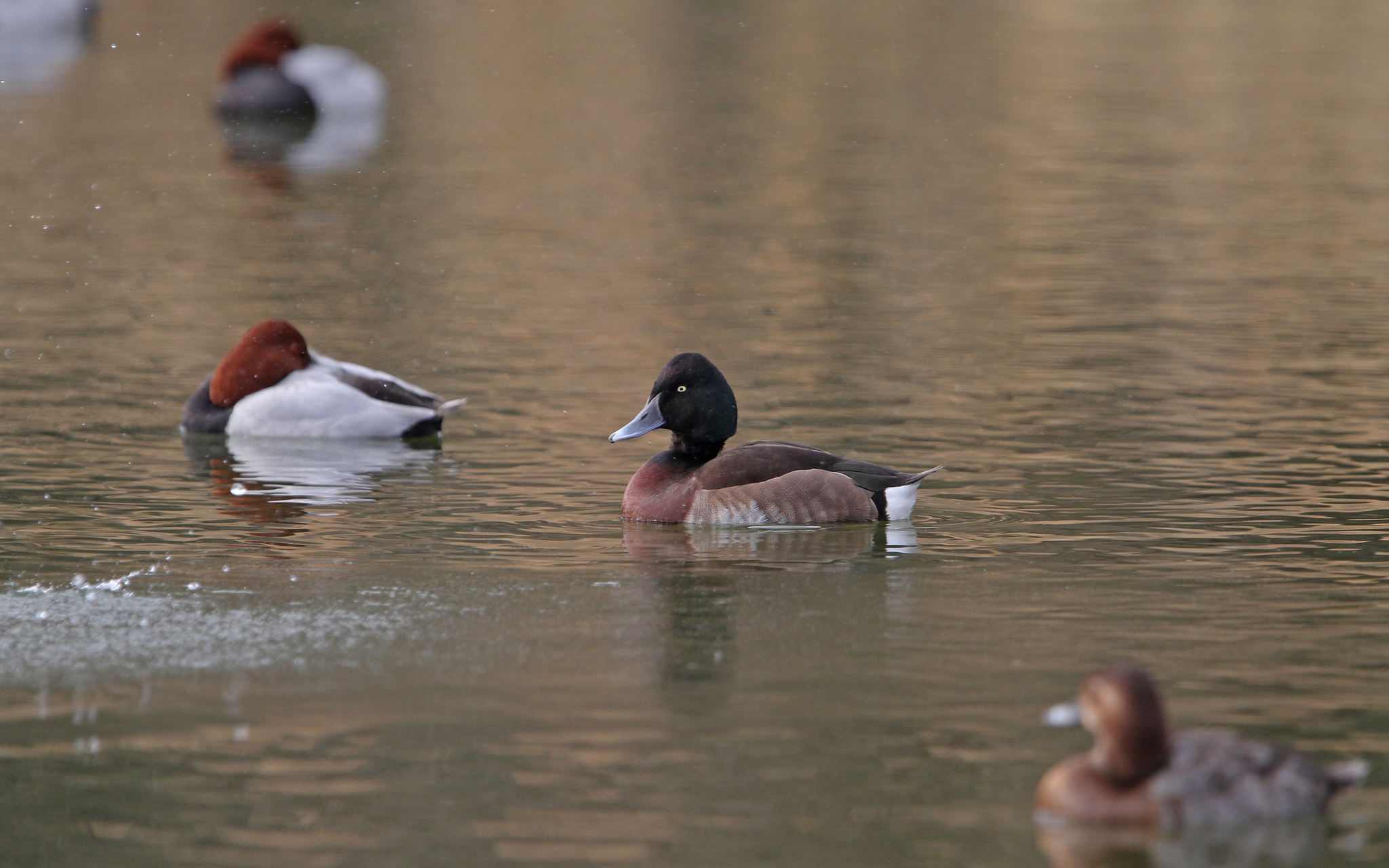
Baer's Pochard (Aythya baeri) Baer's Pochard

Media

Loading…

In short

The Ferruginous Duck and Baer's Pochard are both diving ducks with similar habitats, but they can be distinguished by key plumage differences and subtle structural cues. Ferruginous Ducks have a more uniform chestnut body, while Baer's Pochard shows a contrasting dark head and chestnut body. Observing the head and body coloration is crucial for accurate identification.

Identification tips

  1. Look for the uniform chestnut body and head of the Ferruginous Duck versus the contrasting dark head and chestnut body of Baer's Pochard. 2. Observe the underwing pattern in flight; both have white underwings, but Ferruginous Duck's are more prominent. 3. Note the group size; Ferruginous Ducks are often in smaller groups. 4. Consider habitat, especially if in a man-made wetland, which might favor Ferruginous Duck.

Size

Both species are similar in size, typical of medium-sized diving ducks.

Plumage

Ferruginous Duck has a uniform chestnut body and head, with a white underwing visible in flight. Baer's Pochard, in contrast, has a dark greenish-black head and chest, with a distinct contrast to its chestnut body. The white underwing is also present but less noticeable due to the darker head.

Behaviour

Both species exhibit diving behavior for foraging, but Ferruginous Ducks are less social and often seen in smaller groups compared to Baer's Pochard.

Habitat

Both species occupy freshwater wetlands, but Ferruginous Ducks are more adaptable to man-made wetlands and open-water areas during winter.

Voice

Vocalizations are not a primary distinguishing feature between these species in the field.

Submit a better description

Use the same sections as the comparison. Your text is published immediately.

The Ferruginous Duck and Baer's Pochard are both diving ducks with similar habitats, but they can be distinguished by key plumage differences and subtle structural cues. Ferruginous Ducks have a more uniform chestnut body, while Baer's Pochard shows a contrasting dark head and chestnut body. Observing the head and body coloration is crucial for accurate identification.

  1. Look for the uniform chestnut body and head of the Ferruginous Duck versus the contrasting dark head and chestnut body of Baer's Pochard. 2. Observe the underwing pattern in flight; both have white underwings, but Ferruginous Duck's are more prominent. 3. Note the group size; Ferruginous Ducks are often in smaller groups. 4. Consider habitat, especially if in a man-made wetland, which might favor Ferruginous Duck.

Both species are similar in size, typical of medium-sized diving ducks.

Ferruginous Duck has a uniform chestnut body and head, with a white underwing visible in flight. Baer's Pochard, in contrast, has a dark greenish-black head and chest, with a distinct contrast to its chestnut body. The white underwing is also present but less noticeable due to the darker head.

Both species exhibit diving behavior for foraging, but Ferruginous Ducks are less social and often seen in smaller groups compared to Baer's Pochard.

Both species occupy freshwater wetlands, but Ferruginous Ducks are more adaptable to man-made wetlands and open-water areas during winter.

Vocalizations are not a primary distinguishing feature between these species in the field.

Discard your changes?

You have unsaved edits. If you leave now, those changes will be lost.

Ferruginous Duck · Baer's Pochard · My Tricky Birds