Birdr

Ferruginous Pygmy-Owl vs Mottled Owl

Glaucidium brasilianum versus Strix virgata

Play a quiz with Ferruginous Pygmy-Owl and Mottled Owl
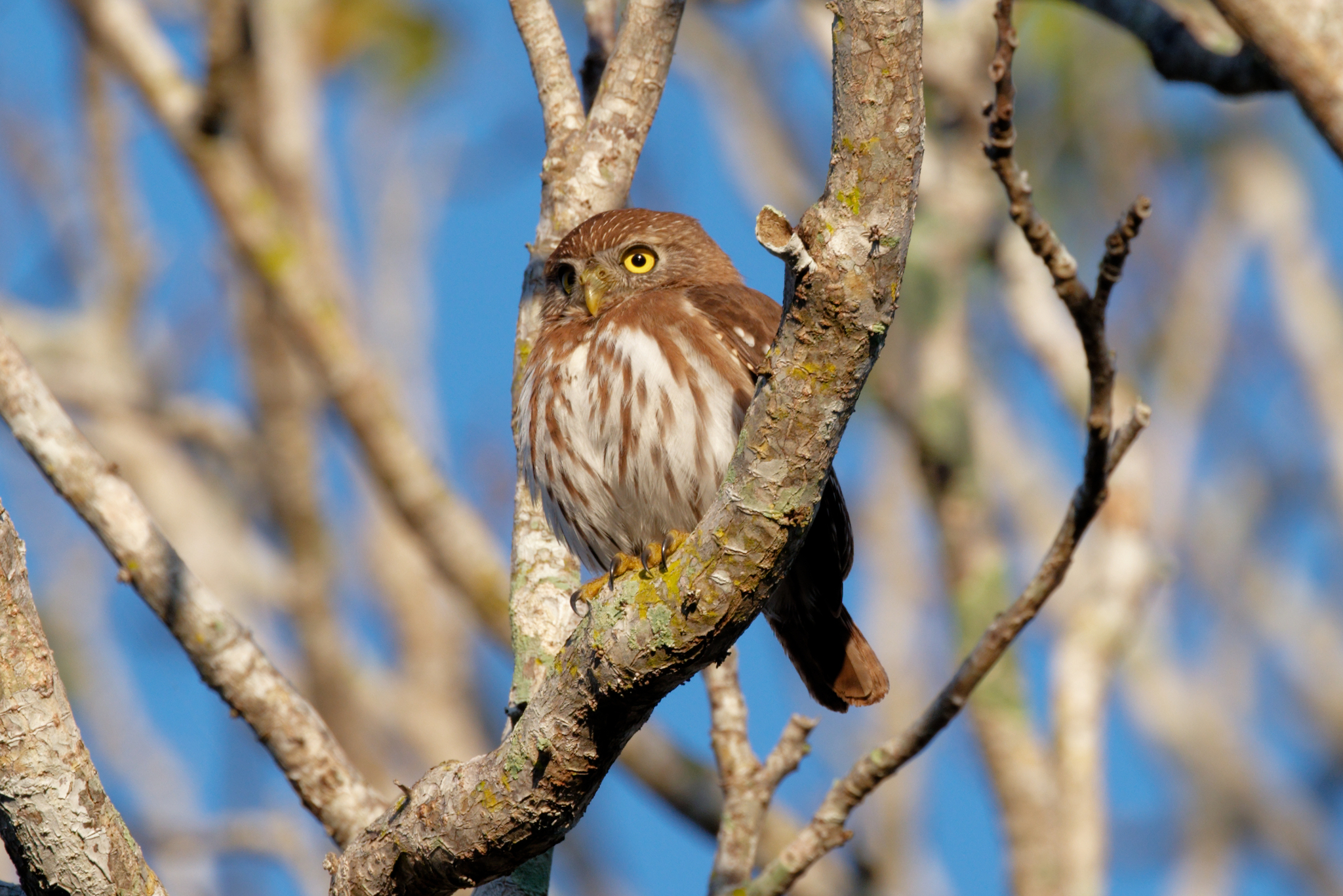
Ferruginous Pygmy-Owl (Glaucidium brasilianum) Ferruginous Pygmy-Owl
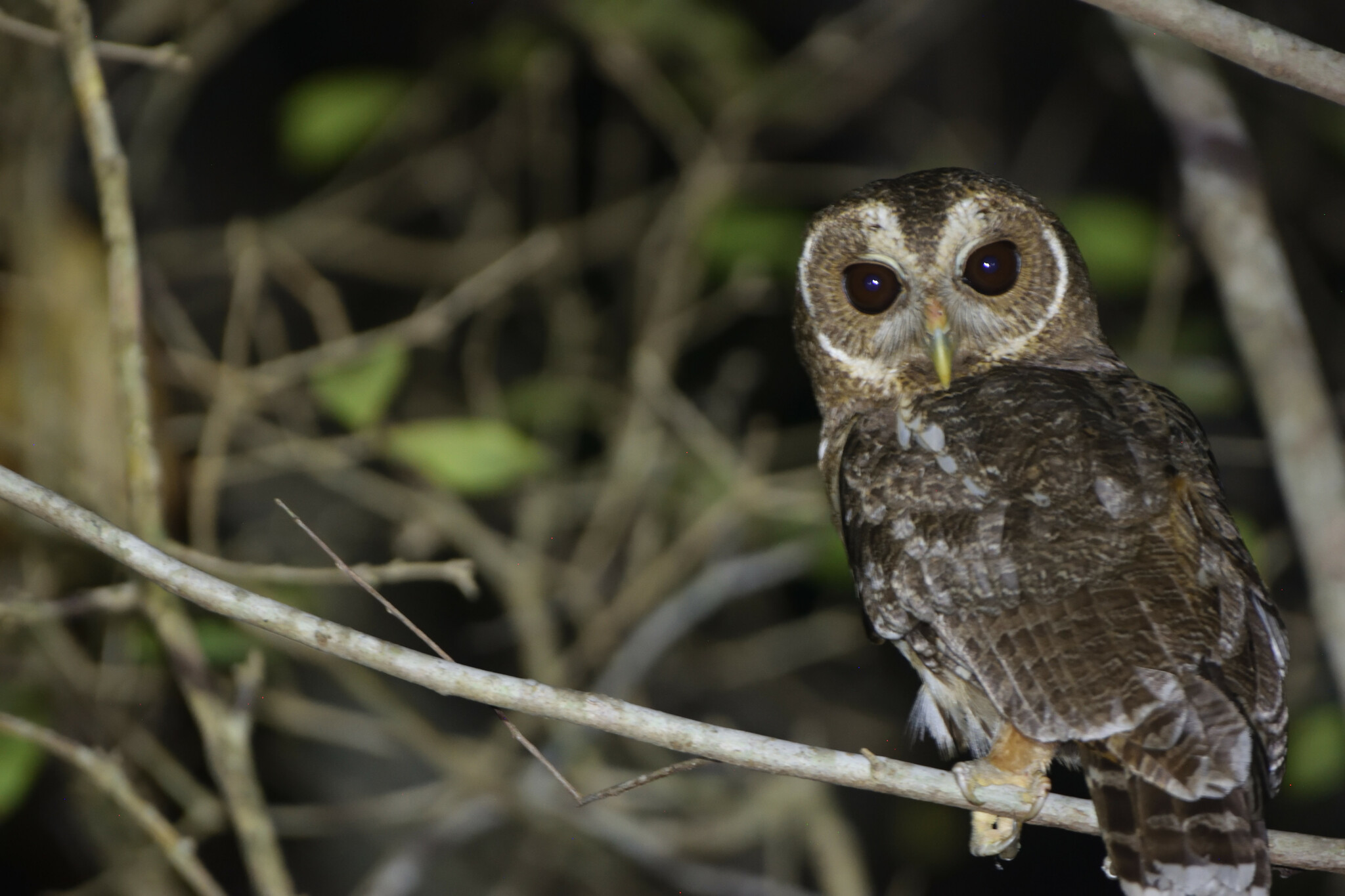
Mottled Owl (Strix virgata) Mottled Owl

Media

Loading…

In short

The Ferruginous Pygmy-Owl is a small, compact owl with a distinctive posture and tail movements, while the Mottled Owl is larger and more robust with a characteristic facial disk. These species differ significantly in size and behavior, making them distinguishable in the field.

Identification tips

1. Size and Structure: Use size difference as a primary indicator; Pygmy-Owl is significantly smaller. 2. Tail Movement: Look for the Pygmy-Owl's distinctive tail movements. 3. Facial Disk: Mottled Owl has a more pronounced facial disk. 4. Habitat: Consider habitat type; Pygmy-Owl in open areas, Mottled Owl in dense forests. 5. Vocalizations: Listen for the Pygmy-Owl's repetitive whistles versus the Mottled Owl's hoots.

Size

The Ferruginous Pygmy-Owl is much smaller, typically around 15 cm in length, whereas the Mottled Owl is larger, about 33–38 cm.

Plumage

Ferruginous Pygmy-Owl has a rufous or brownish plumage with white spots and lacks a prominent facial disk. Mottled Owl has a more defined facial disk and mottled brown and white plumage.

Behaviour

Ferruginous Pygmy-Owl often perches with its tail cocked and moves it up and down or side to side when agitated. Mottled Owl tends to be more stationary and does not exhibit such tail movements.

Habitat

Ferruginous Pygmy-Owl is found in lowland areas, often in open woodlands and forests, while Mottled Owl prefers denser forest habitats.

Voice

Ferruginous Pygmy-Owl has a series of short, repetitive whistles, while Mottled Owl produces a more varied hooting call.

Submit a better description

Use the same sections as the comparison. Your text is published immediately.

The Ferruginous Pygmy-Owl is a small, compact owl with a distinctive posture and tail movements, while the Mottled Owl is larger and more robust with a characteristic facial disk. These species differ significantly in size and behavior, making them distinguishable in the field.

1. Size and Structure: Use size difference as a primary indicator; Pygmy-Owl is significantly smaller. 2. Tail Movement: Look for the Pygmy-Owl's distinctive tail movements. 3. Facial Disk: Mottled Owl has a more pronounced facial disk. 4. Habitat: Consider habitat type; Pygmy-Owl in open areas, Mottled Owl in dense forests. 5. Vocalizations: Listen for the Pygmy-Owl's repetitive whistles versus the Mottled Owl's hoots.

The Ferruginous Pygmy-Owl is much smaller, typically around 15 cm in length, whereas the Mottled Owl is larger, about 33–38 cm.

Ferruginous Pygmy-Owl has a rufous or brownish plumage with white spots and lacks a prominent facial disk. Mottled Owl has a more defined facial disk and mottled brown and white plumage.

Ferruginous Pygmy-Owl often perches with its tail cocked and moves it up and down or side to side when agitated. Mottled Owl tends to be more stationary and does not exhibit such tail movements.

Ferruginous Pygmy-Owl is found in lowland areas, often in open woodlands and forests, while Mottled Owl prefers denser forest habitats.

Ferruginous Pygmy-Owl has a series of short, repetitive whistles, while Mottled Owl produces a more varied hooting call.

Discard your changes?

You have unsaved edits. If you leave now, those changes will be lost.

Ferruginous Pygmy-Owl · Mottled Owl · My Tricky Birds