
Fiji Shrikebill vs Polynesian Starling
Clytorhynchus vitiensis versus Aplonis tabuensis
Play a quiz with Fiji Shrikebill and Polynesian Starling
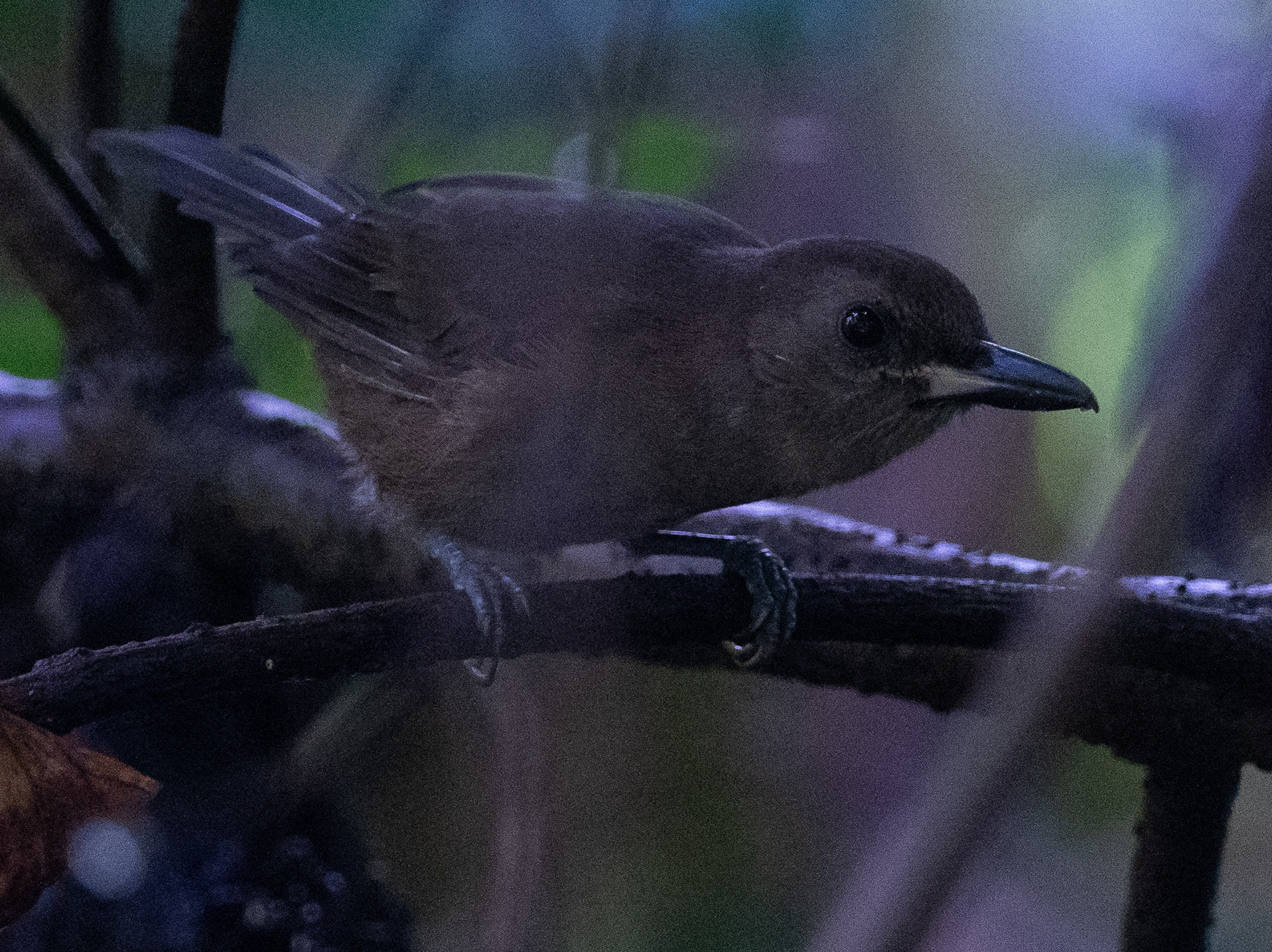 Fiji Shrikebill
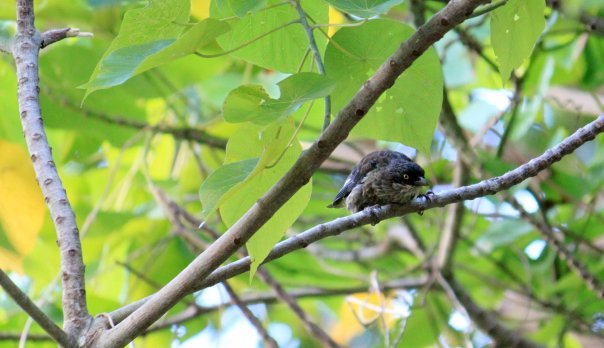 Polynesian Starling
In short
The Fiji Shrikebill and Polynesian Starling can be distinguished primarily by their structure and behavior. The shrikebill has a stout, hooked bill typical of a flycatcher, while the starling has a more slender, straight bill. Behaviorally, shrikebills are more likely to be seen foraging in dense foliage, whereas starlings often perch in the open.
Identification tips
- Bill shape: Look for the stout, hooked bill of the Fiji Shrikebill versus the slender, straight bill of the Polynesian Starling.
- Plumage gloss: Note the glossy, iridescent plumage of the Polynesian Starling compared to the duller tones of the Fiji Shrikebill.
- Foraging behavior: Observe the Fiji Shrikebill in dense foliage, while the Polynesian Starling may be seen in more open areas.
- Vocalizations: Listen for the harsh calls of the shrikebill versus the more melodic starling.
Size
The Polynesian Starling is generally larger than the Fiji Shrikebill.
Plumage
The Fiji Shrikebill has a more uniform, duller plumage, often appearing grayish or olive. In contrast, the Polynesian Starling typically has a glossy, darker plumage with iridescence.
Behaviour
Fiji Shrikebills are often seen actively foraging in dense foliage, using their hooked bills to glean insects. Polynesian Starlings are more likely to be observed perching openly and may be seen feeding on fruits.
Habitat
Both species can be found in forested areas, but the Fiji Shrikebill prefers denser undergrowth, while the Polynesian Starling is more adaptable and can be found in a wider range of habitats, including open areas.
Voice
The vocalizations of these species differ, with the Fiji Shrikebill producing a series of harsh, chattering calls, while the Polynesian Starling's calls are more melodic and varied.