Birdr

Five-striped Sparrow vs Siberian Pipit

Amphispizopsis quinquestriata versus Anthus japonicus

Play a quiz with Five-striped Sparrow and Siberian Pipit
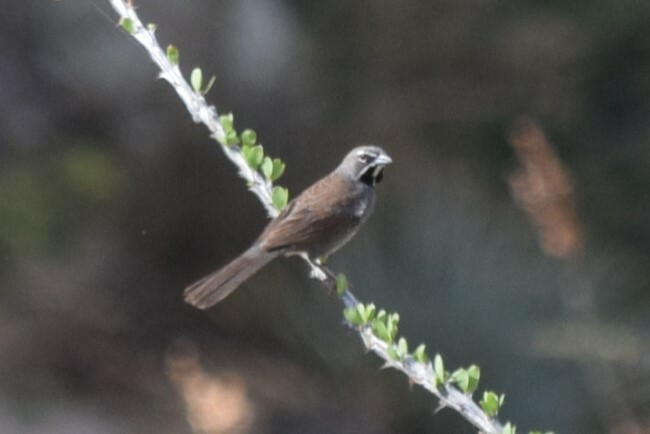
Five-striped Sparrow (Amphispizopsis quinquestriata) Five-striped Sparrow
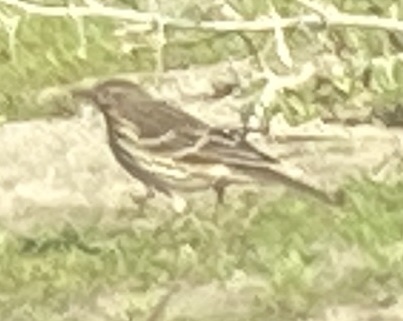
Siberian Pipit (Anthus japonicus) Siberian Pipit

Media

Loading…

In short

The Five-striped Sparrow and Siberian Pipit are unlikely to be confused due to their distinct habitats and geographic ranges, but in the rare event of overlap, focus on their structure and plumage. The sparrow is more robust with a distinctive facial pattern, while the pipit is slender with a more uniform coloration.

Identification tips

  1. Facial Pattern: Look for the Five-striped Sparrow's distinctive facial stripes. 2. Body Shape: Note the stockier build of the sparrow versus the slender pipit. 3. Habitat: Consider the habitat; sparrows are in arid regions, while pipits are in damp, open areas. 4. Behavior: Observe movement; sparrows may hop, pipits often walk or run.

Size

The Five-striped Sparrow is relatively robust and stocky, whereas the Siberian Pipit is slender and elongated.

Plumage

The Five-striped Sparrow has a bold facial pattern with five distinct stripes, including a prominent white supercilium and malar stripe. In contrast, the Siberian Pipit has a more uniform brownish plumage with subtle streaking and lacks the striking facial markings.

Behaviour

The Five-striped Sparrow is often seen foraging on the ground in arid canyons, while the Siberian Pipit is more likely to be observed in open, damp habitats, often walking or running rather than hopping.

Habitat

The Five-striped Sparrow inhabits arid canyons in the southwestern United States and northern Mexico. The Siberian Pipit prefers open, damp environments such as tundra, marsh edges, and rice fields, primarily in Siberia and parts of East Asia.

Voice

Vocalizations are not well-documented for direct comparison, but generally, sparrows have more complex songs compared to the simpler calls of pipits.

Submit a better description

Use the same sections as the comparison. Your text is published immediately.

The Five-striped Sparrow and Siberian Pipit are unlikely to be confused due to their distinct habitats and geographic ranges, but in the rare event of overlap, focus on their structure and plumage. The sparrow is more robust with a distinctive facial pattern, while the pipit is slender with a more uniform coloration.

  1. Facial Pattern: Look for the Five-striped Sparrow's distinctive facial stripes. 2. Body Shape: Note the stockier build of the sparrow versus the slender pipit. 3. Habitat: Consider the habitat; sparrows are in arid regions, while pipits are in damp, open areas. 4. Behavior: Observe movement; sparrows may hop, pipits often walk or run.

The Five-striped Sparrow is relatively robust and stocky, whereas the Siberian Pipit is slender and elongated.

The Five-striped Sparrow has a bold facial pattern with five distinct stripes, including a prominent white supercilium and malar stripe. In contrast, the Siberian Pipit has a more uniform brownish plumage with subtle streaking and lacks the striking facial markings.

The Five-striped Sparrow is often seen foraging on the ground in arid canyons, while the Siberian Pipit is more likely to be observed in open, damp habitats, often walking or running rather than hopping.

The Five-striped Sparrow inhabits arid canyons in the southwestern United States and northern Mexico. The Siberian Pipit prefers open, damp environments such as tundra, marsh edges, and rice fields, primarily in Siberia and parts of East Asia.

Vocalizations are not well-documented for direct comparison, but generally, sparrows have more complex songs compared to the simpler calls of pipits.

Discard your changes?

You have unsaved edits. If you leave now, those changes will be lost.

Five-striped Sparrow · Siberian Pipit · My Tricky Birds