
Fulvous Whistling-Duck vs Goldcrest
Dendrocygna bicolor versus Regulus regulus
Play a quiz with Fulvous Whistling-Duck and Goldcrest
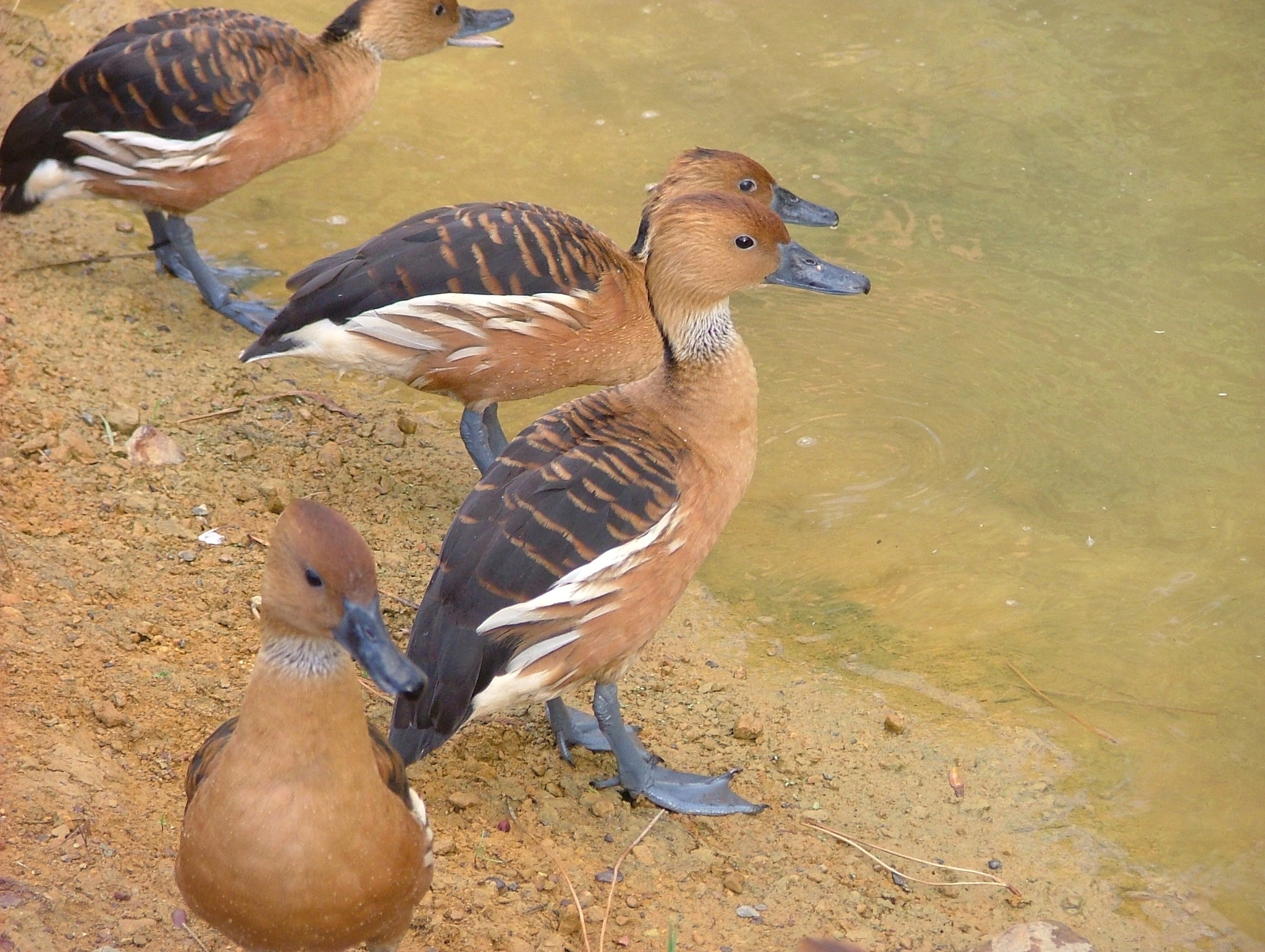 Fulvous Whistling-Duck
 Goldcrest
In short
The Goldcrest (Regulus regulus) is a tiny, brightly colored songbird known for its distinctive crown stripe and small size, typically inhabiting coniferous forests in Europe. In contrast, the Fulvous Whistling-Duck (Dendrocygna bicolor) is a larger, waterfowl species with a more robust body, notable for its long neck and distinctive whistling calls, often found in rice fields and wetlands. Their habitats, sizes, and vocalizations significantly differ, making them relatively easy to distinguish for birdwatchers.
Identification tips
- Birds of the World Similar-Species Diagnostics:
- The Goldcrest can be distinguished from similar species such as the Firecrest by the absence of white wing bars, and its distinctive crown stripe is a key identification feature.
-
The Fulvous Whistling-Duck can be easily identified by its unique body shape, long neck, and whistling calls, which differentiate it from other ducks in its habitat.
-
AI Field Diagnostics:
- Size: The Goldcrest is much smaller than the Fulvous Whistling-Duck, so size alone can help in identification. Remember, if it’s tiny and flitting around in trees, it’s likely a Goldcrest.
- Color and Markings: Look for the vibrant yellow or orange crown stripe of the Goldcrest, which is absent in the Fulvous Whistling-Duck, which instead has a more uniform reddish-brown color.
- Behavior: If you observe a small bird hovering and darting among branches, it’s likely a Goldcrest. In contrast, if you see a larger bird waddling in wetlands or rice paddies, it’s probably a Fulvous Whistling-Duck.
- Vocalizations: Familiarize yourself with the different calls. The melodic song of the Goldcrest is quite different from the raspy, whistling sounds of the Fulvous Whistling-Duck, which can be a helpful auditory cue.
By focusing on these distinguishing features—size, plumage, habitat, and vocalizations—birdwatchers can confidently differentiate between the Goldcrest and the Fulvous Whistling-Duck in the field.
Size
- Goldcrest: This species is one of the smallest birds in Europe, measuring approximately 3.1 to 4.1 inches (7.9 to 10.5 cm) in length and weighing around 0.3 to 0.4 ounces (9 to 12 grams).
- Fulvous Whistling-Duck: Much larger than the Goldcrest, this duck measures about 18 to 22 inches (46 to 56 cm) in length and has a weight range of 1.5 to 3.0 pounds (0.7 to 1.4 kg), making it a medium-sized waterfowl.
Plumage
- Goldcrest: Characterized by a vibrant greenish-yellow back and a distinctive yellow or orange crown stripe bordered by black on each side. Its underparts are pale with a subtle streaking.
- Fulvous Whistling-Duck: This species has a predominantly fulvous (reddish-brown) body with a darker, almost blackish head and neck. It features a lighter, contrasting chest and belly, and its wings have dark brown feathers with lighter tips.
Behaviour
- Goldcrest: Primarily insectivorous, foraging in trees and shrubs for insects and spiders. They are known for their active, acrobatic movements as they flit through branches.
- Fulvous Whistling-Duck: This species is often seen in small flocks, grazing on seeds and grains. They exhibit a distinctive whistling call and are more terrestrial than many other ducks, often seen walking or dabbling in water.
Habitat
- Goldcrest: Prefers coniferous forests and mixed woodlands, especially in areas with dense foliage where it can find ample insects.
- Fulvous Whistling-Duck: Typically found in shallowly flooded agricultural areas, such as rice fields, marshes, and wet grasslands, where they can access their primary food sources.
Voice
- Goldcrest: Their song is a high-pitched, rapid series of notes, often described as a “cheese, cheese, cheese,” which can be quite melodic.
- Fulvous Whistling-Duck: Known for their raspy, two-noted calls, which are often heard at night, and they may produce a series of soft whistles in flight.