Birdr

Geoffroy's Daggerbill vs Brown Violetear

Schistes geoffroyi versus Colibri delphinae

Play a quiz with Geoffroy's Daggerbill and Brown Violetear
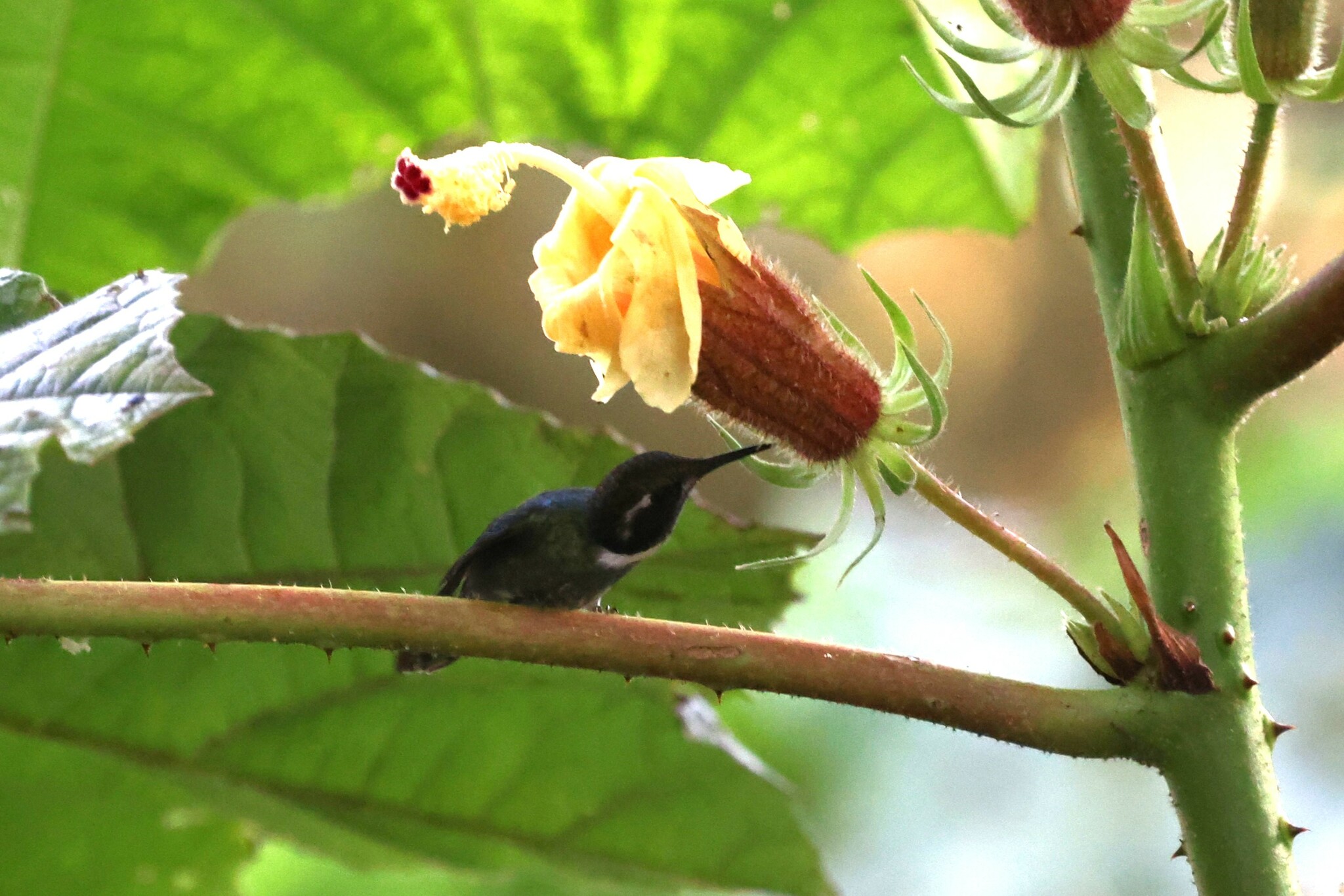
Geoffroy's Daggerbill (Schistes geoffroyi) Geoffroy's Daggerbill
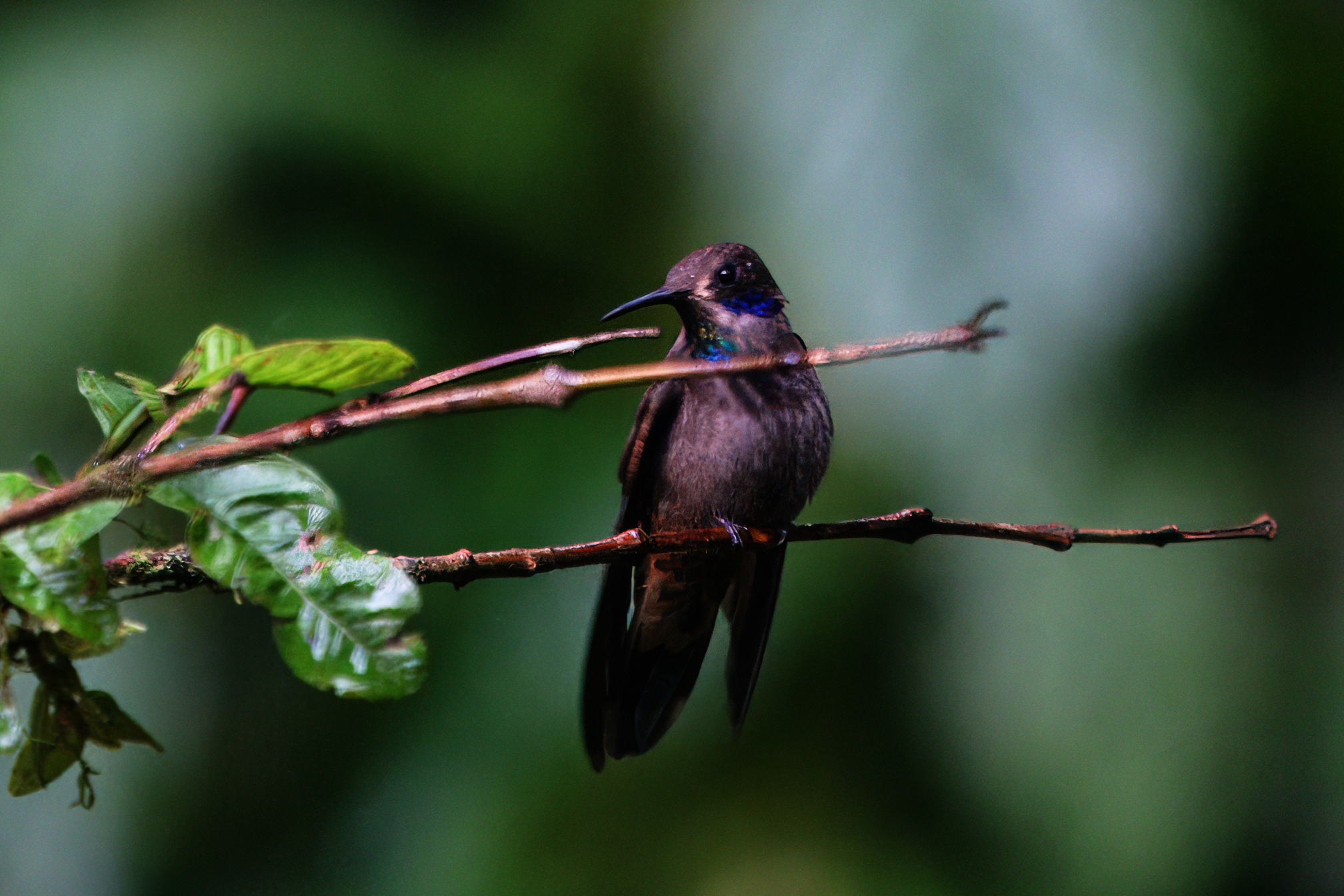
Brown Violetear (Colibri delphinae) Brown Violetear

Media

Loading…

In short

Geoffroy's Daggerbill and Brown Violetear are both hummingbirds but differ significantly in plumage and behavior. The daggerbill has a distinctive white postocular streak and coppery bronze lower back, while the violetear is noted for its bright violet auriculars. Both species inhabit humid forests, but their feeding and vocal behaviors are distinct.

Identification tips

Look for the white postocular streak in Geoffroy's Daggerbill, which is longer than in similar species. Note the bright violet auriculars in Brown Violetear. Observe behavior: violetears are more social and vocal, often at feeders, while daggerbills are solitary and feed by nectar robbing. Check habitat: violetears in semi-open areas, daggerbills in dense understory.

Size

Both species are similar in size, typical of hummingbirds, but specific measurements are not provided.

Plumage

Geoffroy's Daggerbill has a long white postocular streak and a coppery bronze lower back, while Brown Violetear features bright violet auriculars. The daggerbill's males have a glittering green gorget, whereas the violetear lacks this feature. Female daggerbills have a white throat speckled with green, unlike the violetear.

Behaviour

Brown Violetear males form leks and are often seen at feeders, while Geoffroy's Daggerbill is more solitary, feeding from tubular flowers or robbing nectar.

Habitat

Both species inhabit humid forests, but Brown Violetear prefers semi-open areas like second-growth edges and shade coffee plantations, whereas Geoffroy's Daggerbill is found in the understory of montane forests.

Voice

Brown Violetear males sing sharp, rough songs during the breeding season, while the songs of Geoffroy's Daggerbill differ but are not specified.

Submit a better description

Use the same sections as the comparison. Your text is published immediately.

Geoffroy's Daggerbill and Brown Violetear are both hummingbirds but differ significantly in plumage and behavior. The daggerbill has a distinctive white postocular streak and coppery bronze lower back, while the violetear is noted for its bright violet auriculars. Both species inhabit humid forests, but their feeding and vocal behaviors are distinct.

Look for the white postocular streak in Geoffroy's Daggerbill, which is longer than in similar species. Note the bright violet auriculars in Brown Violetear. Observe behavior: violetears are more social and vocal, often at feeders, while daggerbills are solitary and feed by nectar robbing. Check habitat: violetears in semi-open areas, daggerbills in dense understory.

Both species are similar in size, typical of hummingbirds, but specific measurements are not provided.

Geoffroy's Daggerbill has a long white postocular streak and a coppery bronze lower back, while Brown Violetear features bright violet auriculars. The daggerbill's males have a glittering green gorget, whereas the violetear lacks this feature. Female daggerbills have a white throat speckled with green, unlike the violetear.

Brown Violetear males form leks and are often seen at feeders, while Geoffroy's Daggerbill is more solitary, feeding from tubular flowers or robbing nectar.

Both species inhabit humid forests, but Brown Violetear prefers semi-open areas like second-growth edges and shade coffee plantations, whereas Geoffroy's Daggerbill is found in the understory of montane forests.

Brown Violetear males sing sharp, rough songs during the breeding season, while the songs of Geoffroy's Daggerbill differ but are not specified.

Discard your changes?

You have unsaved edits. If you leave now, those changes will be lost.

Geoffroy's Daggerbill · Brown Violetear · My Tricky Birds