
Great Bustard vs Blue-cheeked Bee-eater
Otis tarda versus Merops persicus
Play a quiz with Great Bustard and Blue-cheeked Bee-eater
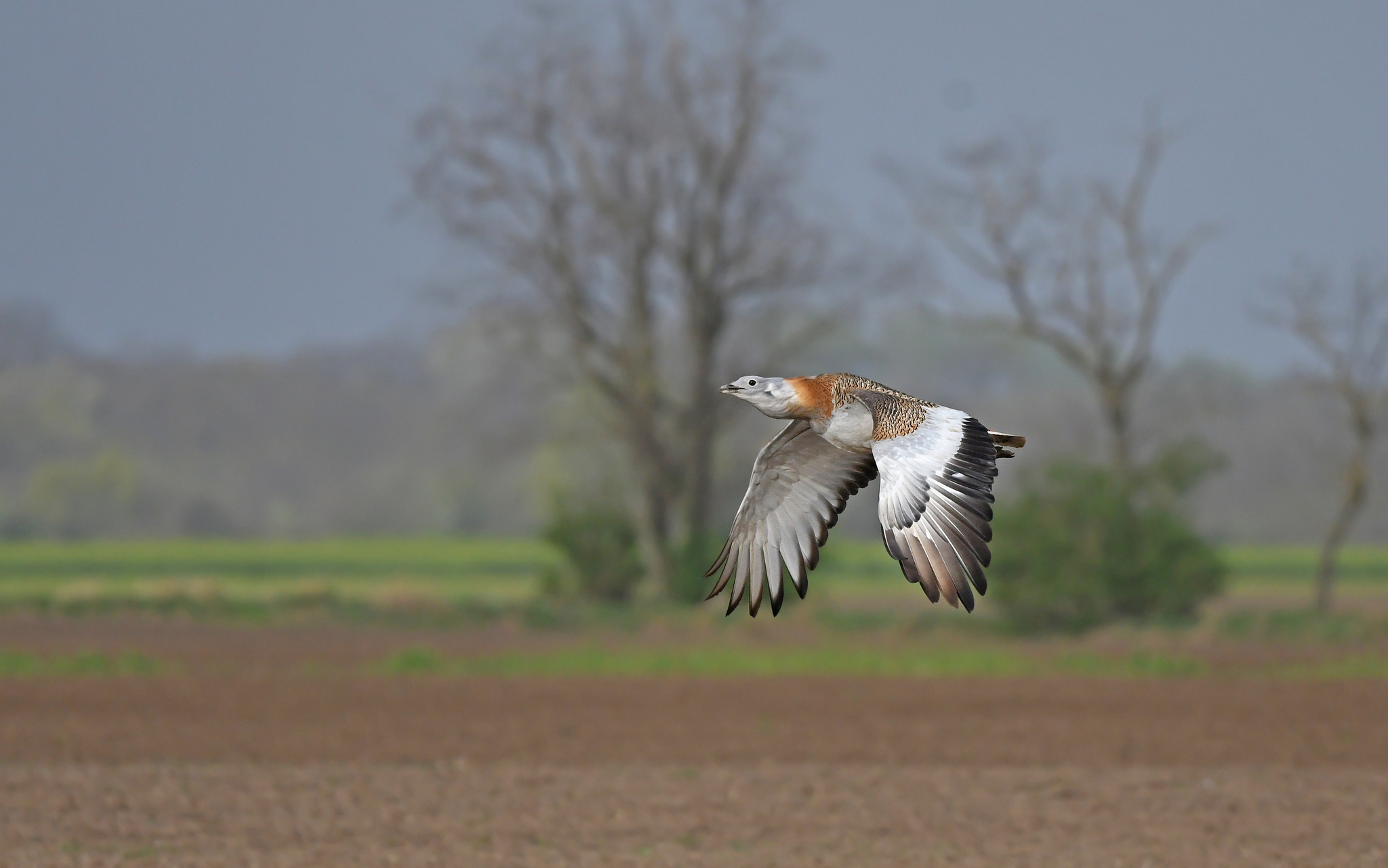 Great Bustard
 Blue-cheeked Bee-eater
In short
The Great Bustard and Blue-cheeked Bee-eater are vastly different in size and appearance, making them easy to distinguish in the field. The Great Bustard is a large, terrestrial bird with a robust build, while the Blue-cheeked Bee-eater is a slender, colorful aerial insectivore. Their habitats and behaviors are also distinct, with the bustard favoring open grasslands and the bee-eater often seen in open areas near water.
Identification tips
- Size and Shape: Look for the large, heavy build of the Great Bustard compared to the slender, small Blue-cheeked Bee-eater. 2. Plumage Color: Note the brown and white pattern of the bustard versus the green and blue of the bee-eater. 3. Behavior: Observe the bustard walking on the ground and the bee-eater flying and catching insects. 4. Habitat: Check the surrounding environment; bustards are in open fields, bee-eaters near water. 5. Calls: Listen for the bee-eater's calls, as bustards are mostly silent.
Size
The Great Bustard is significantly larger, one of the heaviest flying birds, while the Blue-cheeked Bee-eater is much smaller and more delicate.
Plumage
The Great Bustard has a predominantly brown and white plumage with a distinctive black and white pattern on the wings. In contrast, the Blue-cheeked Bee-eater is vibrant green with a blue face and throat, and a long, pointed tail.
Behaviour
Great Bustards are ground-dwelling and often seen walking in open fields, whereas Blue-cheeked Bee-eaters are agile fliers, frequently seen catching insects in flight.
Habitat
Great Bustards inhabit open grasslands and steppe regions, while Blue-cheeked Bee-eaters prefer open areas near water, such as riverbanks and wetlands.
Voice
The Great Bustard is generally silent, while the Blue-cheeked Bee-eater is vocal, often heard giving soft, rolling calls during flight.