Birdr

Great Grey Owl vs Tengmalm's Owl

Strix nebulosa versus Aegolius funereus

Play a quiz with Great Grey Owl and Tengmalm's Owl
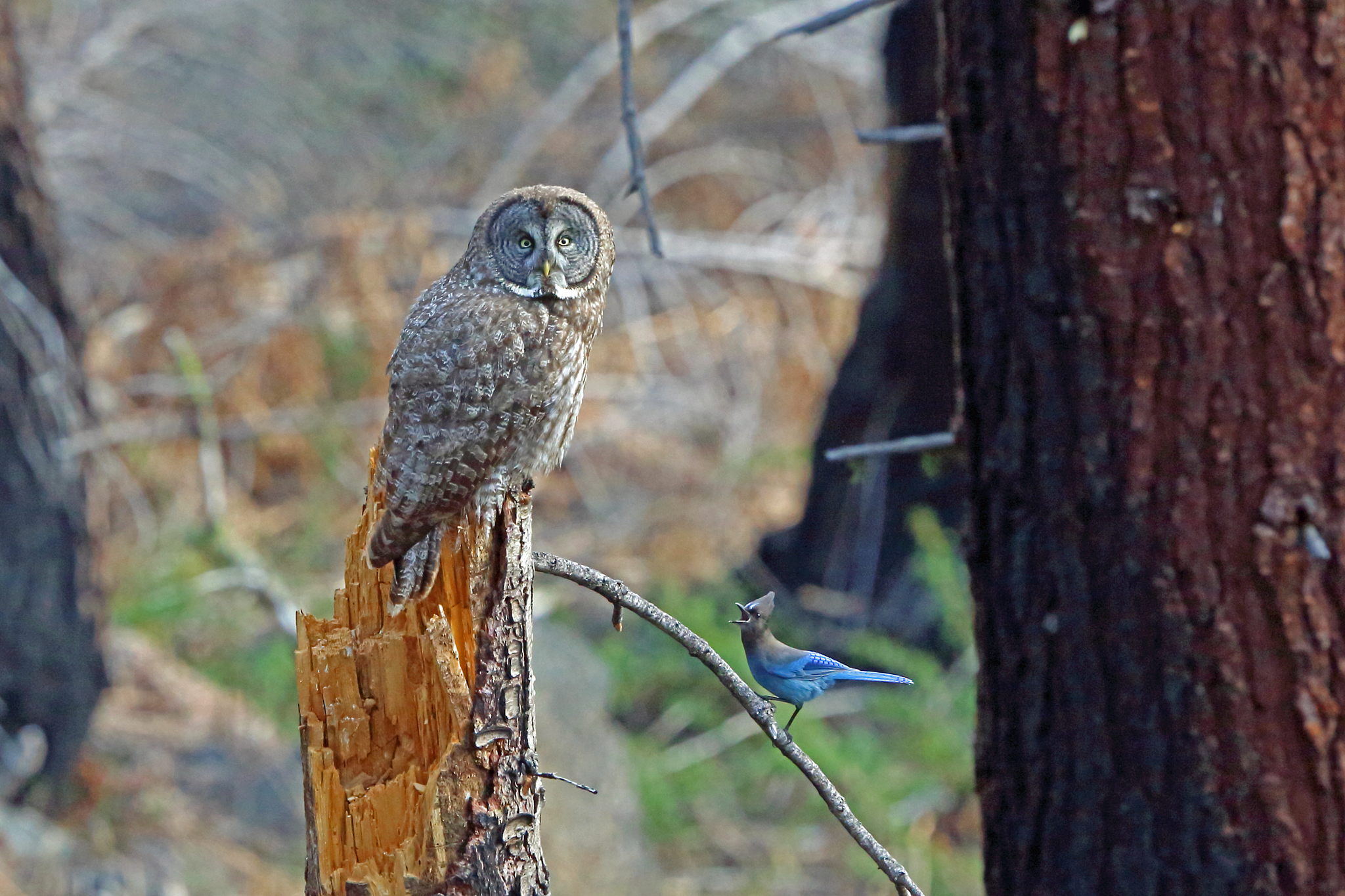
Great Grey Owl (Strix nebulosa) Great Grey Owl
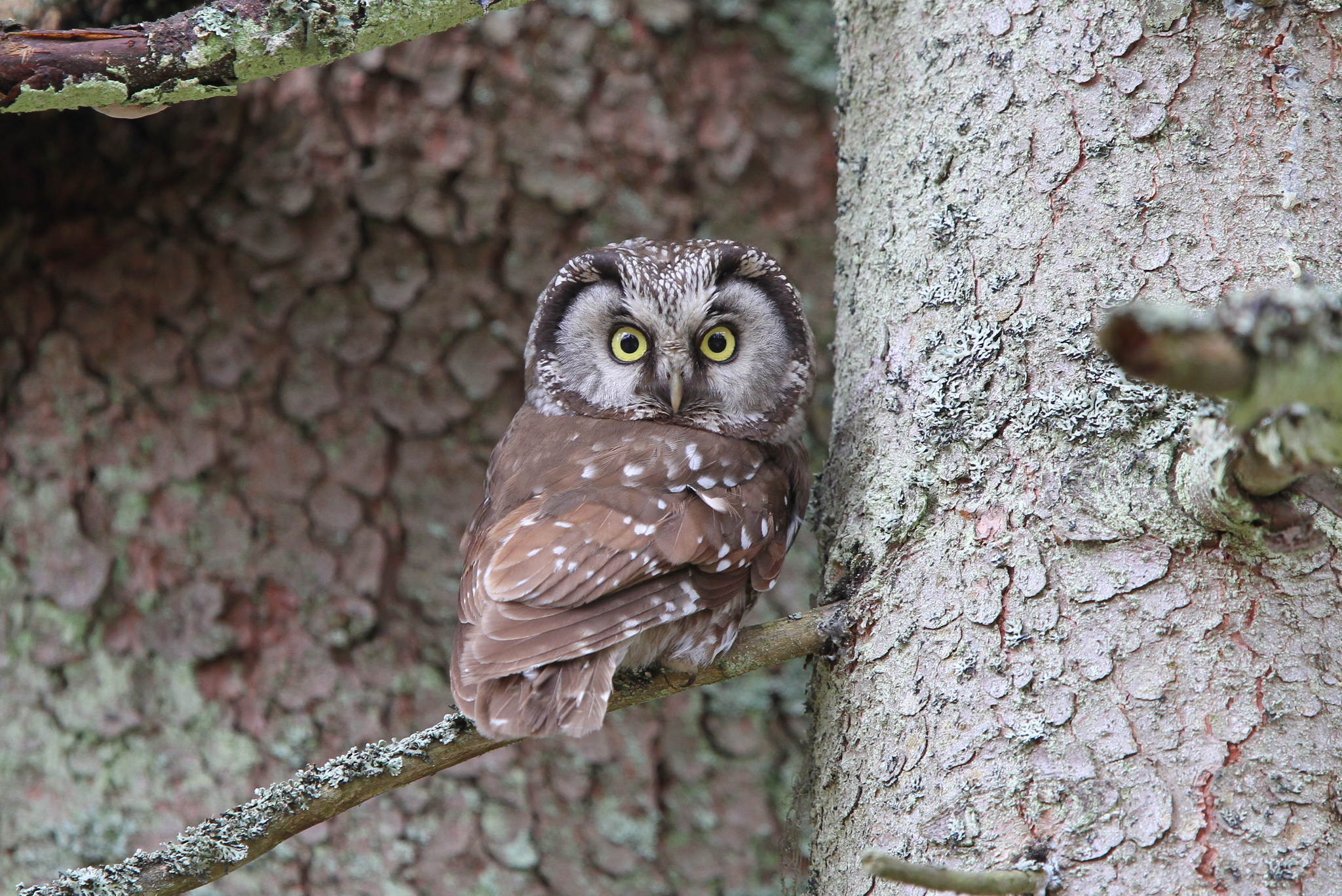
Tengmalm's Owl (Aegolius funereus) Tengmalm's Owl

Media

Loading…

In short

The Great Grey Owl is a large, imposing owl with a distinctive facial disc, while the Tengmalm's Owl is much smaller and has a more compact appearance. Both species inhabit northern forests, but the Great Grey Owl is more likely to be seen in open areas such as meadows and bogs. Vocalizations differ significantly, aiding in identification.

Identification tips

1. Size and Shape: Look for the Great Grey Owl's larger size and prominent facial disc. 2. Facial Markings: Check for the Great Grey Owl's white 'bow tie' under the chin. 3. Habitat: Note the setting; Great Grey Owls prefer open areas, while Tengmalm's Owls favor dense forests. 4. Calls: Listen for the deep hoots of the Great Grey Owl versus the repetitive whistles of the Tengmalm's Owl.

Size

The Great Grey Owl is significantly larger than the Tengmalm's Owl, appearing more massive due to its extensive plumage, although its actual body mass is less than the Great Horned Owl. Tengmalm's Owl is small and compact.

Plumage

The Great Grey Owl has a large, round facial disc with concentric rings and a prominent white 'bow tie' marking under the chin. Tengmalm's Owl has a smaller facial disc with a more uniform brown and white pattern, lacking the 'bow tie'.

Behaviour

Great Grey Owls are known for their ability to hunt by plunging through snow to catch prey, while Tengmalm's Owls are more secretive and often hunt from perches.

Habitat

Great Grey Owls are found in open areas near forests, such as meadows and bogs, especially in northern regions. Tengmalm's Owls prefer dense coniferous forests and are less likely to be seen in open spaces.

Voice

The Great Grey Owl's call is a series of deep, resonant hoots, while the Tengmalm's Owl produces a series of higher-pitched, repetitive whistles.

Submit a better description

Use the same sections as the comparison. Your text is published immediately.

The Great Grey Owl is a large, imposing owl with a distinctive facial disc, while the Tengmalm's Owl is much smaller and has a more compact appearance. Both species inhabit northern forests, but the Great Grey Owl is more likely to be seen in open areas such as meadows and bogs. Vocalizations differ significantly, aiding in identification.

1. Size and Shape: Look for the Great Grey Owl's larger size and prominent facial disc. 2. Facial Markings: Check for the Great Grey Owl's white 'bow tie' under the chin. 3. Habitat: Note the setting; Great Grey Owls prefer open areas, while Tengmalm's Owls favor dense forests. 4. Calls: Listen for the deep hoots of the Great Grey Owl versus the repetitive whistles of the Tengmalm's Owl.

The Great Grey Owl is significantly larger than the Tengmalm's Owl, appearing more massive due to its extensive plumage, although its actual body mass is less than the Great Horned Owl. Tengmalm's Owl is small and compact.

The Great Grey Owl has a large, round facial disc with concentric rings and a prominent white 'bow tie' marking under the chin. Tengmalm's Owl has a smaller facial disc with a more uniform brown and white pattern, lacking the 'bow tie'.

Great Grey Owls are known for their ability to hunt by plunging through snow to catch prey, while Tengmalm's Owls are more secretive and often hunt from perches.

Great Grey Owls are found in open areas near forests, such as meadows and bogs, especially in northern regions. Tengmalm's Owls prefer dense coniferous forests and are less likely to be seen in open spaces.

The Great Grey Owl's call is a series of deep, resonant hoots, while the Tengmalm's Owl produces a series of higher-pitched, repetitive whistles.

Discard your changes?

You have unsaved edits. If you leave now, those changes will be lost.

Great Grey Owl · Tengmalm's Owl · My Tricky Birds