
Greater Rhea vs Pallas's Reed Bunting
Rhea americana versus Emberiza pallasi
Play a quiz with Greater Rhea and Pallas's Reed Bunting
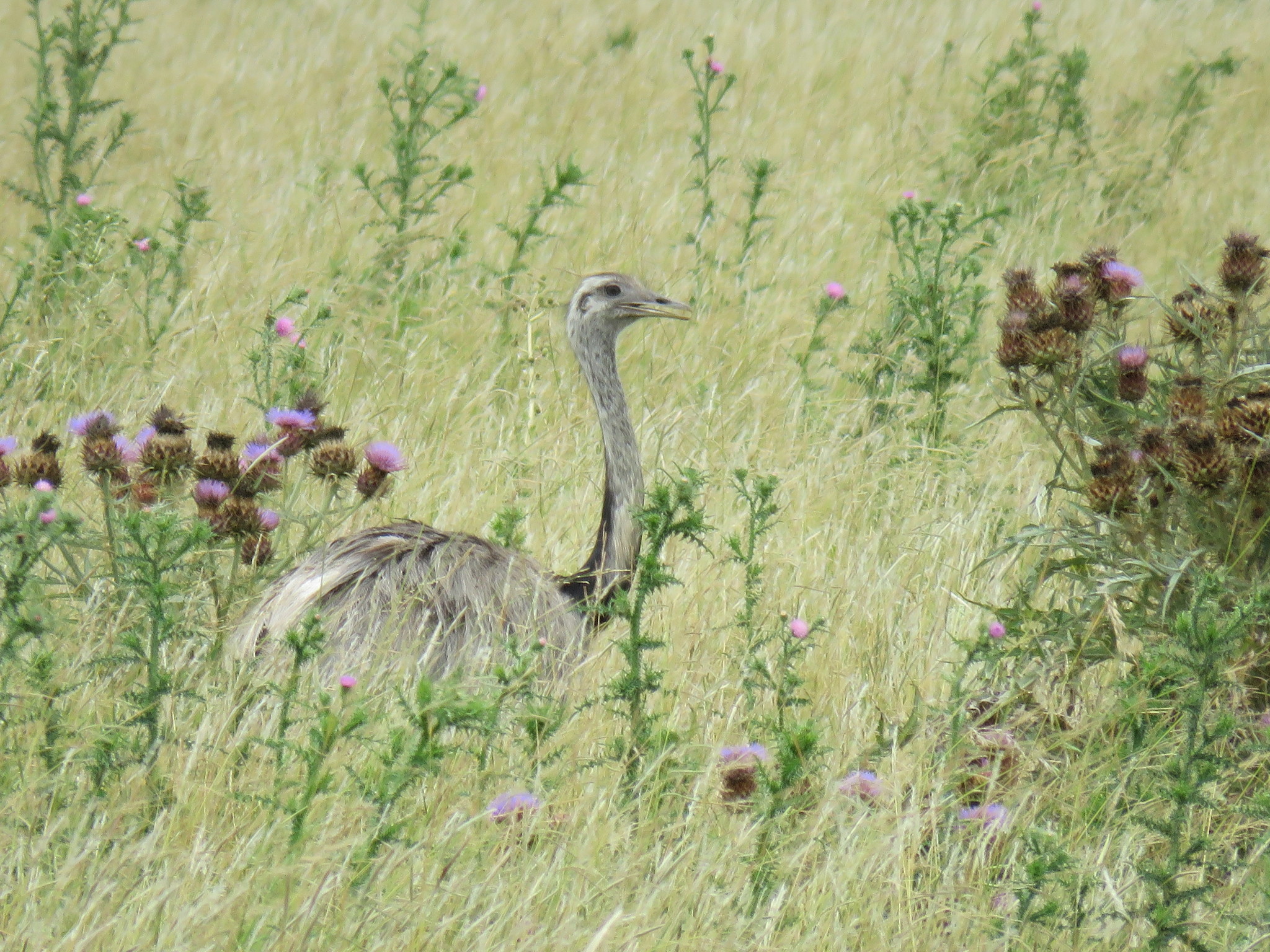 Greater Rhea
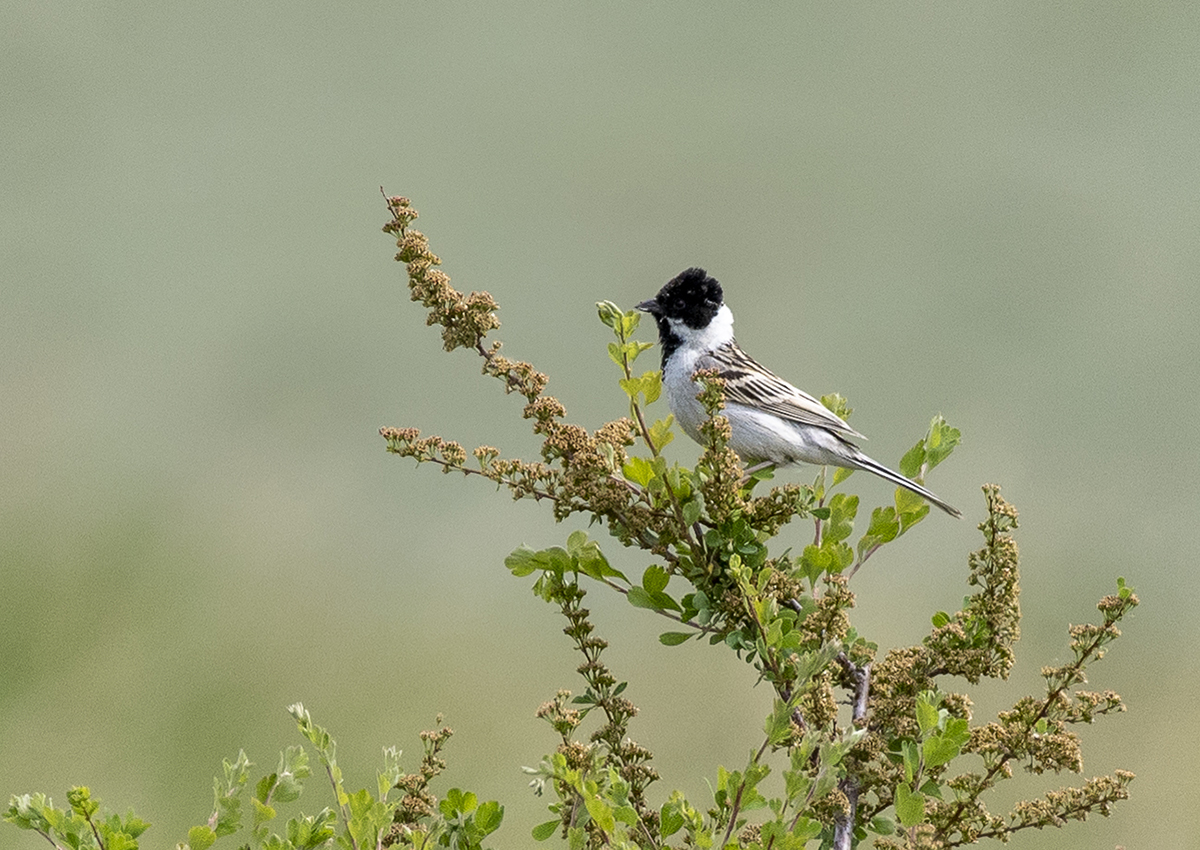 Pallas's Reed Bunting
In short
Pallas's Reed Bunting (Emberiza pallasi) is a small, sparrow-like bird primarily found in wetlands and reed beds across parts of Asia, while the Greater Rhea (Rhea americana) is a large flightless bird native to South America, often inhabiting grasslands and savannas. Key distinctions include their size, habitat preferences, vocalizations, and overall appearance, which are critical for birdwatchers to identify in the field.
Identification tips
- Birds of the World Similar-Species Diagnostics:
- For Pallas's Reed Bunting: They are small, with a distinctive black crown and white supercilium in males, and found in reed beds. Their vocalizations consist of melodious trills.
-
For Greater Rhea: They are large, flightless birds with shaggy grayish-brown plumage, notable for their size and presence in open grasslands rather than wetlands.
-
AI Field Diagnostics:
- Size Difference: The most immediate identification factor is size; the Greater Rhea is enormous compared to the small Pallas's Reed Bunting.
- Plumage Patterns: Look for the Pallas's Reed Bunting’s distinct markings (black crown and white supercilium) against the Greater Rhea's more uniform, shaggy texture.
- Habitat Preference: Pallas's Reed Bunting will be found in wet, vegetated areas, while Greater Rhea prefers open grasslands; this ecological context can aid in identification.
- Behavioral Cues: Watch for the flight behavior; the Pallas's Reed Bunting is an agile flier often hidden in reeds, while the Greater Rhea is a strong runner that typically does not fly.
- Vocalizations: Listen for the melodic trills of the Pallas's Reed Bunting in wetland areas versus the low booming calls of the Greater Rhea in open grasslands.
By using these identification tips, birdwatchers can effectively distinguish between Pallas's Reed Bunting and Greater Rhea in their respective habitats.
Size
- Pallas's Reed Bunting: This species measures approximately 14-16 cm in length and has a wingspan of about 21-23 cm. It is small and compact, resembling a sparrow.
- Greater Rhea: Significantly larger, the Greater Rhea can reach a height of 1.5 to 1.8 meters and weigh between 20-40 kg. Its size is comparable to that of an ostrich, making it one of the largest birds in South America.
Plumage
- Pallas's Reed Bunting: The male has a distinctive black crown, a white supercilium (eyebrow stripe), and a brownish body with streaked underparts. The female is more subdued in coloration, with lighter brown and less pronounced streaking.
- Greater Rhea: The plumage is generally grayish-brown and shaggy, providing excellent camouflage in their grassland habitats. They have long, feathered necks and a notable lack of flight feathers, giving them a distinctive appearance compared to other birds.
Behaviour
- Pallas's Reed Bunting: Typically found in pairs or small groups, these birds are often seen foraging low in vegetation for seeds and insects. They are agile flyers but prefer to remain hidden in reeds and grass.
- Greater Rhea: They are social birds that often form small groups. Their foraging behavior includes running and browsing on grasses and seeds. Unlike Pallas's Reed Bunting, they are strong runners and can evade threats by sprinting rather than flying.
Habitat
- Pallas's Reed Bunting: Prefers wetland habitats, especially reed beds, marshes, and riverbanks. They require dense vegetation for nesting and shelter.
- Greater Rhea: Typically inhabits open grasslands, savannas, and scrubland. They are adaptable and can also be found in agricultural areas near native vegetation.
Voice
- Pallas's Reed Bunting: Their song is a series of melodious notes, often described as a “charming” trill. Males are more vocal during the breeding season to attract females.
- Greater Rhea: Vocalizations include a range of low booming sounds, honks, and grunts. They can be quite vocal, especially during courtship displays.