
Greater Scaup vs King Eider
Aythya marila versus Somateria spectabilis
Play a quiz with Greater Scaup and King Eider
 Greater Scaup
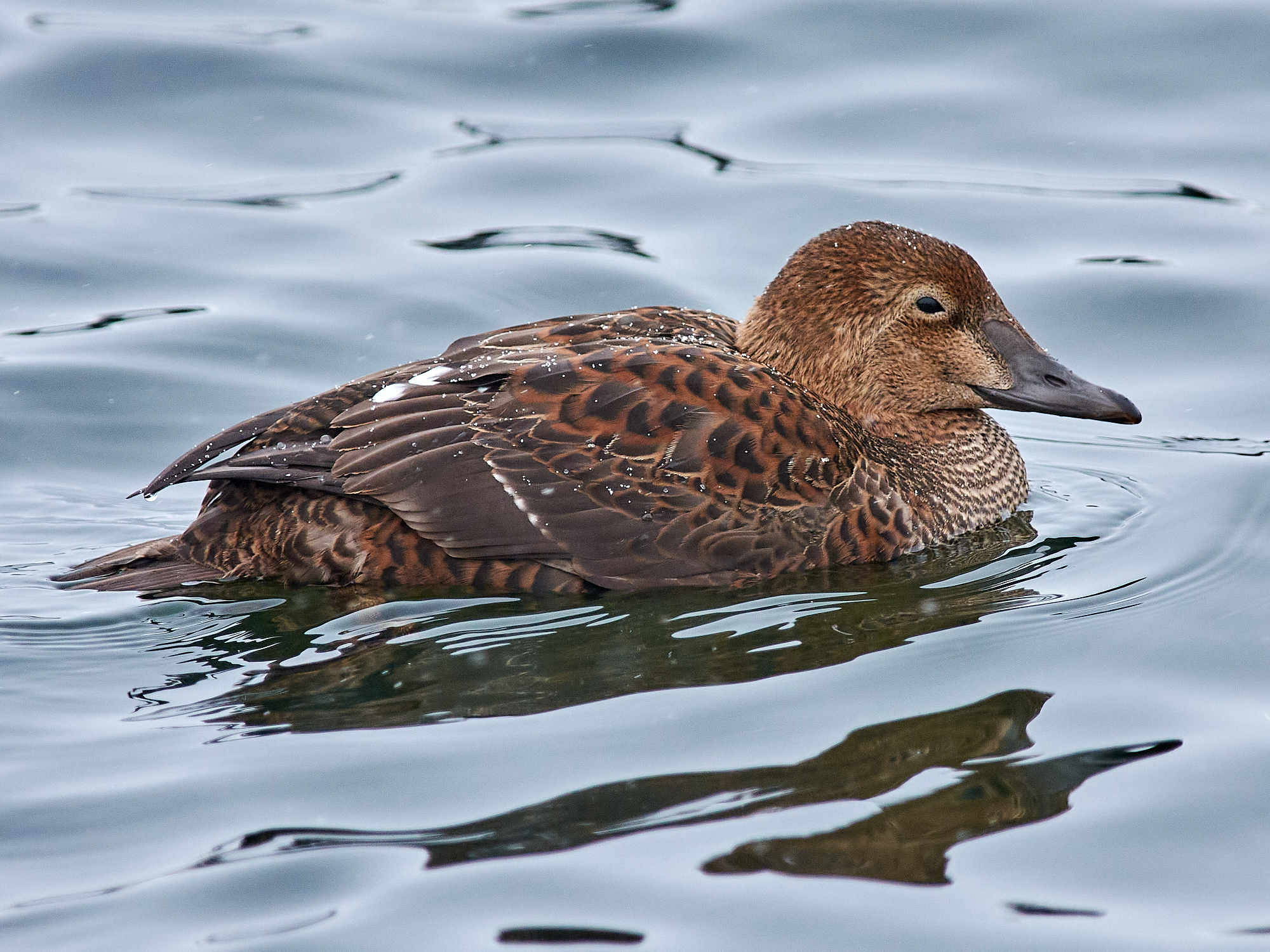 King Eider
In short
The Greater Scaup and King Eider are both diving ducks, but they differ significantly in habitat and plumage. Greater Scaup are typically found in freshwater or coastal marine environments, while King Eiders prefer Arctic and sub-Arctic marine habitats. In terms of plumage, male King Eiders are unmistakable with their colorful head and large orange bill knob, unlike the more uniformly colored Greater Scaup.
Identification tips
- Location: Check the habitat; King Eiders are more likely in Arctic marine environments.
- Plumage: Look for the colorful head and orange bill knob of male King Eiders.
- Size and Shape: King Eiders are larger and bulkier.
- Season: Consider the season; King Eiders migrate with the ice, while Greater Scaup may be more widespread.
Size
King Eiders are generally larger and bulkier than Greater Scaup.
Plumage
Male King Eiders have a striking appearance with a colorful head, black body, and a large orange bill knob. Female King Eiders are mottled brown but have a distinctive profile. Greater Scaup males have a black head with a greenish sheen, a gray back, and white sides, while females are brown with a white face patch.
Behaviour
Both species dive for food, but King Eiders are more often found in marine environments, diving for marine invertebrates, while Greater Scaup may be seen in both freshwater and marine habitats.
Habitat
Greater Scaup are found in freshwater lakes and coastal marine environments, while King Eiders are primarily Arctic and sub-Arctic sea ducks, often seen in icy waters.
Voice
Vocalizations are not a primary distinguishing feature in the field for these species.