
Greater White-fronted Goose vs Hooded Crow
Anser albifrons versus Corvus cornix
Play a quiz with Greater White-fronted Goose and Hooded Crow
 Greater White-fronted Goose
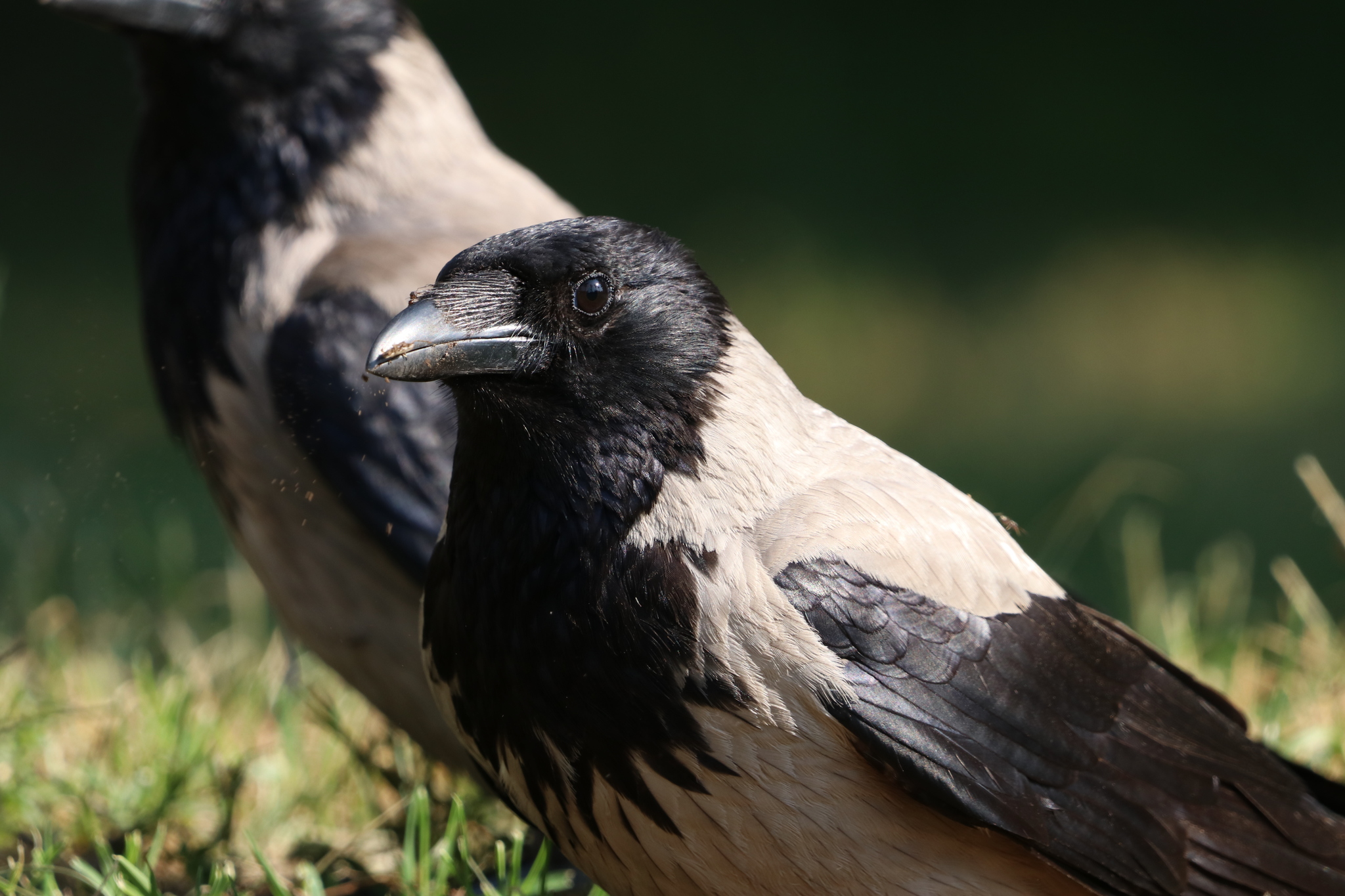 Hooded Crow
In short
The Greater White-fronted Goose and the Hooded Crow are easily distinguished by their size, structure, and coloration. The goose is a large waterfowl with a distinctive white face patch, while the crow is a medium-sized passerine with a gray and black plumage. Both species are found in different habitats, with the goose favoring wetlands and fields, and the crow more commonly seen in urban and rural areas.
Identification tips
- Look for the white facial patch on the Greater White-fronted Goose, absent in the Hooded Crow. 2. Note the size difference: the goose is much larger. 3. Observe the habitat: geese are more likely in wetlands, crows in urban or rural areas. 4. Listen for vocalizations: geese have a high-pitched call, crows a harsh caw.
Size
The Greater White-fronted Goose is significantly larger than the Hooded Crow, with a robust body and long neck typical of geese, whereas the crow is smaller and more slender.
Plumage
The goose has a brownish body with a white face patch and black barring on the belly, while the Hooded Crow features a pale gray body with contrasting black head, wings, and tail.
Behaviour
Greater White-fronted Geese are gregarious and often seen in large flocks, especially during migration. Hooded Crows are social but typically seen in smaller groups or pairs, often scavenging.
Habitat
The goose prefers wetlands, grasslands, and agricultural fields, particularly during migration and winter. The crow is more adaptable, commonly found in urban areas, farmland, and open countryside.
Voice
The Greater White-fronted Goose emits a high-pitched, laughing call, while the Hooded Crow has a harsh, cawing call typical of crows.