Birdr

Greater Yellowlegs vs Ruddy Turnstone

Tringa melanoleuca versus Arenaria interpres

Play a quiz with Greater Yellowlegs and Ruddy Turnstone

Greater Yellowlegs (Tringa melanoleuca) Greater Yellowlegs
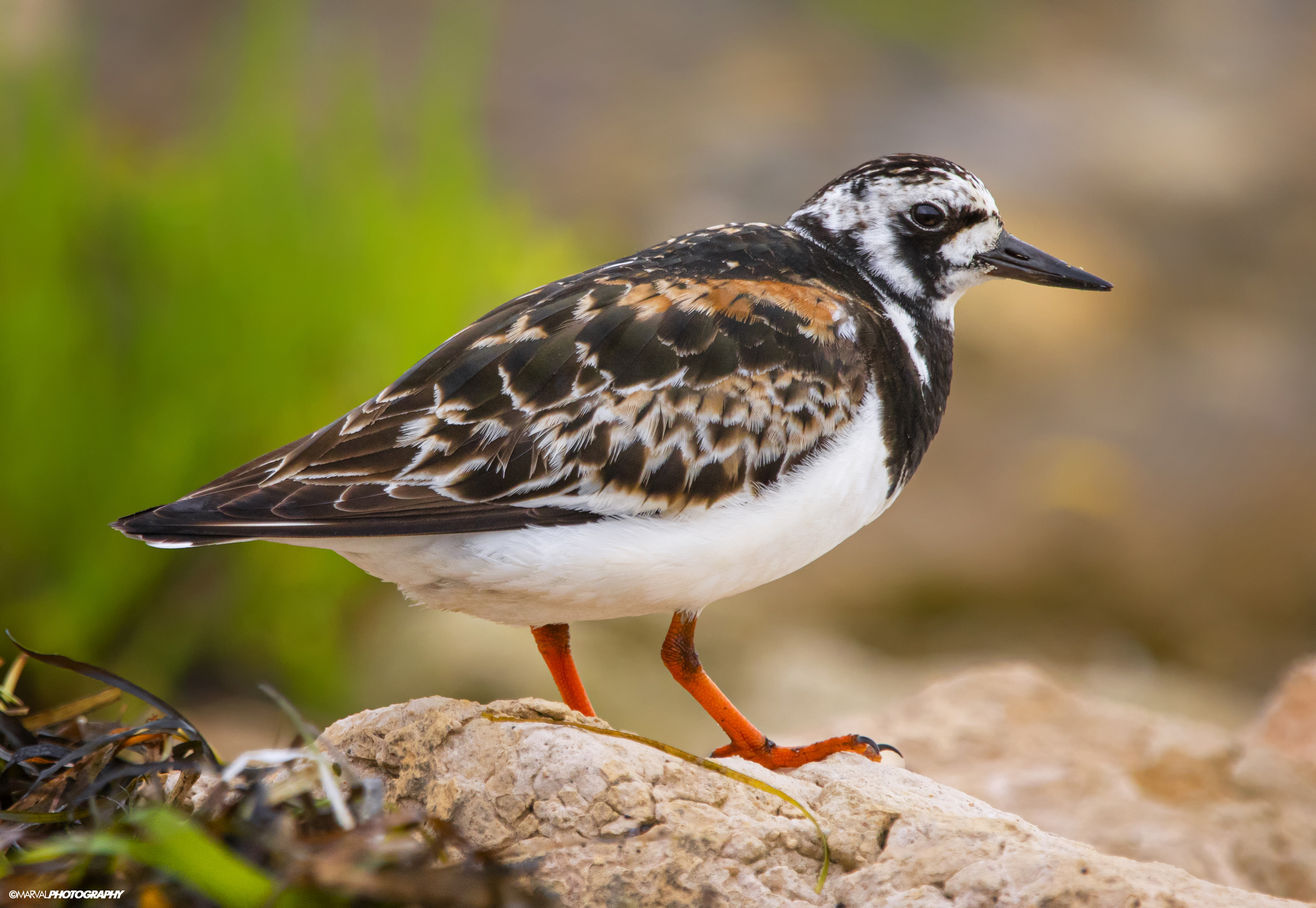
Ruddy Turnstone (Arenaria interpres) Ruddy Turnstone

Media

Loading…

In short

The Greater Yellowlegs and Ruddy Turnstone are both shorebirds but differ significantly in appearance and behavior. The Greater Yellowlegs is more slender with long, bright yellow legs, while the Ruddy Turnstone is stockier with a distinctive black and white pattern and orange legs.

Identification tips

  1. Look for the Greater Yellowlegs' long, bright yellow legs and more slender build. 2. Note the Ruddy Turnstone's bold black and white head pattern and orange legs. 3. Observe behavior: Greater Yellowlegs are more solitary, while Ruddy Turnstones are often seen in groups flipping stones. 4. Listen for the Greater Yellowlegs' loud, piercing call.

Size

The Greater Yellowlegs is larger and more slender than the Ruddy Turnstone.

Plumage

Greater Yellowlegs have a grayish body with fine streaking and long, bright yellow legs. Ruddy Turnstones have a striking black and white head pattern, a mottled brown and black back, and orange legs.

Behaviour

Greater Yellowlegs are often solitary or in small groups, while Ruddy Turnstones are more social and can be seen flipping over stones and debris to find food.

Habitat

Greater Yellowlegs prefer wetlands, including marshes and mudflats, while Ruddy Turnstones are often found on rocky shores and beaches.

Voice

Greater Yellowlegs have a distinctive, loud, and piercing call, often described as a 'telltale' or 'tattler'. Ruddy Turnstones are generally quieter.

Submit a better description

Use the same sections as the comparison. Your text is published immediately.

The Greater Yellowlegs and Ruddy Turnstone are both shorebirds but differ significantly in appearance and behavior. The Greater Yellowlegs is more slender with long, bright yellow legs, while the Ruddy Turnstone is stockier with a distinctive black and white pattern and orange legs.

  1. Look for the Greater Yellowlegs' long, bright yellow legs and more slender build. 2. Note the Ruddy Turnstone's bold black and white head pattern and orange legs. 3. Observe behavior: Greater Yellowlegs are more solitary, while Ruddy Turnstones are often seen in groups flipping stones. 4. Listen for the Greater Yellowlegs' loud, piercing call.

The Greater Yellowlegs is larger and more slender than the Ruddy Turnstone.

Greater Yellowlegs have a grayish body with fine streaking and long, bright yellow legs. Ruddy Turnstones have a striking black and white head pattern, a mottled brown and black back, and orange legs.

Greater Yellowlegs are often solitary or in small groups, while Ruddy Turnstones are more social and can be seen flipping over stones and debris to find food.

Greater Yellowlegs prefer wetlands, including marshes and mudflats, while Ruddy Turnstones are often found on rocky shores and beaches.

Greater Yellowlegs have a distinctive, loud, and piercing call, often described as a 'telltale' or 'tattler'. Ruddy Turnstones are generally quieter.

Discard your changes?

You have unsaved edits. If you leave now, those changes will be lost.

Greater Yellowlegs · Ruddy Turnstone · My Tricky Birds