Birdr

Green Oropendola vs Olive Oropendola

Psarocolius viridis versus Psarocolius bifasciatus

Play a quiz with Green Oropendola and Olive Oropendola
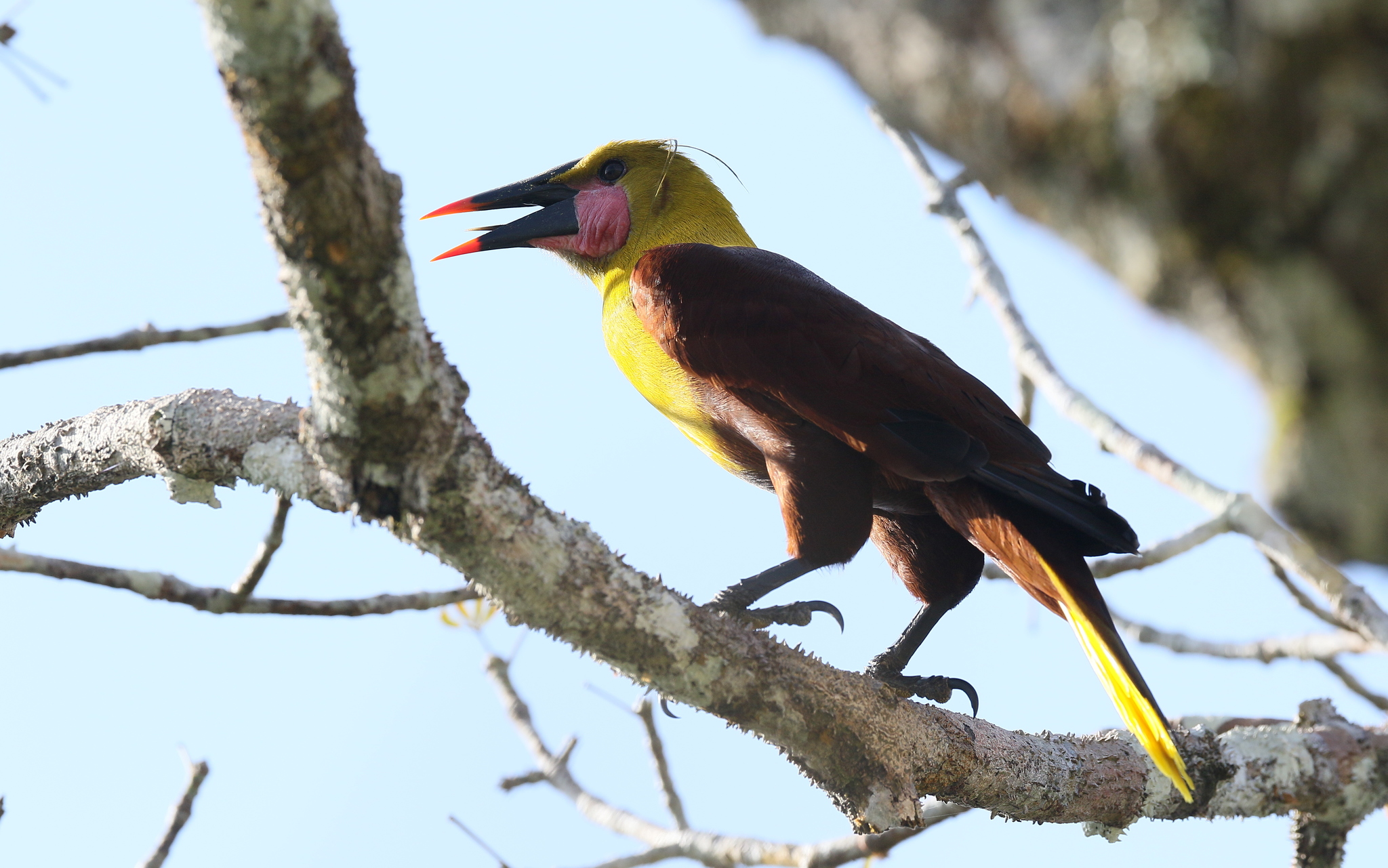
Green Oropendola (Psarocolius viridis) Green Oropendola
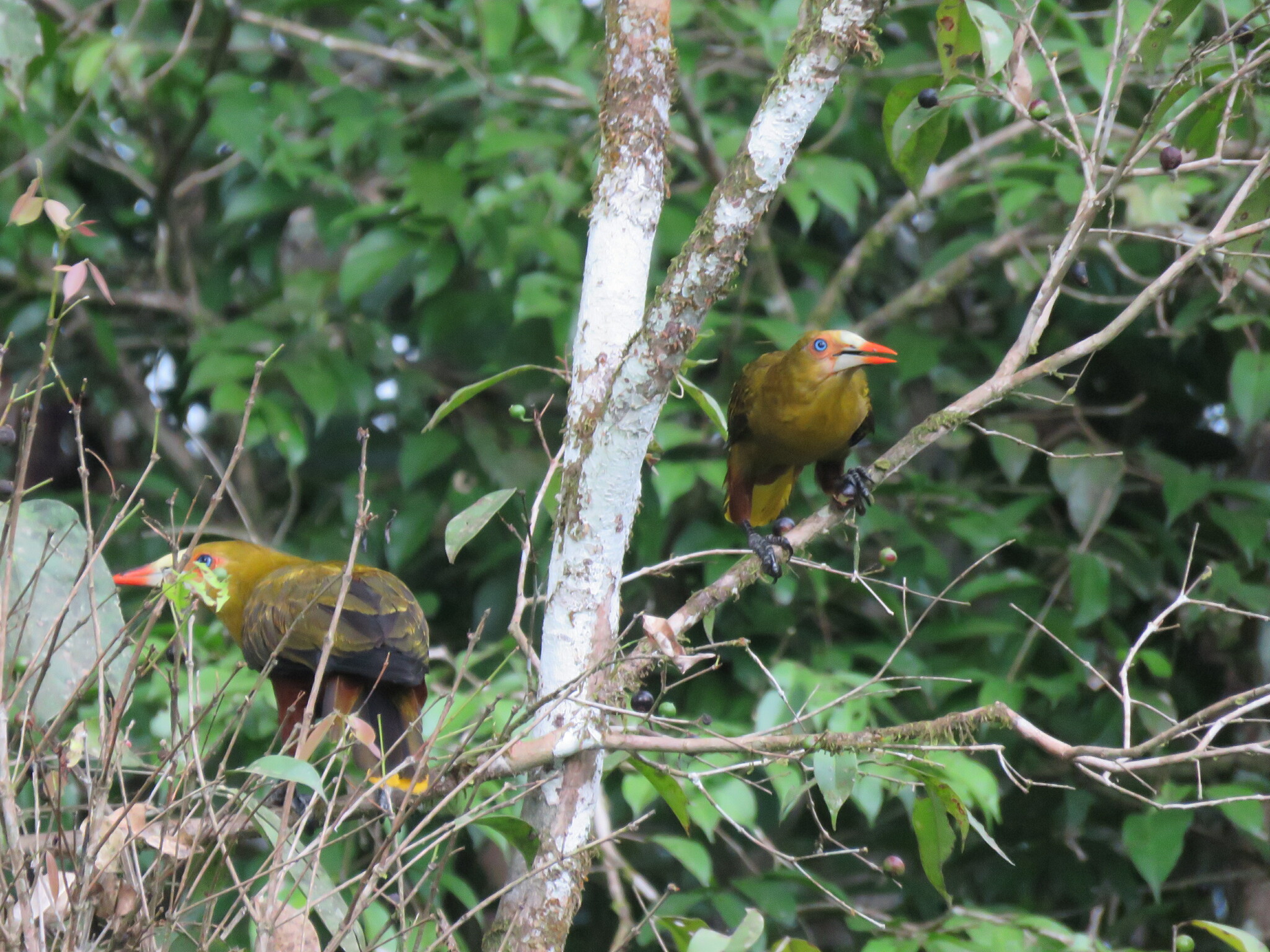
Olive Oropendola (Psarocolius bifasciatus) Olive Oropendola

Media

Loading…

In short

The Green Oropendola and Olive Oropendola are both large, colonial icterids with overlapping ranges in the Amazon. Key differences include bill color and plumage tone, which are more reliable than size or vocalizations.

Identification tips

1. Bill Color: Green Oropendola has a pale bill with a red tip, while Olive Oropendola's bill is generally pale with a dark base. 2. Tail Color: Both have yellow tails, but the Green Oropendola's tail is more consistently bright yellow. 3. Plumage Tone: Look for the greenish body of the Green Oropendola versus the olive and chestnut tones of the Olive Oropendola. 4. Habitat Preference: Note habitat; Olive Oropendola is more likely in tall terra firme forests.

Size

Both species are similar in size, though the Olive Oropendola is generally larger.

Plumage

The Green Oropendola has a predominantly greenish body with a bright yellow tail, while the Olive Oropendola varies by subspecies but typically shows pale olive on the head and chest with chestnut wings and back.

Behaviour

Both species breed in colonies and construct hanging basket nests. They forage high in the canopy, often in small groups.

Habitat

The Green Oropendola is found in a variety of forested habitats, while the Olive Oropendola prefers tall terra firme forests but can be seen flying over various habitats.

Voice

Vocalizations are not a primary distinguishing feature between these species.

Submit a better description

Use the same sections as the comparison. Your text is published immediately.

The Green Oropendola and Olive Oropendola are both large, colonial icterids with overlapping ranges in the Amazon. Key differences include bill color and plumage tone, which are more reliable than size or vocalizations.

1. Bill Color: Green Oropendola has a pale bill with a red tip, while Olive Oropendola's bill is generally pale with a dark base. 2. Tail Color: Both have yellow tails, but the Green Oropendola's tail is more consistently bright yellow. 3. Plumage Tone: Look for the greenish body of the Green Oropendola versus the olive and chestnut tones of the Olive Oropendola. 4. Habitat Preference: Note habitat; Olive Oropendola is more likely in tall terra firme forests.

Both species are similar in size, though the Olive Oropendola is generally larger.

The Green Oropendola has a predominantly greenish body with a bright yellow tail, while the Olive Oropendola varies by subspecies but typically shows pale olive on the head and chest with chestnut wings and back.

Both species breed in colonies and construct hanging basket nests. They forage high in the canopy, often in small groups.

The Green Oropendola is found in a variety of forested habitats, while the Olive Oropendola prefers tall terra firme forests but can be seen flying over various habitats.

Vocalizations are not a primary distinguishing feature between these species.

Discard your changes?

You have unsaved edits. If you leave now, those changes will be lost.

Green Oropendola · Olive Oropendola · My Tricky Birds