
Hooded Wheatear vs Pied Wheatear
Oenanthe monacha versus Oenanthe pleschanka
Play a quiz with Hooded Wheatear and Pied Wheatear
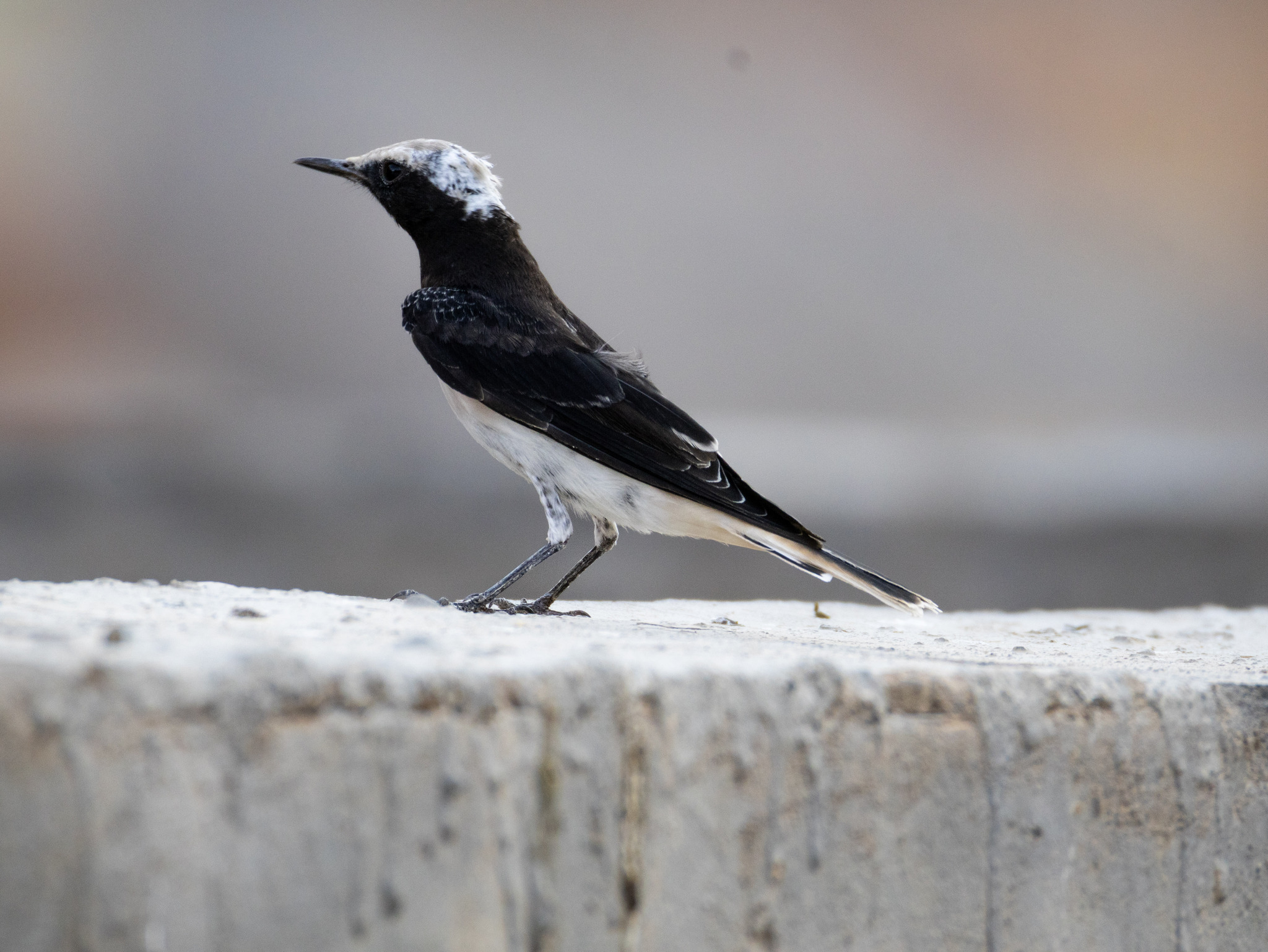 Hooded Wheatear
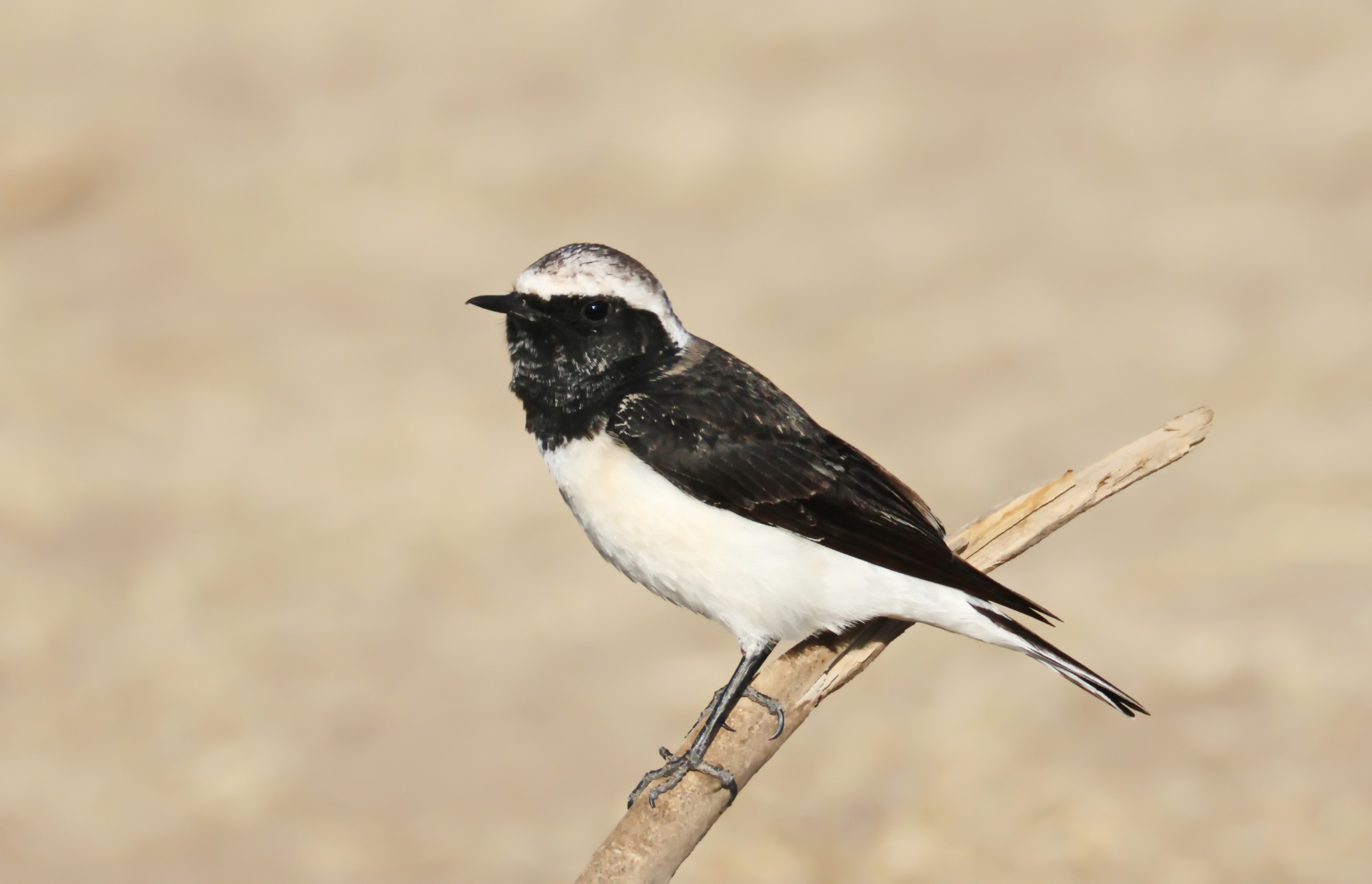 Pied Wheatear
In short
The Hooded Wheatear and Pied Wheatear can be distinguished by the Hooded Wheatear's striking black hood and white body, while the Pied Wheatear has a more varied plumage with a black face and throat but a brownish back. Both species are similar in size and structure, but their plumage and habitat preferences can help in identification.
Identification tips
- Look for the black hood: Hooded Wheatear has a full black hood, while Pied Wheatear has a black face and throat but not a full hood.
- Check the back color: Hooded Wheatear has a white body, whereas Pied Wheatear has a brownish back.
- Consider habitat: Hooded Wheatears are more likely in rocky deserts, Pied Wheatears in grassy steppes.
- Observe tail pattern: In breeding season, Pied Wheatear males have a black tail, which can be a distinguishing feature.
Size
Both species are similar in size, typical of wheatears, with no significant differences in structure or proportions.
Plumage
The Hooded Wheatear is characterized by its distinctive black hood extending over the head and neck, contrasting sharply with its white body. In contrast, the Pied Wheatear has a black face and throat but a brownish back and white underparts, with males showing a black tail in breeding plumage.
Behaviour
Both species exhibit typical wheatear behavior, such as perching on rocks or low shrubs and making short flights to catch insects. There are no significant behavioral differences noted.
Habitat
Hooded Wheatears are often found in arid, rocky areas and deserts, while Pied Wheatears prefer open, grassy steppes and semi-desert regions. Overlapping habitats can occur, but these preferences can guide identification.
Voice
Both species have similar calls, consisting of short, harsh notes. Detailed differences in song are not well-documented and may not be reliable for field identification.