
Hooded Wheatear vs Tawny Pipit
Oenanthe monacha versus Anthus campestris
Play a quiz with Hooded Wheatear and Tawny Pipit
 Hooded Wheatear
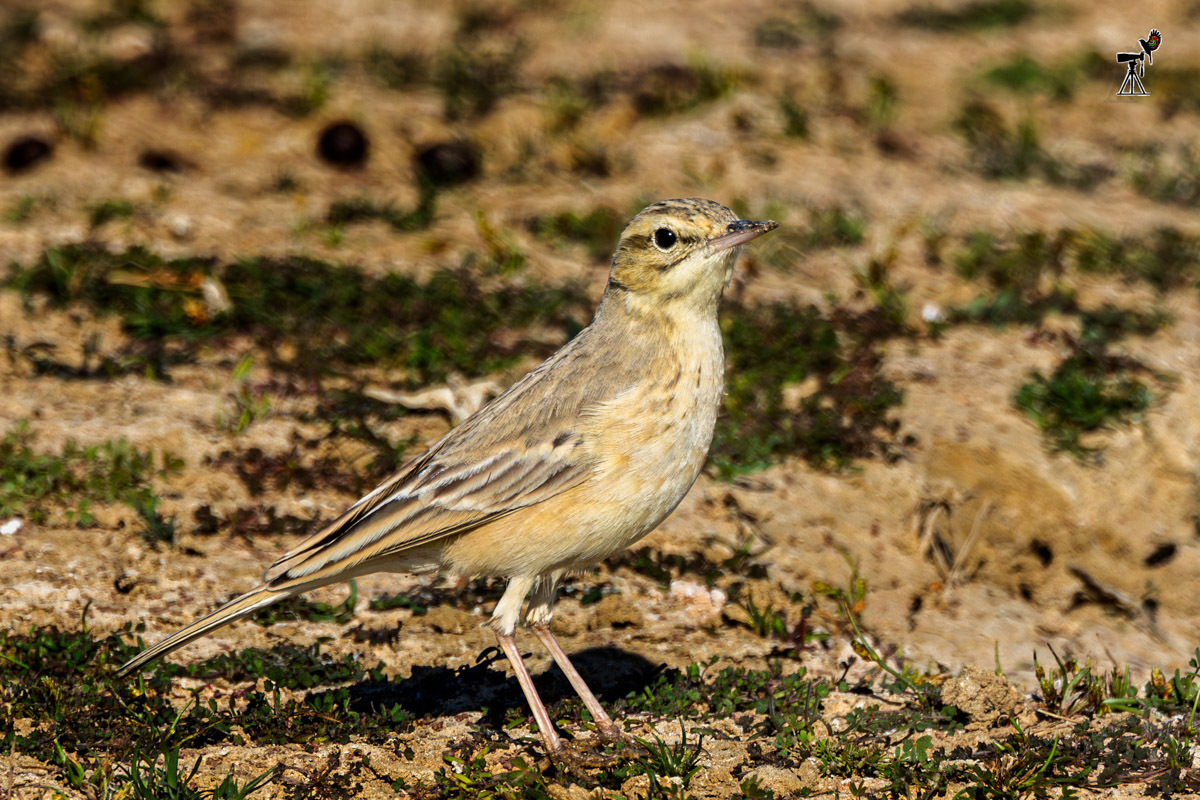 Tawny Pipit
In short
The Hooded Wheatear and Tawny Pipit can be distinguished primarily by their structure and plumage. The Hooded Wheatear has a more compact body with a distinct black and white plumage, while the Tawny Pipit is slender with a more uniform sandy-brown appearance. Both species differ significantly in behavior and habitat preferences.
Identification tips
1. Structure: Hooded Wheatears have a compact build with a short tail, while Tawny Pipits are slender with a longer tail. 2. Plumage: Look for the stark black and white contrast in Hooded Wheatears, especially in males. Tawny Pipits are more uniformly brown. 3. Behavior: Observe perching habits; wheatears perch on elevated spots, pipits stay on the ground. 4. Habitat: Consider the environment; wheatears in rocky, arid areas, pipits in open fields. 5. Vocalization: Listen for the pipit's repetitive call, especially in flight.
Size
The Hooded Wheatear is slightly smaller and more compact compared to the more slender Tawny Pipit.
Plumage
Hooded Wheatear males are striking with a black hood and white body, while females are more subdued but still show a contrast between darker upperparts and lighter underparts. The Tawny Pipit is uniformly sandy-brown with subtle streaking, lacking the stark contrast seen in the wheatear.
Behaviour
Hooded Wheatears often perch prominently on rocks or shrubs, frequently flicking their tails. Tawny Pipits are more likely to be seen walking or running on the ground, often in open fields.
Habitat
Hooded Wheatears prefer rocky desert areas and arid landscapes, while Tawny Pipits are found in open grasslands and fields, often with sparse vegetation.
Voice
The Hooded Wheatear's song and calls are less documented but are generally simple and quiet. The Tawny Pipit has a more distinctive, repetitive call that is often given in flight.