
Isabelline Wheatear vs Hooded Wheatear
Oenanthe isabellina versus Oenanthe monacha
Play a quiz with Isabelline Wheatear and Hooded Wheatear
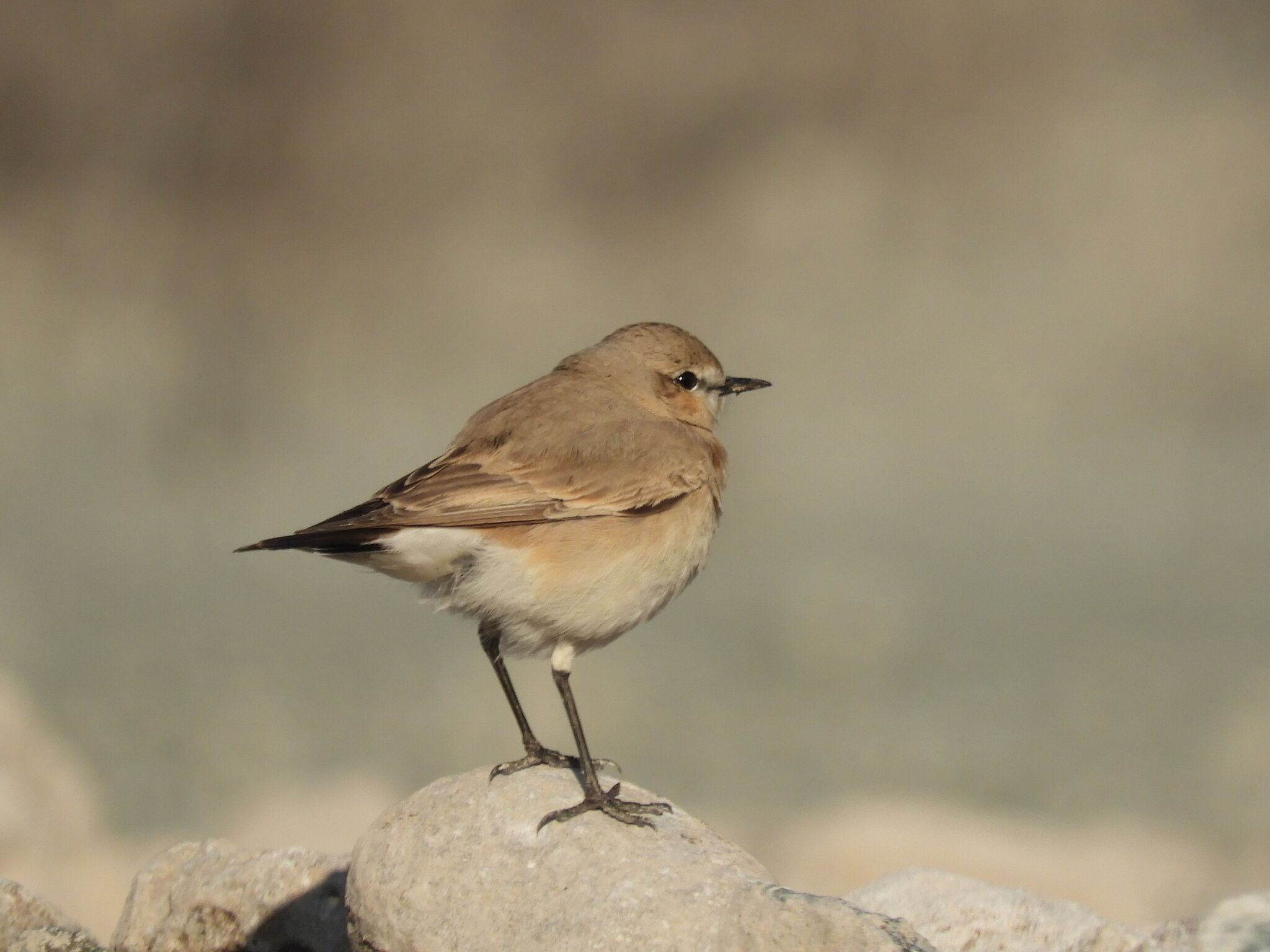 Isabelline Wheatear
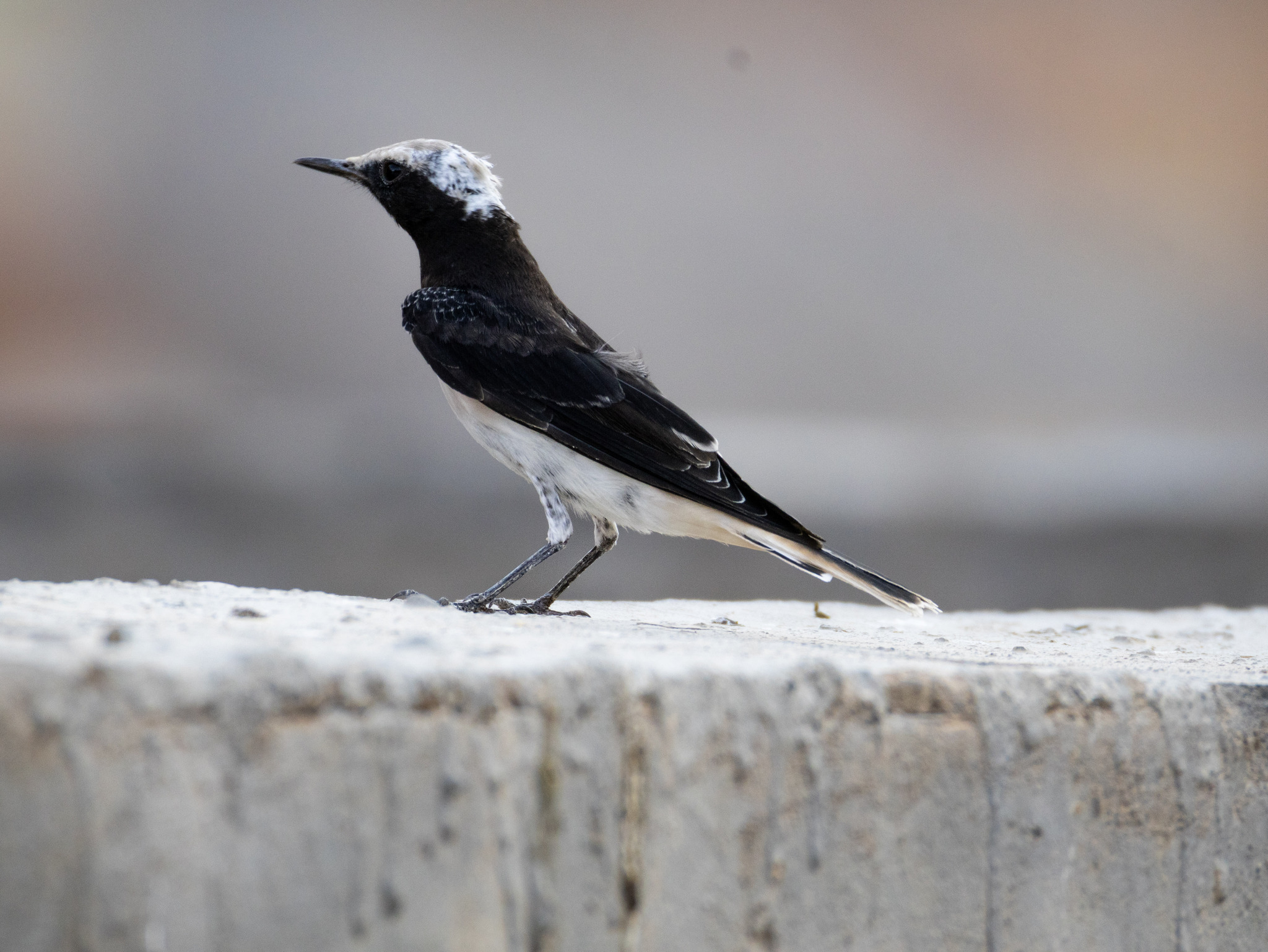 Hooded Wheatear
In short
The Isabelline Wheatear and Hooded Wheatear can be distinguished by their plumage and structural differences. The Isabelline Wheatear typically has a paler overall appearance with a weak pale supercilium, while the Hooded Wheatear features a striking black hood and contrasting white underparts.
Identification tips
- Look for the black hood and white underparts of the Hooded Wheatear. 2. Note the pale sandy-brown plumage and weak pale supercilium of the Isabelline Wheatear. 3. Check the habitat: Hooded Wheatears prefer rocky deserts. 4. Observe behavior: both species perch on rocks and make short flights, but plumage is more reliable for identification.
Size
Both species are similar in size, but the Hooded Wheatear may appear slightly more robust due to its distinct plumage contrast.
Plumage
The Isabelline Wheatear has a pale sandy-brown plumage with a weak pale supercilium and a broad black terminal tail band. In contrast, the Hooded Wheatear is characterized by its black hood and white underparts, making it more striking in appearance.
Behaviour
Both species exhibit typical wheatear behaviors such as perching on rocks and making short flights to catch insects. There are no notable behavioral differences highlighted.
Habitat
Both species inhabit open, arid environments, but the Hooded Wheatear is more likely to be found in rocky desert regions.
Voice
Vocalizations are not a primary distinguishing feature between these species, and specific differences are not well-documented.