
Isabelline Wheatear vs White-winged Snowfinch
Oenanthe isabellina versus Montifringilla nivalis
Play a quiz with Isabelline Wheatear and White-winged Snowfinch
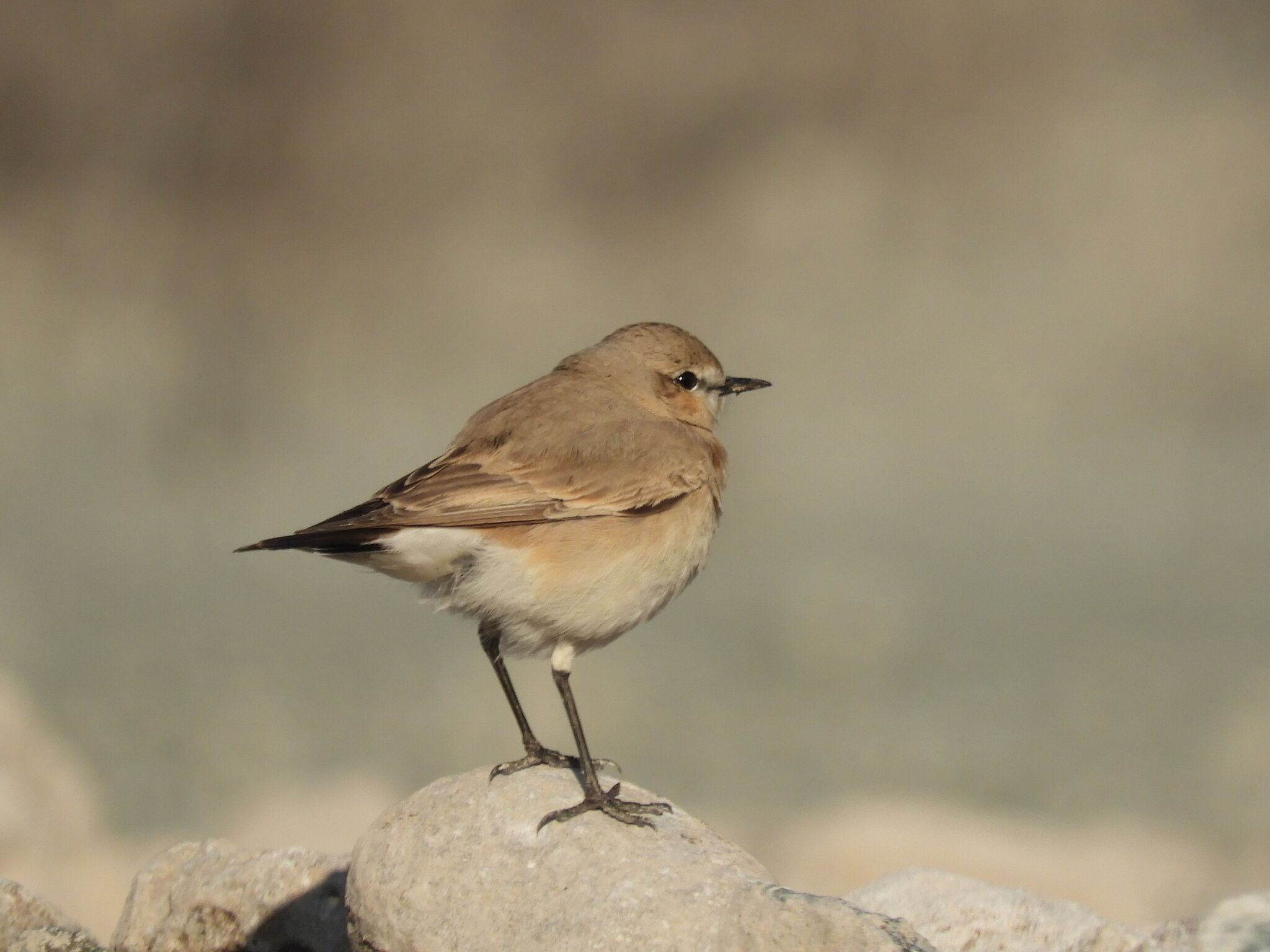 Isabelline Wheatear
 White-winged Snowfinch
In short
The Isabelline Wheatear and the White-winged Snowfinch differ significantly in both appearance and habitat. The Isabelline Wheatear is a ground-dwelling bird with a pale sandy-brown plumage, while the White-winged Snowfinch is more robust with distinct white wing patches. These species are unlikely to be confused in their typical habitats, as the wheatear prefers open grasslands and the snowfinch is found in alpine regions.
Identification tips
- Location: Check the habitat; wheatears are in open grasslands, snowfinches in alpine regions. 2. Plumage: Look for the Isabelline Wheatear's pale sandy-brown color and black lores versus the snowfinch's white wing patches. 3. Size and Shape: Note the wheatear's more slender build compared to the snowfinch's robust, sparrow-like form. 4. Behavior: Observe behavior; wheatears are solitary and ground-dwelling, while snowfinches are often in flocks.
Size
The Isabelline Wheatear is smaller and more slender than the White-winged Snowfinch, which is more robust and sparrow-like.
Plumage
The Isabelline Wheatear has a pale sandy-brown plumage with black lores, a weak pale supercilium, and a broad black terminal tail band. In contrast, the White-winged Snowfinch has a more robust appearance with distinct white patches on its wings and a less pronounced supercilium.
Behaviour
The Isabelline Wheatear often perches on low shrubs or rocks and is known for its ground-foraging behavior. The White-winged Snowfinch is more likely to be seen in flocks, especially in alpine regions, and is less solitary than the wheatear.
Habitat
The Isabelline Wheatear is typically found in open grasslands and semi-deserts, while the White-winged Snowfinch inhabits alpine and mountainous regions, often above the tree line.
Voice
Vocalizations are not a primary distinguishing feature between these species, but the Isabelline Wheatear has a more varied song compared to the simpler calls of the White-winged Snowfinch.
Isabelline Wheatear · White-winged Snowfinch · My Tricky Birds