
Johannes's Tody-Tyrant vs Zimmer's Tody-Tyrant
Hemitriccus iohannis versus Hemitriccus minimus
Play a quiz with Johannes's Tody-Tyrant and Zimmer's Tody-Tyrant
 Johannes's Tody-Tyrant
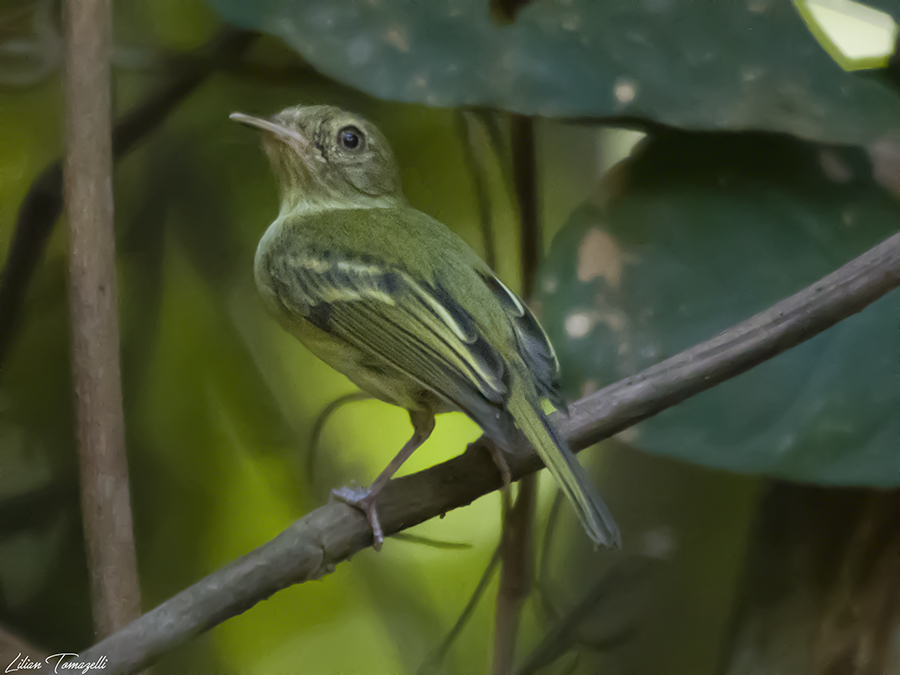 Zimmer's Tody-Tyrant
In short
Johannes's Tody-Tyrant and Zimmer's Tody-Tyrant are small flycatchers that can be tricky to distinguish. The most reliable field mark is their habitat preference, with Johannes's favoring dense understory and Zimmer's often found in more open forest edges. Both species have similar structure and plumage, but careful observation of their behavior and vocalizations can aid identification.
Identification tips
- Habitat: Look for Johannes's in dense understory and Zimmer's in more open areas.
- Vocalization: Listen for the rapid notes of Johannes's versus the slower calls of Zimmer's.
- Behavior: Note any differences in foraging behavior, with Johannes's potentially more secretive.
Size
Both species are small and similar in size, typical of the Hemitriccus genus.
Plumage
Plumage is similar between the two, with both having a generally olive-green body and indistinct wing bars. Any subtle differences are not reliable for field identification.
Behaviour
Both species exhibit typical tody-tyrant behavior, actively foraging in the lower to mid-levels of the forest. Johannes's Tody-Tyrant may be slightly more secretive, often staying in denser foliage.
Habitat
Johannes's Tody-Tyrant is usually found in dense understory of humid forests, while Zimmer's Tody-Tyrant is more often seen at forest edges and in slightly more open areas.
Voice
Vocalizations are a key difference; Johannes's Tody-Tyrant has a distinctive, rapid series of high-pitched notes, while Zimmer's Tody-Tyrant typically gives a slower, more deliberate call. Listening carefully can be crucial for identification.
Johannes's Tody-Tyrant · Zimmer's Tody-Tyrant · My Tricky Birds