
Laughing Gull vs Black-tailed Gull
Leucophaeus atricilla versus Larus crassirostris
Play a quiz with Laughing Gull and Black-tailed Gull
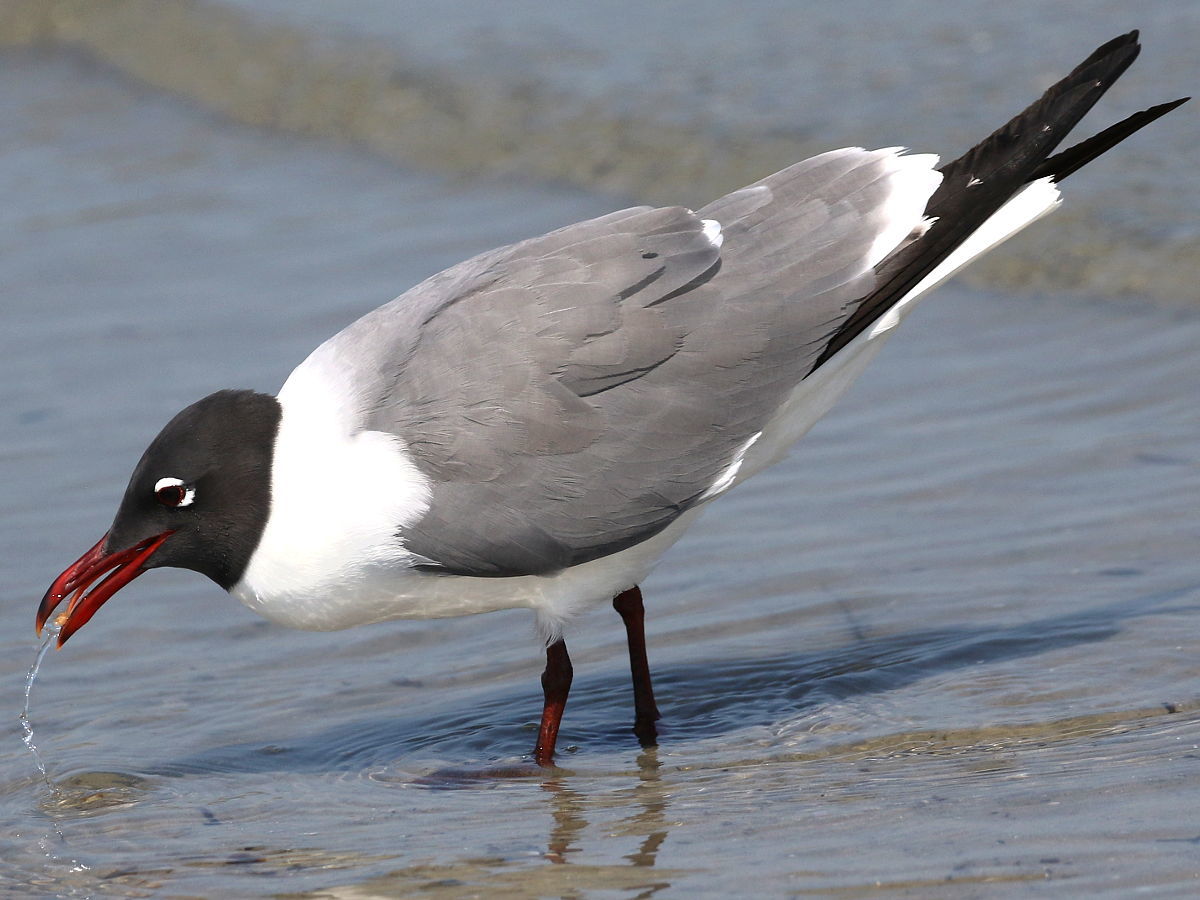 Laughing Gull
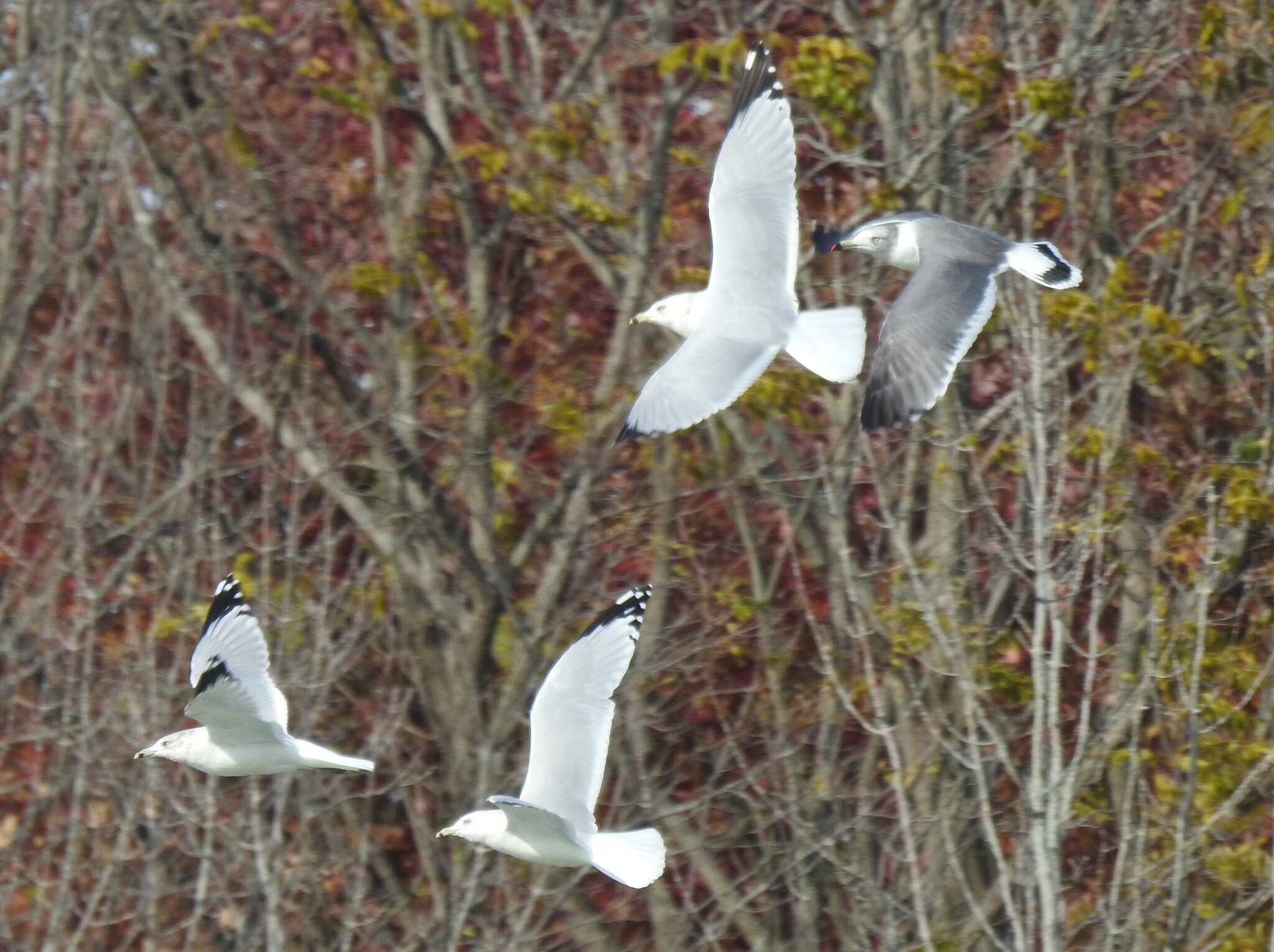 Black-tailed Gull
In short
The Laughing Gull (Leucophaeus atricilla) and Black-tailed Gull (Larus crassirostris) can be distinguished by their head and tail patterns. The Laughing Gull has a black hood during breeding season and lacks the distinctive black tail band of the Black-tailed Gull. Both species share similar coastal habitats but differ in geographic range.
Identification tips
- Breeding season: Look for the black hood on Laughing Gulls.
- Tail pattern: Check for the black tail band on Black-tailed Gulls, absent in Laughing Gulls.
- Geographic location: Consider the region; Laughing Gulls are in the Americas, while Black-tailed Gulls are in East Asia.
- Behavior: Observe social behavior; Laughing Gulls are more likely to be seen in large groups around human activity.
Size
Both species are medium-sized gulls, but the Black-tailed Gull is slightly larger with a more robust build.
Plumage
The Laughing Gull has a black hood in breeding plumage and a dark gray mantle. The Black-tailed Gull features a white head with a black tail band and a gray mantle. In non-breeding plumage, Laughing Gulls lose their black hood, while Black-tailed Gulls retain their distinctive tail band.
Behaviour
Laughing Gulls are often seen in large, noisy colonies and are known for their buoyant flight and social behavior around humans. Black-tailed Gulls are less associated with human activity and are more solitary or found in smaller groups.
Habitat
Laughing Gulls are found along the Atlantic and Gulf coasts of North America, as well as parts of the Caribbean and Pacific coasts of Mexico. Black-tailed Gulls are primarily found in East Asia, frequenting coastal areas and islands.
Voice
Laughing Gulls are known for their distinctive 'laughing' call, which is not shared by the Black-tailed Gull, whose calls are less well-documented in this context.