
Lesser Black-backed Gull vs Red-headed Bluebill
Larus fuscus versus Spermophaga ruficapilla
Play a quiz with Lesser Black-backed Gull and Red-headed Bluebill
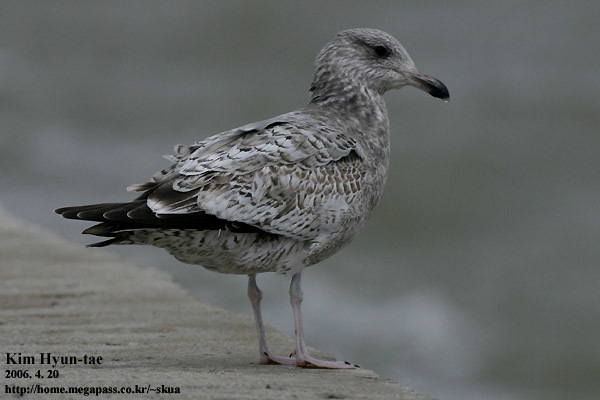 Lesser Black-backed Gull
 Red-headed Bluebill
In short
The Lesser Black-backed Gull and the Red-headed Bluebill are easily distinguished by their size and habitat preferences. The gull is a large seabird, while the bluebill is a small, colorful finch found in forested areas.
Identification tips
- Size and Shape: The gull is much larger and has a robust build compared to the small, compact bluebill. 2. Plumage: Look for the gull's dark gray to black back versus the bluebill's bright red head and blue body. 3. Habitat: Consider the environment; gulls are near water, bluebills in forests. 4. Behavior: Gulls are often seen soaring or scavenging, while bluebills are active in dense foliage.
Size
The Lesser Black-backed Gull is significantly larger, with a wingspan that can reach up to 150 cm, whereas the Red-headed Bluebill is a small finch, typically around 12 cm in length.
Plumage
The gull has a dark gray to black back and wings with white underparts, while the bluebill is strikingly different with a bright red head and a blue body.
Behaviour
Lesser Black-backed Gulls are often seen soaring over coastal areas or scavenging near water bodies. In contrast, Red-headed Bluebills are more likely to be found flitting through dense undergrowth in forests.
Habitat
Lesser Black-backed Gulls are typically found in coastal regions, often near large bodies of water. Red-headed Bluebills inhabit forested areas, particularly in tropical regions.
Voice
The gull's calls are typical of large gulls, with loud, harsh sounds, while the bluebill's vocalizations are softer and more melodic, typical of finches.
Lesser Black-backed Gull · Red-headed Bluebill · My Tricky Birds