
Lesser Whistling-Duck vs Rufous Turtle Dove
Dendrocygna javanica versus Streptopelia orientalis
Play a quiz with Lesser Whistling-Duck and Rufous Turtle Dove
 Lesser Whistling-Duck
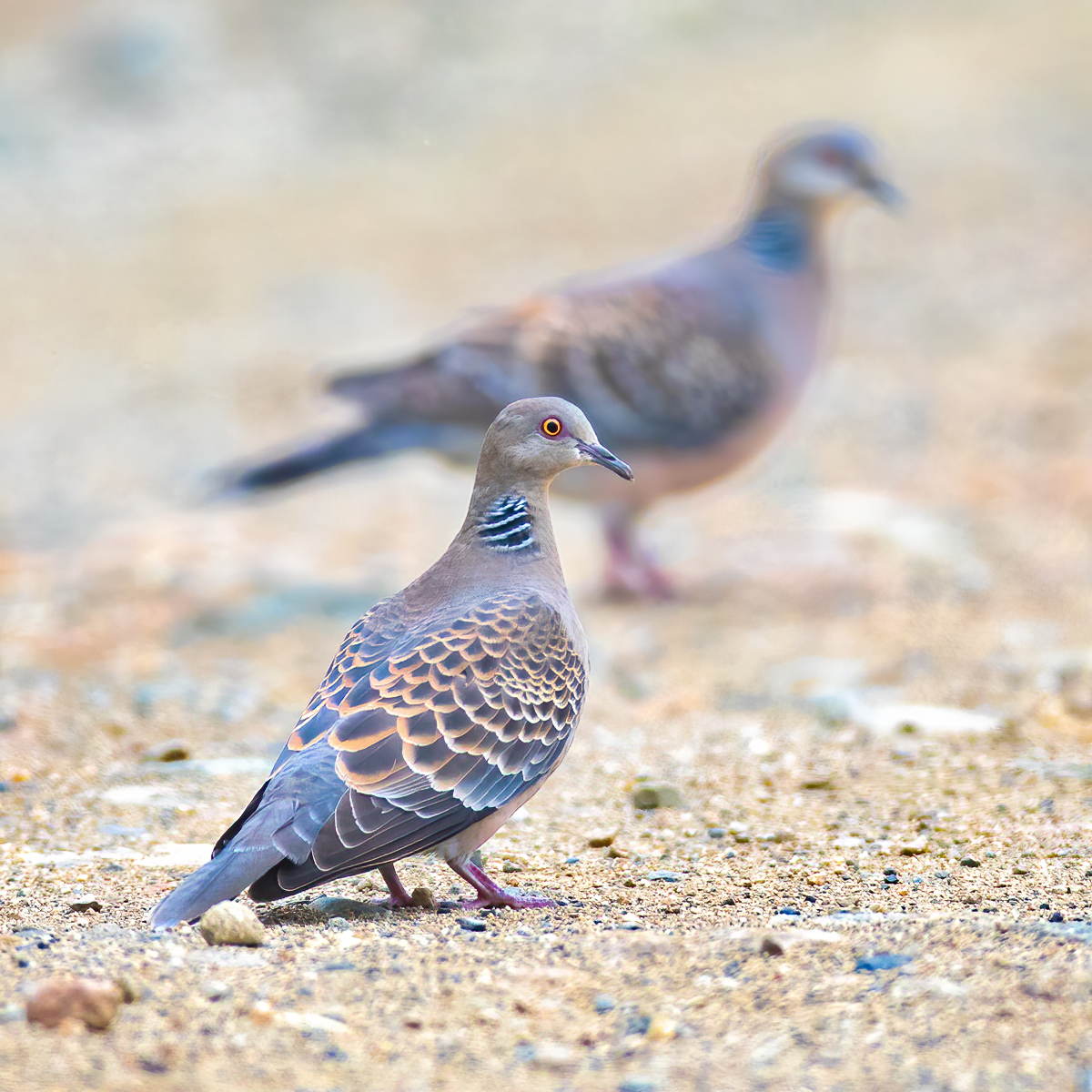 Rufous Turtle Dove
In short
The Lesser Whistling-Duck and Rufous Turtle Dove are easily distinguished by their shape and behavior. The duck is a waterfowl with a distinctive whistling call, while the dove is a terrestrial bird with a cooing song. Observe the habitat and body structure for quick identification.
Identification tips
- Shape and Structure: Ducks have a flat bill and webbed feet, while doves have a slender bill and unwebbed feet.
- Habitat: Look for ducks on water and doves on land or in trees.
- Vocalization: Listen for the duck's whistling versus the dove's cooing.
- Plumage: Note the duck's uniform brown and the dove's patterned neck and back.
Size
The Lesser Whistling-Duck is generally larger and more robust than the Rufous Turtle Dove, with a bulkier body typical of waterfowl.
Plumage
The Lesser Whistling-Duck has a warm brown plumage with a paler face and a dark crown, while the Rufous Turtle Dove features a more patterned plumage with a rufous back and a scaly appearance on the neck.
Behaviour
Lesser Whistling-Ducks are often seen in flocks on water bodies, swimming or dabbling. Rufous Turtle Doves are more likely to be found foraging on the ground or perched in trees.
Habitat
Lesser Whistling-Ducks are typically found in wetlands, ponds, and lakes. Rufous Turtle Doves prefer open woodlands, gardens, and agricultural areas.
Voice
Lesser Whistling-Ducks produce a distinctive high-pitched whistling sound. Rufous Turtle Doves have a soft, repetitive cooing call.
Lesser Whistling-Duck · Rufous Turtle Dove · My Tricky Birds