
Line-fronted Canastero vs Many-striped Canastero
Asthenes urubambensis versus Asthenes flammulata
Play a quiz with Line-fronted Canastero and Many-striped Canastero
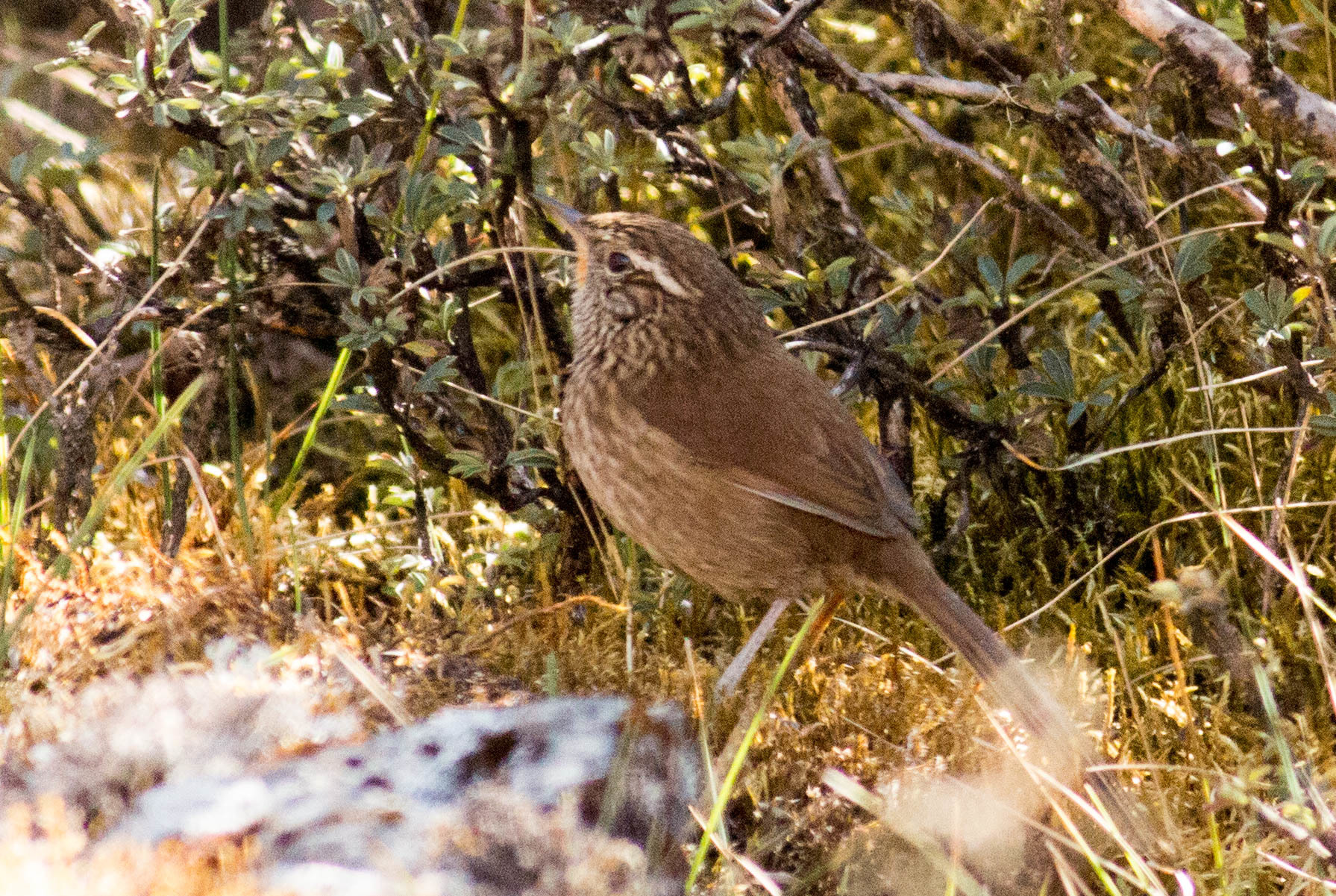 Line-fronted Canastero
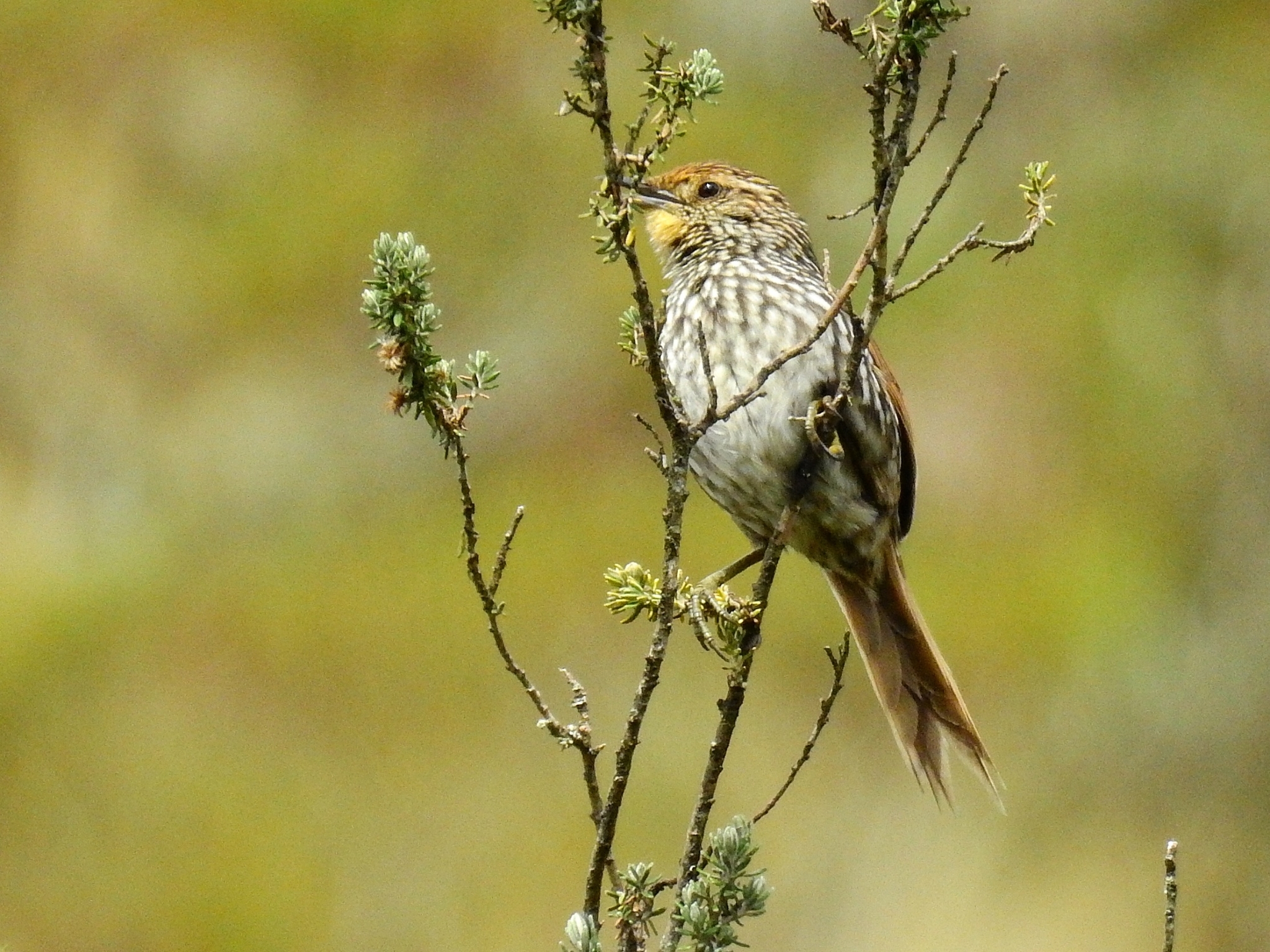 Many-striped Canastero
In short
The Line-fronted Canastero and Many-striped Canastero are similar in structure but differ in plumage details and habitat preferences. The Line-fronted Canastero is often found in degraded habitats, while the Many-striped Canastero prefers páramo grasslands. Key differences include the supercilium and throat coloration.
Identification tips
- Look for the supercilium: Line-fronted has a whitish supercilium, Many-striped has an ochraceous one. 2. Check the throat color: Line-fronted is less colorful, Many-striped has a deep rufous throat. 3. Observe the habitat: Line-fronted in degraded areas, Many-striped in páramo grasslands.
Size
Both species are similar in size, typical of canasteros.
Plumage
The Line-fronted Canastero has a more subdued plumage with a whitish supercilium and less pronounced striping. In contrast, the Many-striped Canastero features a darker chestnut forehead, a more ochraceous supercilium, and a deep rufous chin and throat, with broader blackish margins on the ventral stripes.
Behaviour
Behavioral differences are not well-documented, but both species are likely to exhibit typical canastero behaviors such as skulking in dense vegetation.
Habitat
The Line-fronted Canastero is found in degraded habitats caused by grazing and burning, while the Many-striped Canastero is more common in páramo grasslands with scattered low bushes.
Voice
Vocalization details are not well-documented for these species.
Line-fronted Canastero · Many-striped Canastero · My Tricky Birds