
Little Grebe vs Common Waxbill
Tachybaptus ruficollis versus Estrilda astrild
Play a quiz with Little Grebe and Common Waxbill
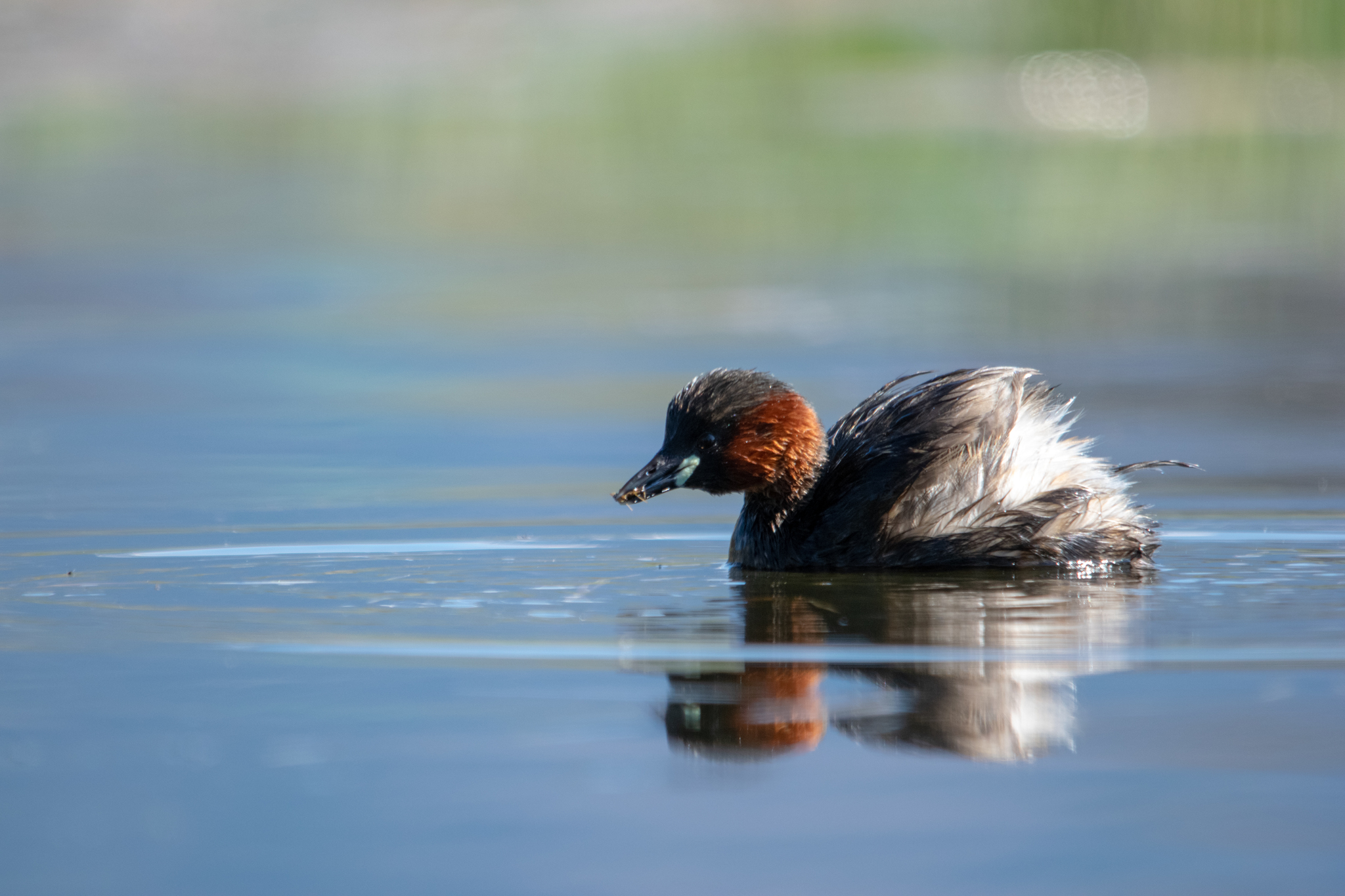 Little Grebe
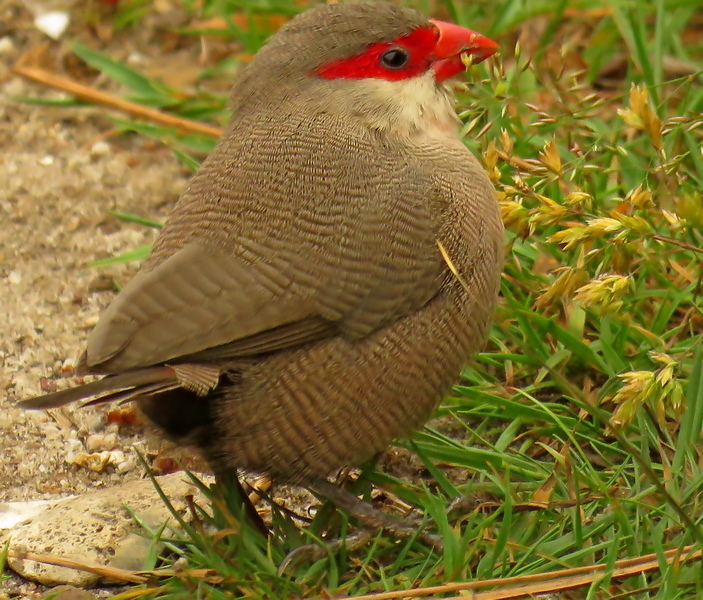 Common Waxbill
In short
The Little Grebe and Common Waxbill are easily distinguished by their size and habitat preferences. The Little Grebe is a small waterbird found on freshwater bodies, while the Common Waxbill is a tiny passerine often seen in grassy or shrubby areas.
Identification tips
- Check the habitat: Little Grebes are on water; Common Waxbills are in grassy areas. 2. Look at the bill: Little Grebes have a pointed bill; Common Waxbills have a short, conical red bill. 3. Observe behavior: Little Grebes dive frequently; Common Waxbills forage on the ground. 4. Listen for calls: Little Grebes have a trilling call, while Common Waxbills have a soft 'tseep'.
Size
The Little Grebe is larger and more robust, typically around 25–29 cm in length, whereas the Common Waxbill is much smaller, about 11–13 cm long.
Plumage
The Little Grebe has a distinctive dark, rufous neck and a mostly brown body, while the Common Waxbill has a fawn-colored body with a striking red bill and face mask.
Behaviour
Little Grebes are often seen diving for food in water, whereas Common Waxbills are more likely to be seen foraging on the ground or in low vegetation.
Habitat
Little Grebes are found on lakes, ponds, and slow-moving rivers, while Common Waxbills prefer open grasslands, fields, and gardens.
Voice
Little Grebes have a trilling call, often heard near water, whereas Common Waxbills have a soft, high-pitched 'tseep' call.