
Long-tailed Tit vs Goldcrest
Aegithalos caudatus versus Regulus regulus
Play a quiz with Long-tailed Tit and Goldcrest
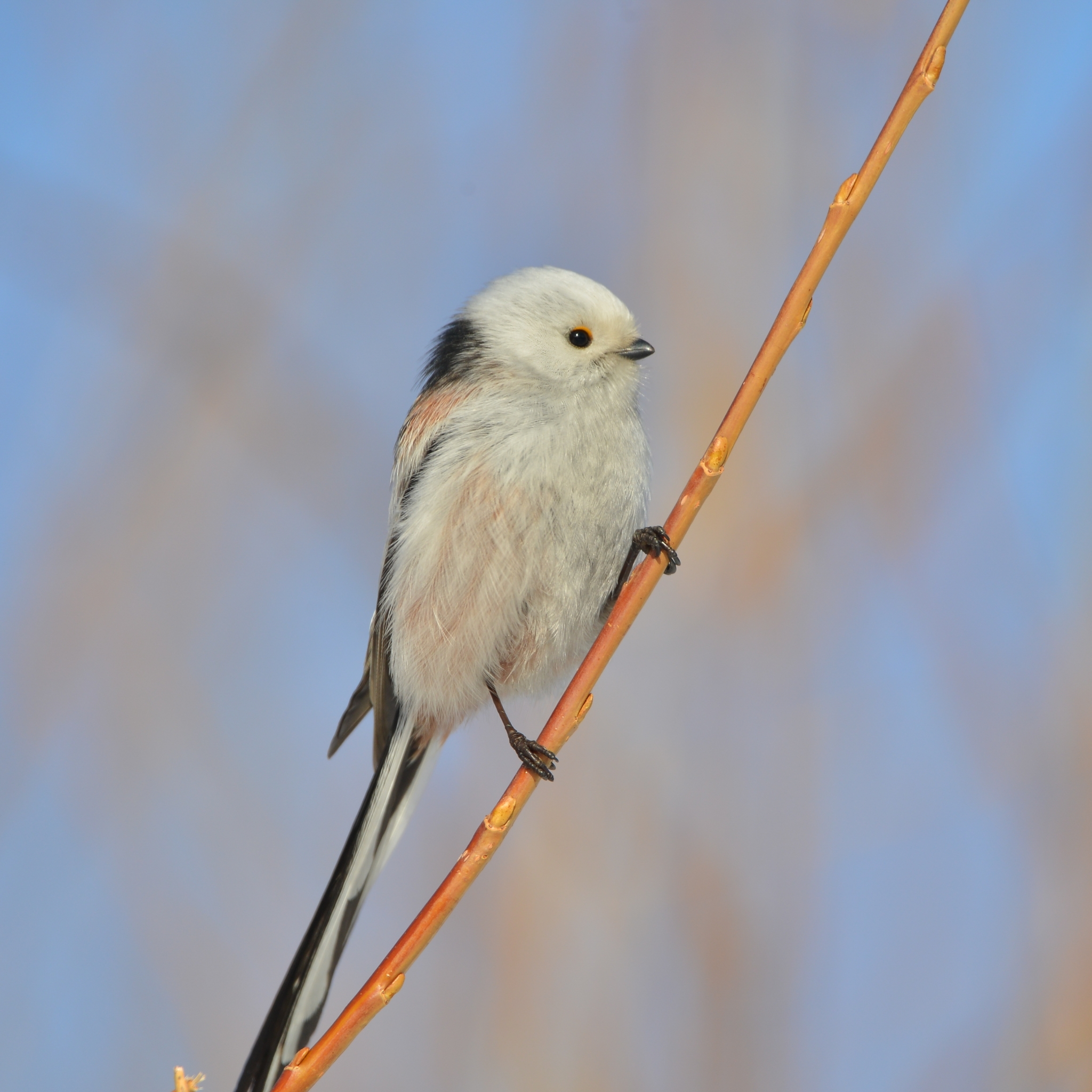 Long-tailed Tit
 Goldcrest
In short
The Goldcrest (Regulus regulus) and Long-tailed Tit (Aegithalos caudatus) are small, insectivorous birds with distinct differences in size, plumage, and behavior. The Goldcrest is known for its olive-green plumage and distinctive orange crest, while the Long-tailed Tit features a striking black and white coloration with a very long tail. Their vocalizations, habitat preferences, and social behaviors also differ significantly.
Identification tips
- Birds of the World Similar-Species Diagnostics:
-
According to the Birds of the World, "Goldcrest can be distinguished from Long-tailed Tit by its much smaller size, more olive-green coloration, and the distinctive crown stripe," while the Long-tailed Tit is recognized for its "long tail, pinkish body, and black-and-white facial features."
-
AI Field Diagnostics:
- When in the field, look for the Goldcrest's small size and olive-green plumage, especially when it is flitting among the branches of conifers. The distinctive orange or yellow crown stripe will often be visible, particularly when the bird is agitated.
- In contrast, the Long-tailed Tit's long tail is its most distinguishing feature. If you see a small bird with a noticeably long tail and a rounded body, it is likely a Long-tailed Tit. The pinkish hue and black-and-white markings on its head are also key identifiers.
- Listen for the Goldcrest's sharp, high-pitched call to differentiate it acoustically from the Long-tailed Tit's cheerful, varied notes.
- Keep in mind that the Goldcrest is often solitary or in small groups, while the Long-tailed Tit is typically seen in larger, more social flocks, especially during foraging.
By focusing on these field-identifiable differences, birdwatchers can effectively distinguish between the Goldcrest and Long-tailed Tit in various habitats.
Size
- Goldcrest: The Goldcrest is one of the smallest birds in Europe, measuring about 8.5–9.5 cm (3.3–3.7 in) in length with a wingspan of approximately 13–15 cm (5.1–5.9 in). It typically weighs around 6–7 grams.
- Long-tailed Tit: In contrast, the Long-tailed Tit is larger, measuring about 13–15 cm (5.1–5.9 in) in length, with a wingspan of about 17–21 cm (6.7–8.3 in). It usually weighs between 10–12 grams.
Plumage
- Goldcrest: The Goldcrest has an olive-green back, pale underparts, and a distinctive black-and-yellow crown stripe. Its wings are short and its tail is also relatively short, which contributes to its compact appearance.
- Long-tailed Tit: The Long-tailed Tit displays a unique plumage with a soft pinkish body, black cap, and white cheek patches. Its tail is remarkably long, about half the length of its body, and is an essential feature for identification.
Behaviour
- Goldcrest: This bird is often seen flitting around in coniferous trees, foraging for insects and their larvae. It is typically solitary or found in small groups, often moving with mixed-species flocks.
- Long-tailed Tit: The Long-tailed Tit is very social and often found in small groups or family units. It forages for insects, but also eats seeds and berries, often moving through shrubs and trees in a more acrobatic manner due to its long tail.
Habitat
- Goldcrest: Prefers dense coniferous forests, especially those with a high density of trees, but can also be found in mixed woodlands. Its distribution is primarily in Europe, with a preference for higher altitudes in southern regions during the summer.
- Long-tailed Tit: This species is more adaptable and can be found in a variety of habitats including woodlands, scrub, parks, and gardens. It tends to prefer areas with dense cover, which aids in its foraging behavior.
Voice
- Goldcrest: The Goldcrest has a high-pitched, melodic call that can be described as a series of thin, sharp notes, often likened to a "tsee tsee" sound.
- Long-tailed Tit: The Long-tailed Tit's vocalizations are characterized by a series of high-pitched, cheerful notes and a distinctive "peep-peep" sound that is more varied and sociable in nature compared to the Goldcrest.