
Mangrove Cuckoo vs Rose-breasted Grosbeak
Coccyzus minor versus Pheucticus ludovicianus
Play a quiz with Mangrove Cuckoo and Rose-breasted Grosbeak
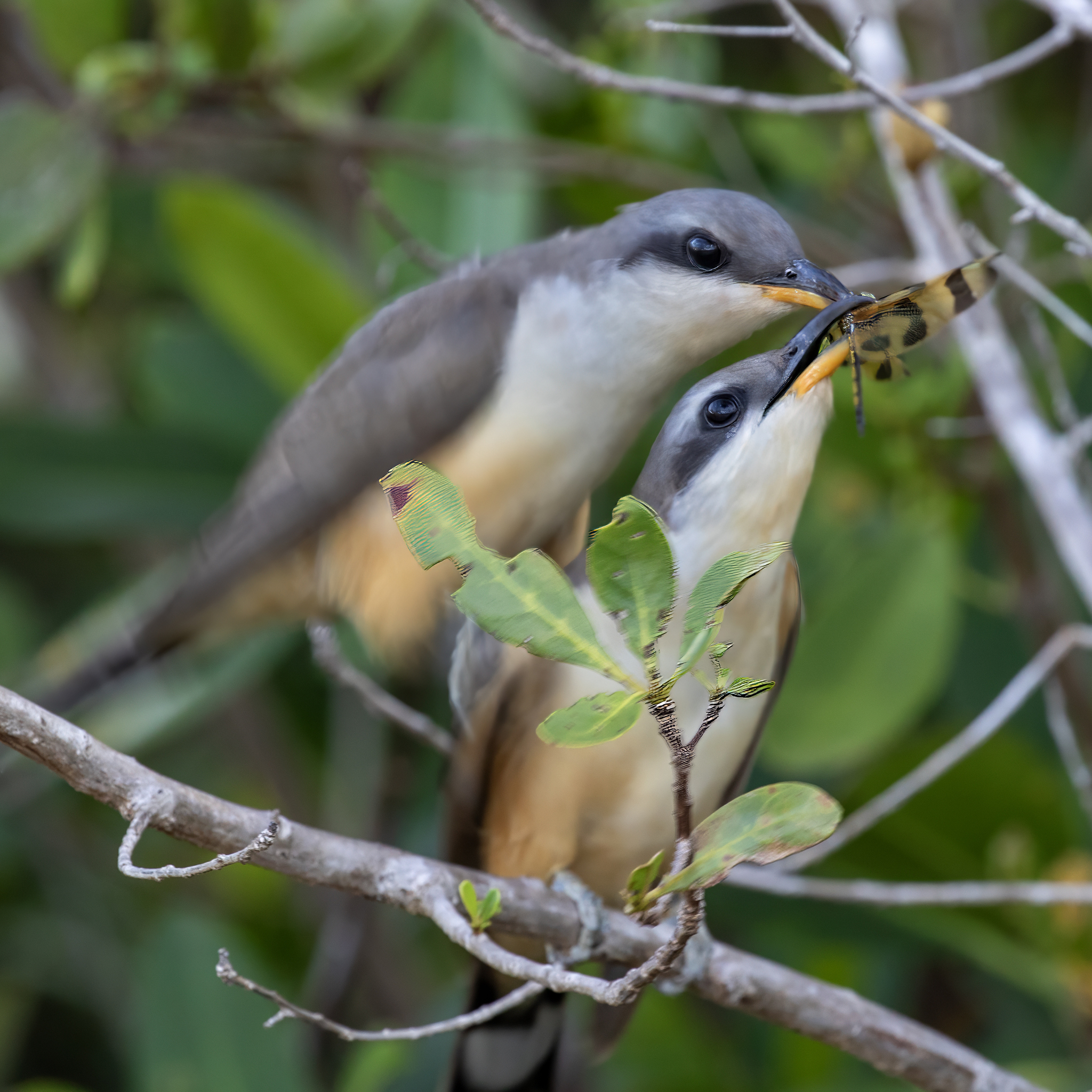 Mangrove Cuckoo
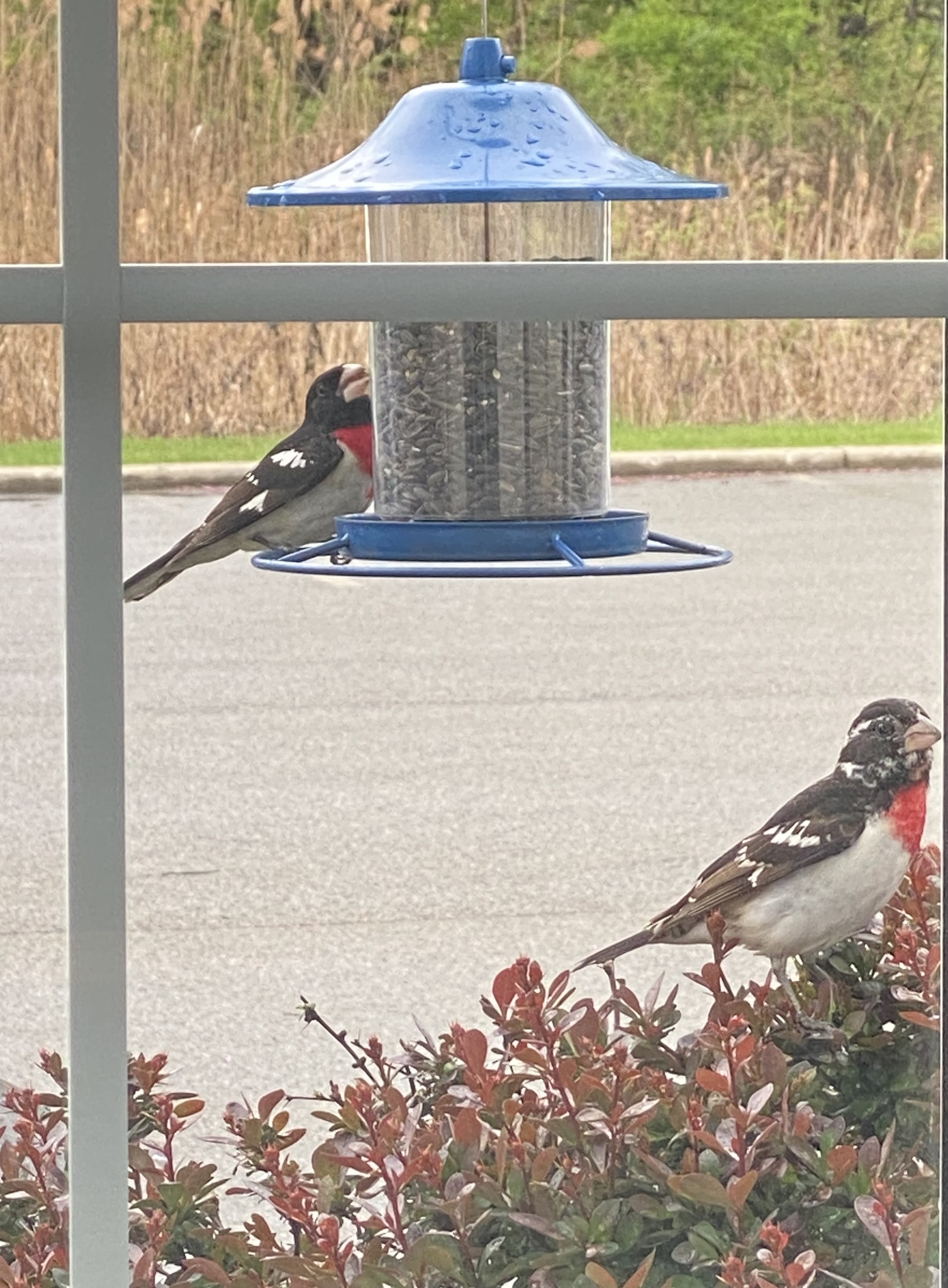 Rose-breasted Grosbeak
In short
The Mangrove Cuckoo and Rose-breasted Grosbeak are distinct in appearance and habitat. The Mangrove Cuckoo is a slender, long-tailed bird with a distinctive black mask and buffy underparts, while the Rose-breasted Grosbeak is known for its striking black-and-white plumage with a rose-pink breast in males. They occupy different habitats, with the cuckoo favoring mangroves and the grosbeak found in deciduous forests and gardens.
Identification tips
- Tail pattern: Mangrove Cuckoo has white-tipped outer tail feathers with black proximally on both webs; Rose-breasted Grosbeak lacks this pattern.
- Head markings: Look for the black auricular mask on the Mangrove Cuckoo.
- Breast color: The male Rose-breasted Grosbeak has a distinctive rose-pink breast.
- Habitat: Consider the environment; mangroves suggest Mangrove Cuckoo, while gardens and forests suggest Rose-breasted Grosbeak.
- Vocalization: Listen for the slower, lower-pitched calls of the Mangrove Cuckoo versus the melodic song of the Rose-breasted Grosbeak.
Size
The Mangrove Cuckoo is larger, measuring 28–32 cm in length, compared to the Rose-breasted Grosbeak, which is smaller and more compact.
Plumage
Mangrove Cuckoo has a grayish crown, black auricular patch, and buffy underparts, with white-tipped outer tail feathers. The Rose-breasted Grosbeak male is black-and-white with a rose-pink breast, while the female is brown and streaked.
Behaviour
The Mangrove Cuckoo is more secretive and often found in mangroves, while the Rose-breasted Grosbeak is more visible, often seen in gardens and forests, and both sexes share nesting duties.
Habitat
Mangrove Cuckoo inhabits mangrove forests, while the Rose-breasted Grosbeak prefers deciduous and mixed forests, as well as gardens.
Voice
Mangrove Cuckoo's calls are lower-pitched and slower compared to the Rose-breasted Grosbeak, which has a song similar to an American Robin but sweeter and more varied.