
Mangrove Cuckoo vs Varied Thrush
Coccyzus minor versus Ixoreus naevius
Play a quiz with Mangrove Cuckoo and Varied Thrush
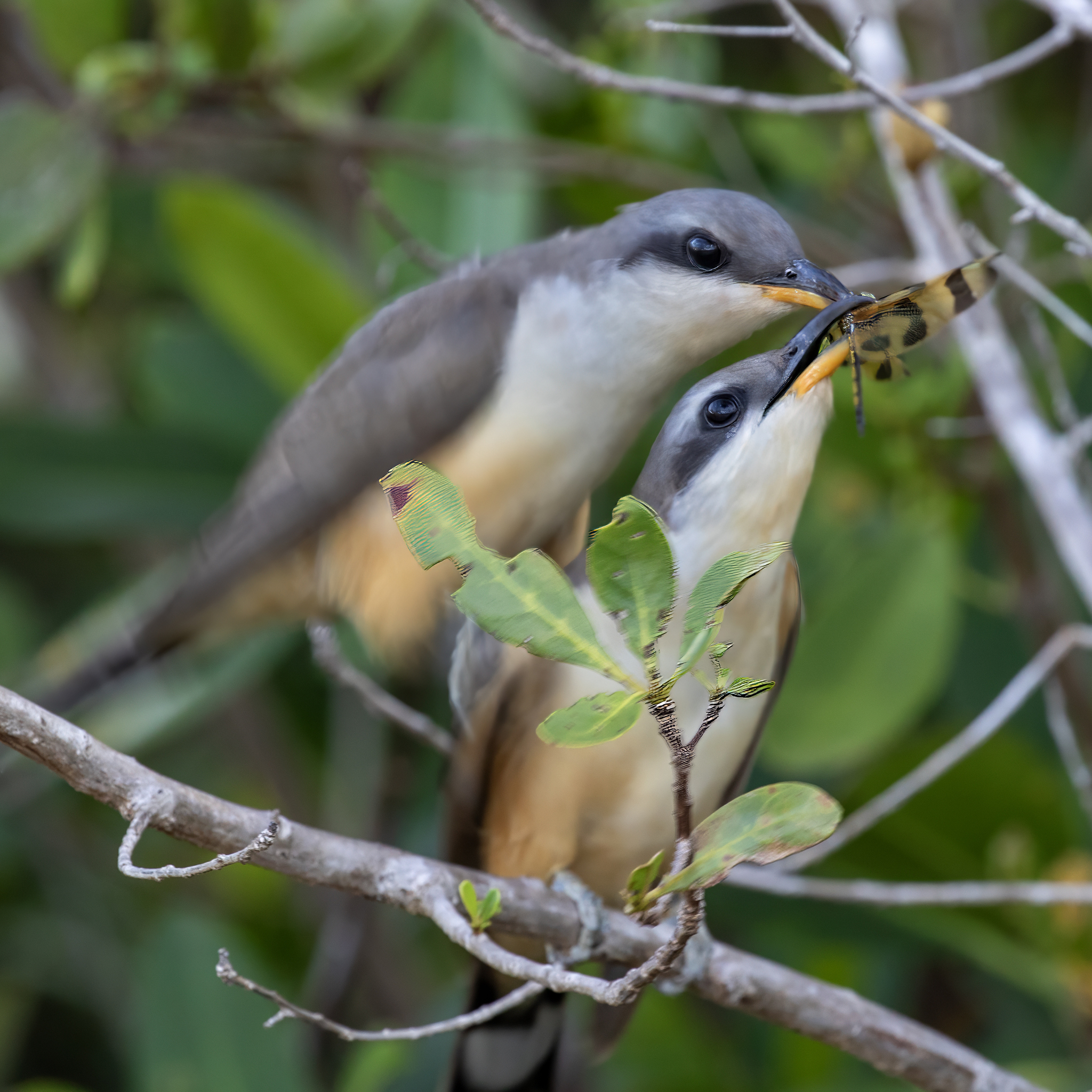 Mangrove Cuckoo
 Varied Thrush
In short
Mangrove Cuckoo and Varied Thrush are distinct in appearance and habitat. The Mangrove Cuckoo is a slender, long-tailed bird with a distinctive black mask and buffy underparts, typically found in mangrove habitats. The Varied Thrush, on the other hand, is a forest-dwelling bird with a striking orange and black plumage pattern.
Identification tips
- Mangrove Cuckoo: Look for the black mask, buffy underparts, and long tail with white-tipped feathers. Found in mangrove habitats.
- Varied Thrush: Note the orange breast and eyebrow, dark upperparts, and preference for forested environments. Listen for its unique song.
Size
The Mangrove Cuckoo is 28–32 cm long, while the Varied Thrush is slightly smaller, typically around 24 cm.
Plumage
The Mangrove Cuckoo has a grayish-brown upper body with a black auricular mask and buffy underparts. Its tail is long with white-tipped outer rectrices. The Varied Thrush is notable for its orange breast and eyebrow stripe, contrasting with its dark blue-black upperparts and wings.
Behaviour
Mangrove Cuckoos are often found perched quietly in mangroves, while Varied Thrushes are shy and prefer dark, wet forests, often foraging on the ground.
Habitat
Mangrove Cuckoos inhabit mangrove forests and coastal areas, whereas Varied Thrushes are found in mature and old-growth forests, particularly in the Pacific Northwest.
Voice
Mangrove Cuckoo calls are lower-pitched and slower compared to the Varied Thrush's distinctive, eerie song of drawn-out notes at varying pitches.