
Marbled Wren-Babbler vs Black-throated Wren-Babbler
Turdinus marmoratus versus Turdinus atrigularis
Play a quiz with Marbled Wren-Babbler and Black-throated Wren-Babbler
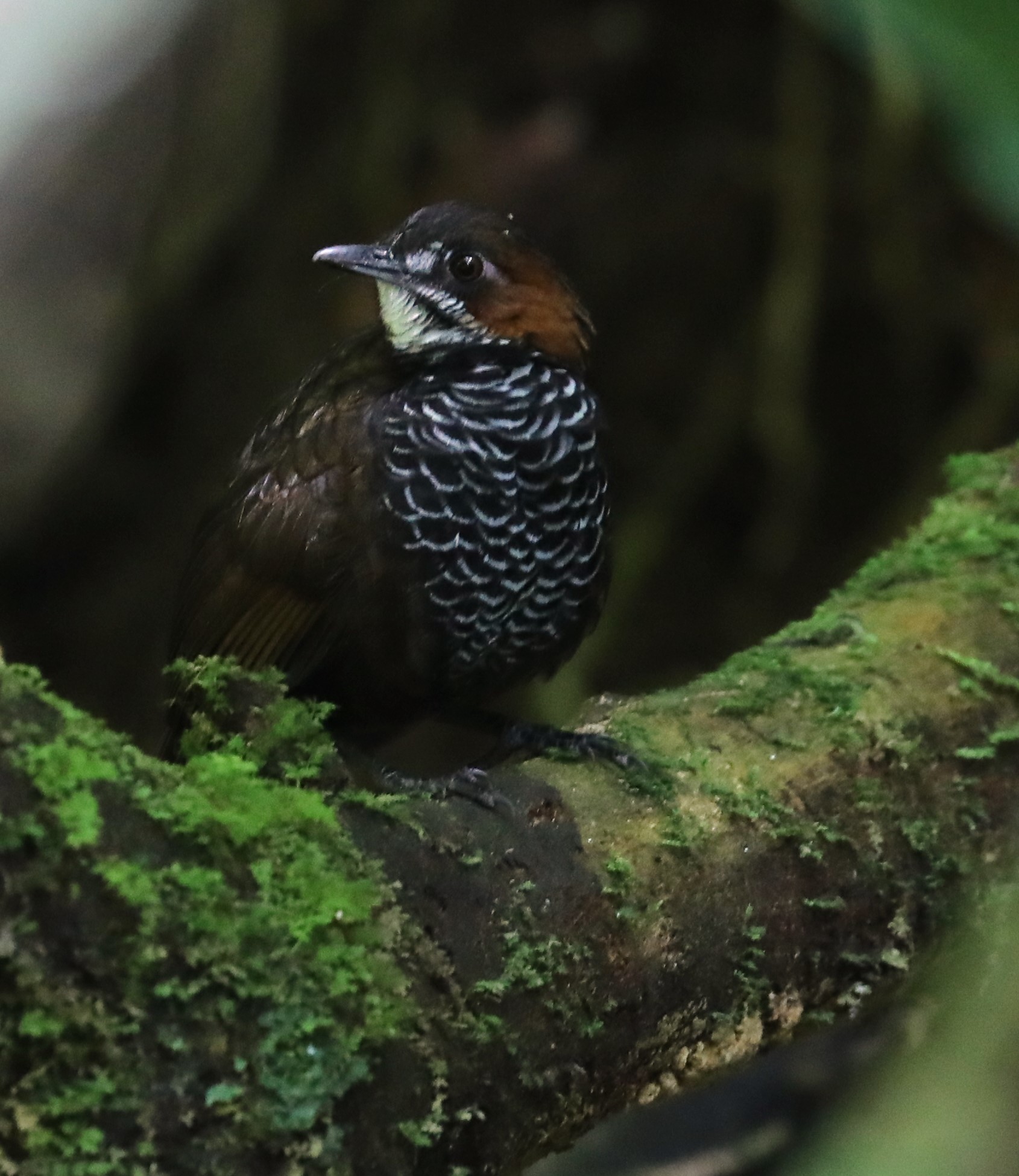 Marbled Wren-Babbler
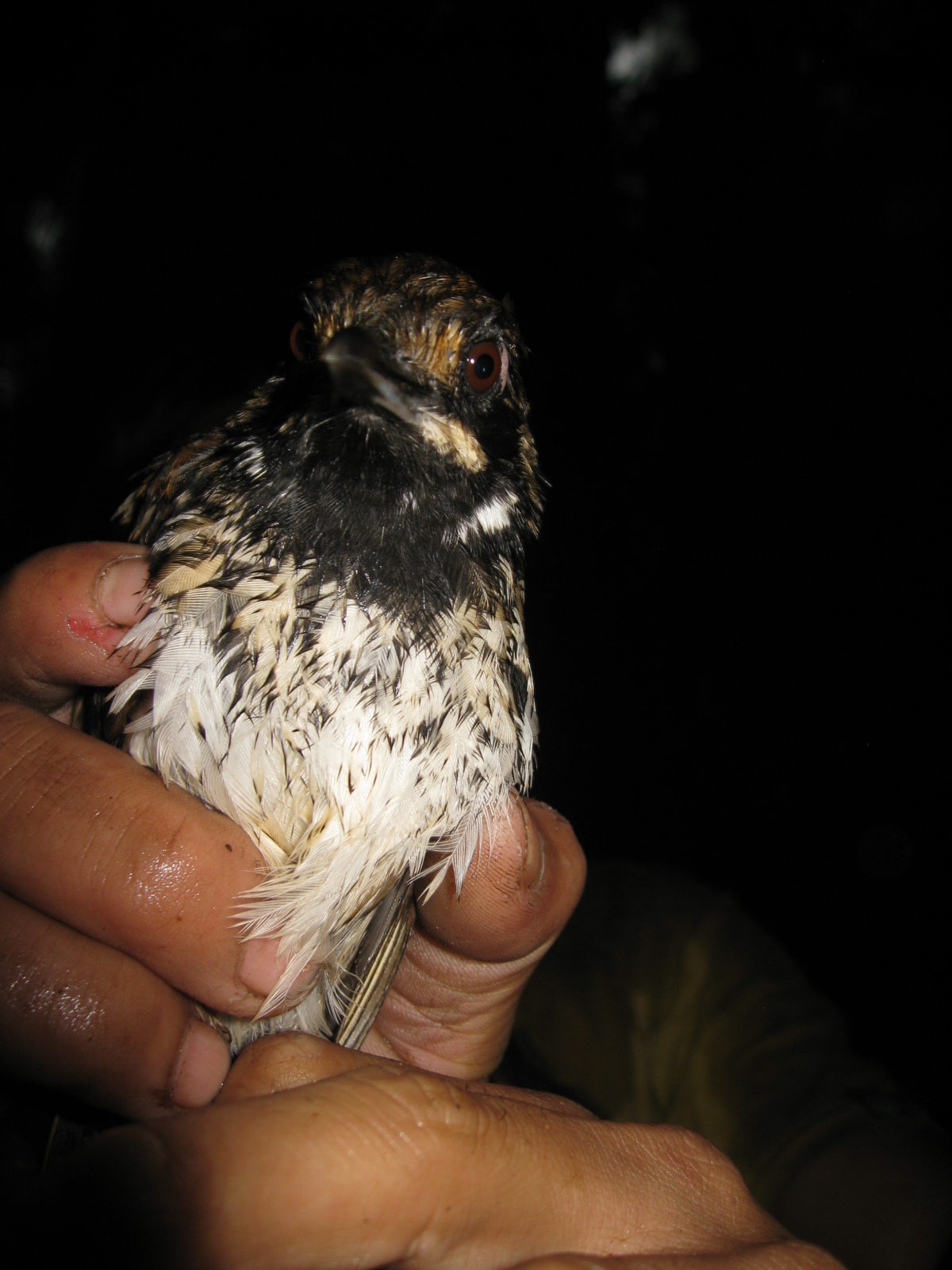 Black-throated Wren-Babbler
In short
The Marbled Wren-Babbler and Black-throated Wren-Babbler are similar ground-dwelling birds, but the Marbled has a more mottled appearance while the Black-throated features a distinctive black throat patch. Both species inhabit dense forest undergrowth, making them challenging to spot, but their vocalizations can aid identification.
Identification tips
1. Look for the black throat patch on the Black-throated Wren-Babbler. 2. Note the marbled appearance of the Marbled Wren-Babbler. 3. Listen for differences in vocalizations, as these can be more reliable than visual cues in dense habitats.
Size
Both species are similar in size, typical of small wren-babblers.
Plumage
The Marbled Wren-Babbler has a mottled brown and white plumage, giving it a marbled appearance, while the Black-throated Wren-Babbler is characterized by its prominent black throat patch and otherwise darker, more uniform plumage.
Behaviour
Both species are secretive and tend to forage on the forest floor, often staying hidden in dense undergrowth.
Habitat
Both species prefer dense forest undergrowth, but specific habitat preferences may vary slightly based on local distribution.
Voice
Vocalizations are important for differentiation; the Marbled Wren-Babbler's song is typically a series of whistles, while the Black-throated Wren-Babbler's call might be harsher or more varied.
Marbled Wren-Babbler · Black-throated Wren-Babbler · My Tricky Birds