
Mottle-cheeked Tyrannulet vs Amazonian Scrub-Flycatcher
Phylloscartes ventralis versus Sublegatus obscurior
Play a quiz with Mottle-cheeked Tyrannulet and Amazonian Scrub-Flycatcher
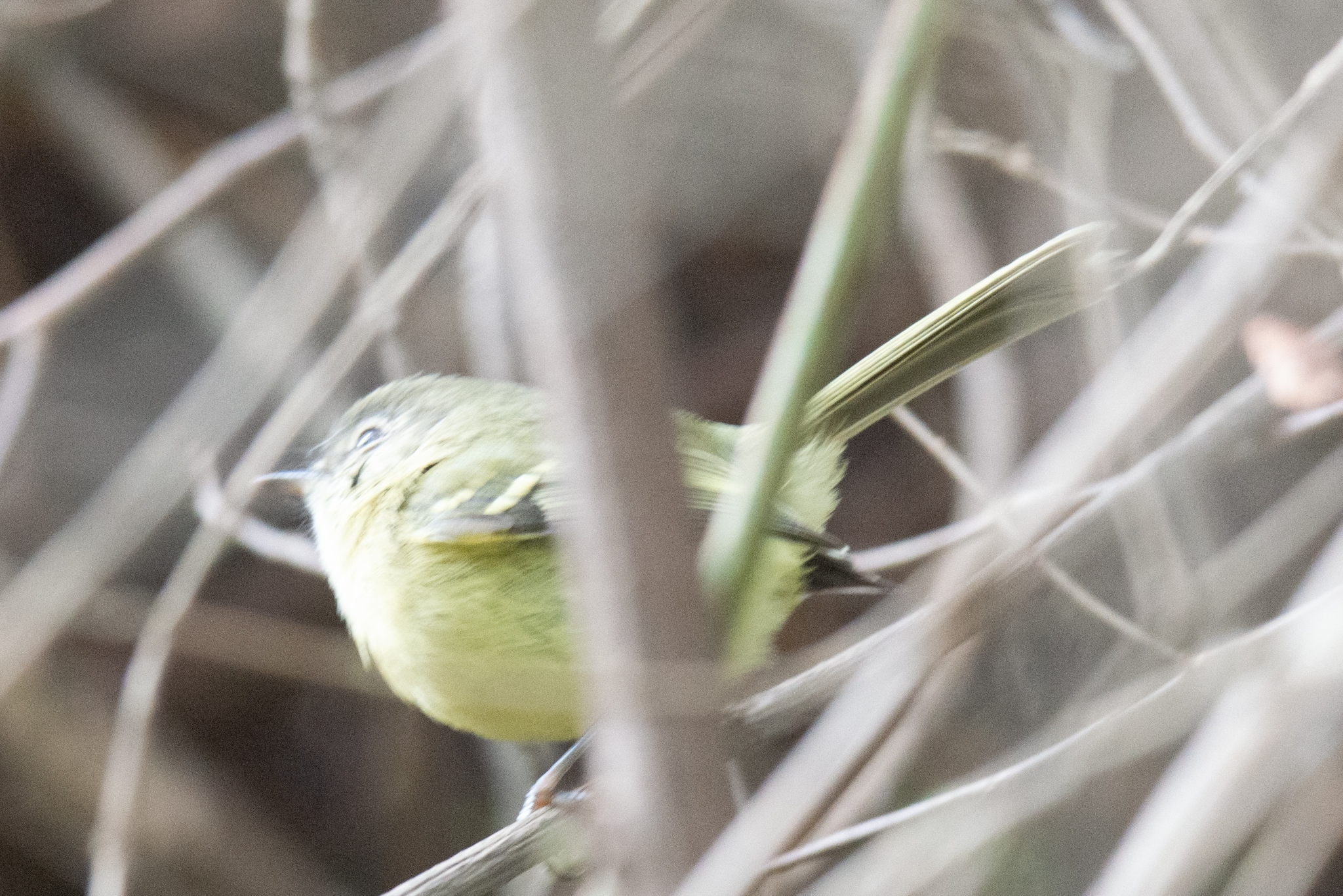 Mottle-cheeked Tyrannulet
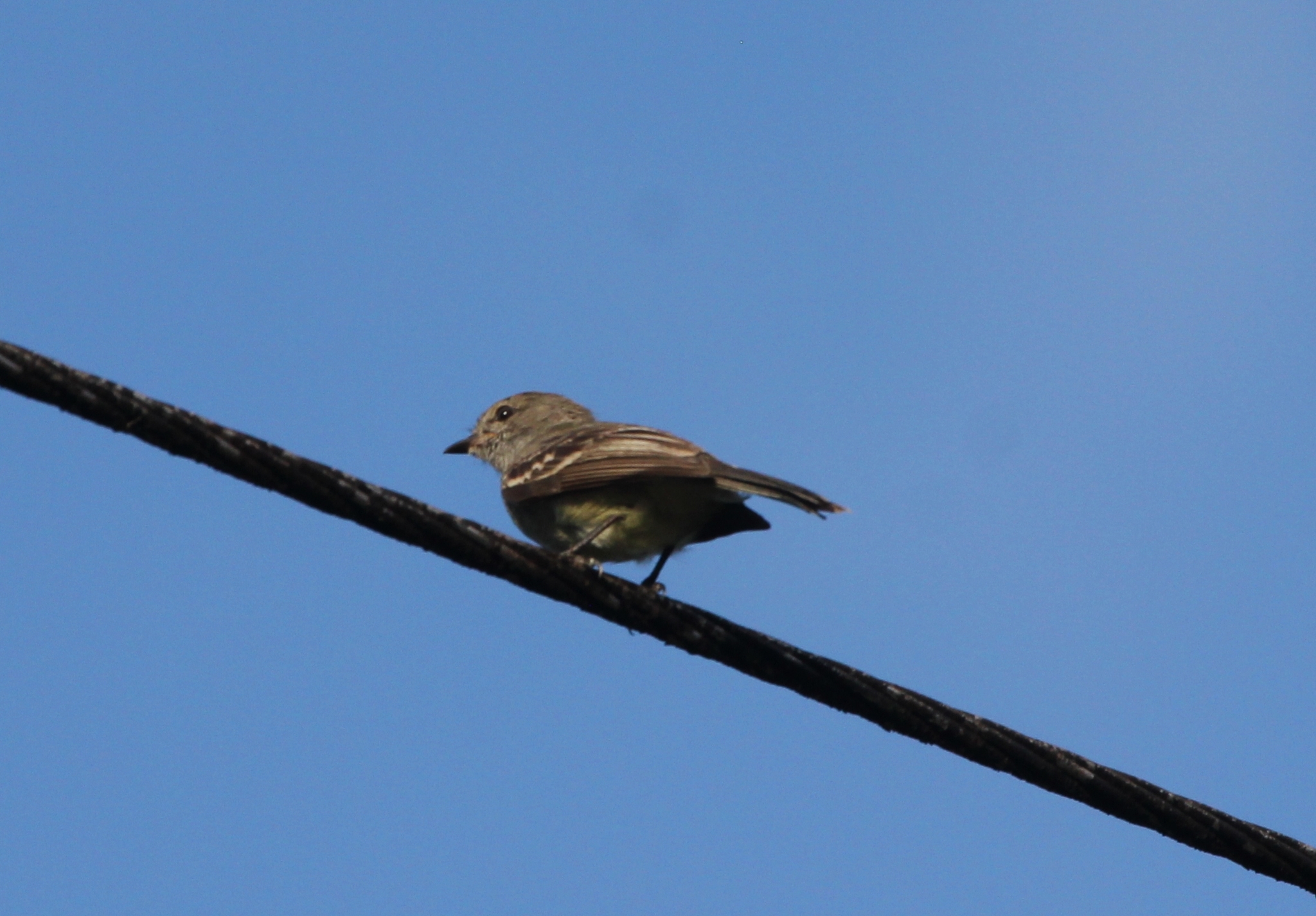 Amazonian Scrub-Flycatcher
In short
The Mottle-cheeked Tyrannulet and Amazonian Scrub-Flycatcher are both small, olive-toned flycatchers, but they differ in structure and behavior. The Mottle-cheeked Tyrannulet is more active and often joins mixed-species flocks, while the Amazonian Scrub-Flycatcher is more solitary. Key differences include the Mottle-cheeked Tyrannulet's prominent wingbars and white tertial markings.
Identification tips
- Look for prominent wingbars and white tertial markings on the Mottle-cheeked Tyrannulet. 2. Note behavior: Mottle-cheeked Tyrannulet is more active and often in flocks. 3. Consider habitat: Mottle-cheeked Tyrannulet is found at higher elevations. 4. Listen for vocal differences, as calls can be distinctive.
Size
Both species are small flycatchers, but the Mottle-cheeked Tyrannulet may appear slightly more robust due to its active behavior.
Plumage
The Mottle-cheeked Tyrannulet has prominent wingbars and white markings on the tertials, while the Amazonian Scrub-Flycatcher is more uniformly olive without such distinct markings.
Behaviour
The Mottle-cheeked Tyrannulet is very active, often joining mixed-species flocks, whereas the Amazonian Scrub-Flycatcher tends to be more solitary and less conspicuous.
Habitat
The Mottle-cheeked Tyrannulet is found at higher elevations (1000–2200 m) in forest habitats, while the Amazonian Scrub-Flycatcher is typically found in lower elevation scrub and edge habitats.
Voice
Specific vocalization differences are not detailed, but listening for differences in calls can aid identification, as flycatchers often have distinctive vocalizations.
Mottle-cheeked Tyrannulet · Amazonian Scrub-Flycatcher · My Tricky Birds