
Mottle-cheeked Tyrannulet vs Yellow-olive Flatbill
Phylloscartes ventralis versus Tolmomyias sulphurescens
Play a quiz with Mottle-cheeked Tyrannulet and Yellow-olive Flatbill
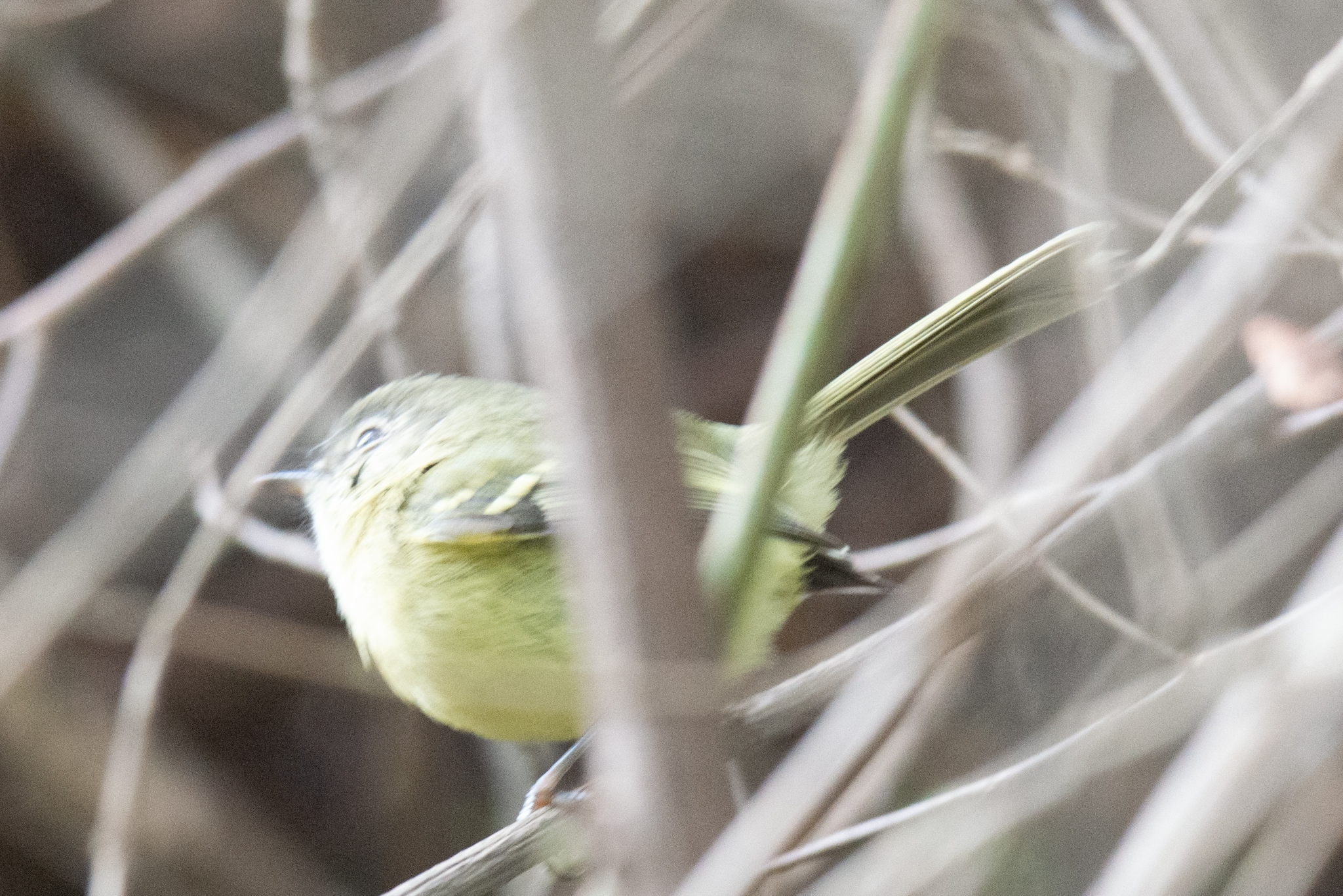 Mottle-cheeked Tyrannulet
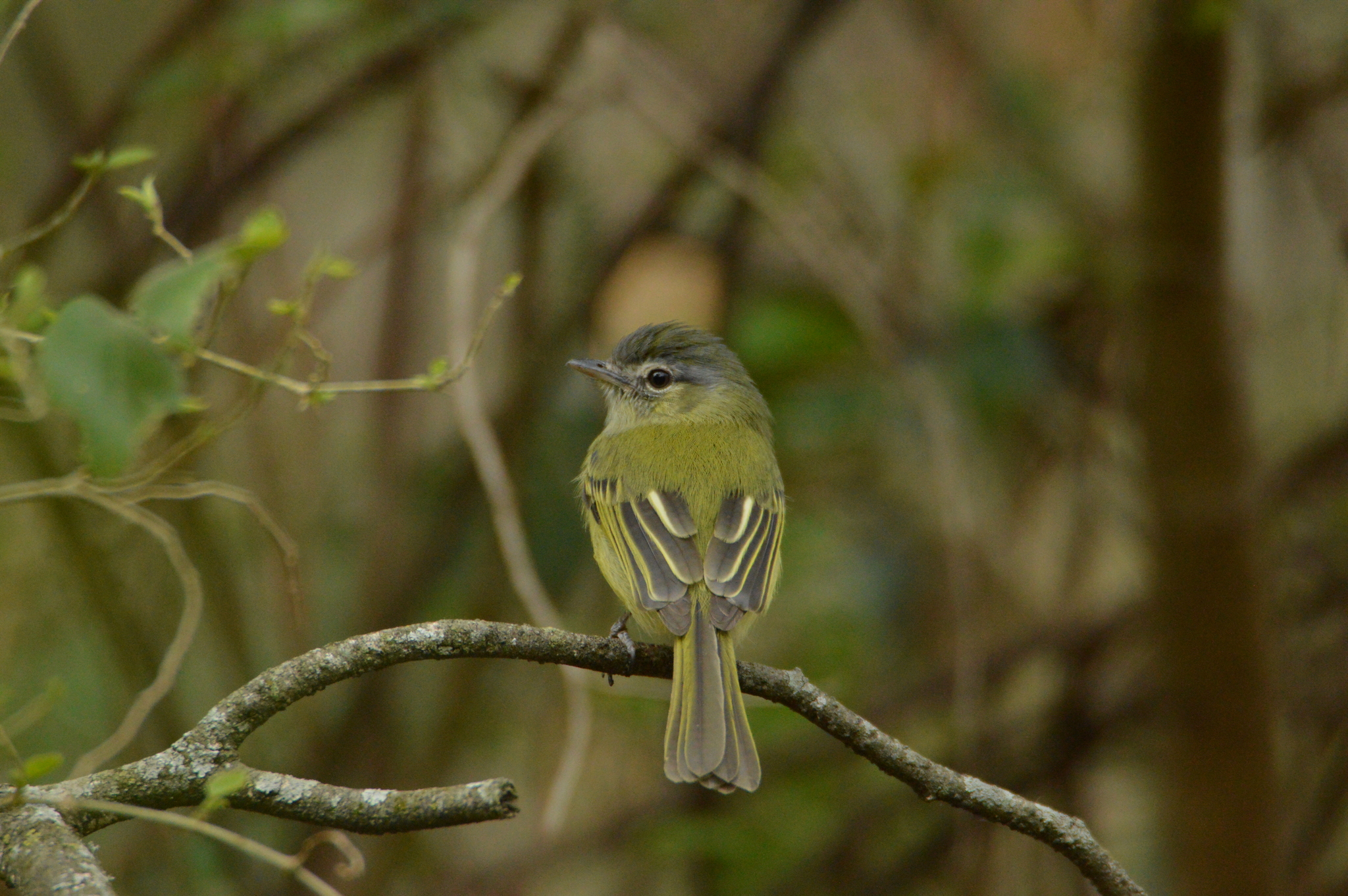 Yellow-olive Flatbill
In short
The Mottle-cheeked Tyrannulet and Yellow-olive Flatbill can be distinguished by their bill size and plumage details. The Mottle-cheeked Tyrannulet has a smaller, more delicate bill and distinct white markings on the tertials, while the Yellow-olive Flatbill features a broader bill and a pale gray crown with dark auriculars.
Identification tips
- Look for the bill size: Mottle-cheeked Tyrannulet has a smaller, more delicate bill compared to the broader bill of the Yellow-olive Flatbill. 2. Check for white tertial markings on the Mottle-cheeked Tyrannulet. 3. Note the gray crown and dark auriculars of the Yellow-olive Flatbill. 4. Observe behavior: Mottle-cheeked Tyrannulet is more active in mixed-species flocks, while Yellow-olive Flatbill forages more deliberately.
Size
Both species are small flycatchers, but the Yellow-olive Flatbill has a slightly bulkier appearance due to its broader bill.
Plumage
The Mottle-cheeked Tyrannulet is olive-green above with prominent white tertial markings and paler underparts. In contrast, the Yellow-olive Flatbill has a light-gray crown, pale gray cheeks and throat, and a pale yellow belly, with dark auriculars surrounding a paler central spot.
Behaviour
Mottle-cheeked Tyrannulets are active foragers in mixed-species flocks, perching horizontally and holding their tails slightly cocked. Yellow-olive Flatbills forage more deliberately, often singly or in pairs, and make short sallies for insects.
Habitat
Both species inhabit forested areas, but the Mottle-cheeked Tyrannulet is found at higher elevations (1000–2200 m), while the Yellow-olive Flatbill is associated with forest edges and lower to mid-levels of forests.
Voice
Vocalizations are not detailed in the notes, but Yellow-olive Flatbill subspecies may differ in voice, potentially aiding identification.
Mottle-cheeked Tyrannulet · Yellow-olive Flatbill · My Tricky Birds