
Northern Shoveler vs Greater Scaup
Spatula clypeata versus Aythya marila
Play a quiz with Northern Shoveler and Greater Scaup
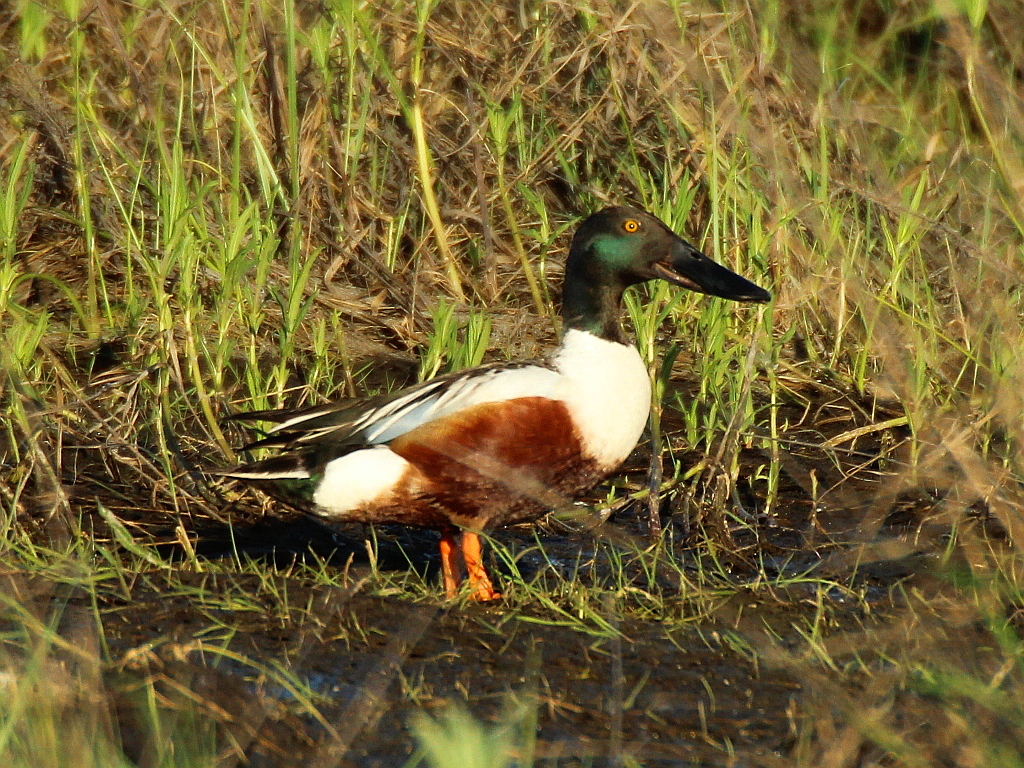 Northern Shoveler
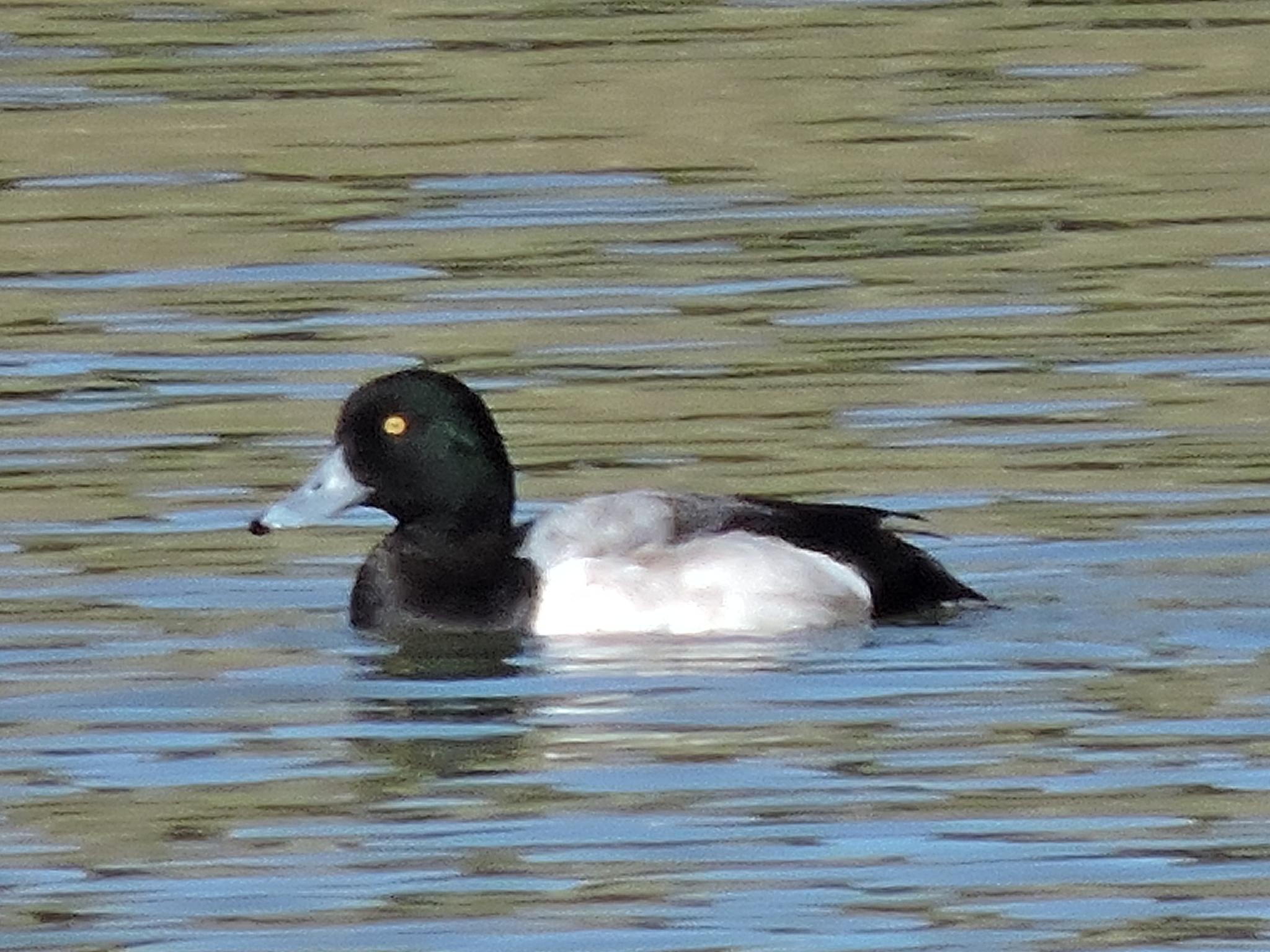 Greater Scaup
In short
The Greater Scaup (Aythya marila) and the Northern Shoveler (Spatula clypeata) are both waterfowl found in North America, but they exhibit distinct differences in size, plumage, foraging behavior, and habitat preferences. Greater Scaup are diving ducks with a more streamlined body and rounded head, while Northern Shovelers are dabbling ducks known for their unique spatula-shaped bills and vibrant plumage.
Identification tips
- Birds of the World Similar-Species Diagnostics:
-
From the Similar Species section of Birds of the World: "Greater Scaup can be distinguished from Lesser Scaup by its larger size, broader head, and the peak of the head is further back. The bill is also more slender with a bluish hue." Conversely, "Northern Shoveler males are easily recognized by their broad, spatula-shaped bill, which is not found in Greater Scaup."
-
AI Field Diagnostics:
- Size and Shape: Look for the Greater Scaup's more streamlined body and rounded head compared to the Northern Shoveler’s compact body and distinctive broad bill.
- Plumage: Focus on the male’s vibrant plumage; the Greater Scaup has a more uniform black and white coloration, while the Northern Shoveler has a colorful, patterned appearance with its green head and chestnut sides.
- Foraging Behavior: Observe how they feed; the Greater Scaup dives and forages underwater, while the Northern Shoveler tips forward in the water, using its bill to filter food.
- Habitat Preference: Note the habitat; Greater Scaup are often seen in open waters, while Northern Shovelers prefer vegetated marshes and wetlands.
- Vocalizations: Listen for the difference in calls; Northern Shovelers have a more pronounced, sharper quack, while Greater Scaup have softer whistles.
By focusing on these key differences, birdwatchers can effectively distinguish between the Greater Scaup and Northern Shoveler in the field.
Size
- Greater Scaup: Typically measures around 15.5 to 20 inches (39 to 51 cm) in length with a wingspan of about 28 to 32 inches (71 to 81 cm). They are medium-sized diving ducks.
- Northern Shoveler: Slightly smaller, measuring about 17 to 20 inches (43 to 51 cm) in length, with a wingspan of 29 to 31 inches (74 to 79 cm). They have a more compact body shape compared to the Greater Scaup.
Plumage
- Greater Scaup: Males are primarily black on the head and white on the body with a distinctive greenish sheen, while females are more mottled brown with a pale cheek patch. The male's bill is also relatively slender and has a bluish hue.
- Northern Shoveler: Males display a striking green head, white chest, and chestnut-colored sides, with a wide, flat, and spatula-like bill which is a defining characteristic. Females are mottled brown but have a more distinct facial pattern than Greater Scaup, with a light brown cheek and a dark crown.
Behaviour
- Greater Scaup: As diving ducks, they often forage underwater for aquatic plants, mollusks, and crustaceans, diving to depths of several meters. They typically exhibit a more social behavior, often found in larger groups during migration and wintering.
- Northern Shoveler: They are dabblers and primarily forage by tipping their bodies forward in the water to reach submerged vegetation, filtering food through their unique bills. Males are known to be quite territorial during the breeding season and often remain paired with females longer than other dabbling ducks.
Habitat
- Greater Scaup: Prefer open waters of lakes, bays, and coastal habitats, particularly during winter. They nest in wetlands and tundra regions.
- Northern Shoveler: Found in freshwater marshes, shallow lakes, and ponds, they prefer habitats rich in emergent vegetation. They are also common in agricultural fields during migration and winter.
Voice
- Greater Scaup: Their calls are typically a soft "quack" or "whistle" sound that can be less pronounced than the Northern Shoveler.
- Northern Shoveler: Males produce a distinct, sharp "quack," while females have a more nasal quack, which is often louder and more recognizable.